
Why Lights Dim When Appliances Start in Greater Boston Homes

Contact Us
Your lights should not blink every time the microwave starts or the AC kicks on. A brief dip can happen, but repeated dimming usually means the electrical system is feeling the strain.
In Greater Boston homes, this shows up more often than many people expect. Older wiring, packed panels, and heavy appliance loads can all make a small problem look bigger at the light fixture.
The good news is that the cause is often clear once you know what to look for. The next step is sorting out a normal startup dip from a sign that needs a licensed electrician.
What Happens When an Appliance Starts
Many appliances need a strong burst of power at the moment they turn on. That startup surge is common with motors and compressors, so the load on the circuit jumps fast. When that happens, the lights on the same circuit can dim for a second.
A refrigerator compressor, an air conditioner, a washer, a dryer, or a sump pump can all create that kind of load. Microwaves can do it too, especially in kitchens where several appliances share one circuit. If the wiring is already stretched thin, the dip becomes more obvious.
That dip happens because electricity follows the path of least resistance, and a circuit can only carry so much at once. When the appliance asks for power, the voltage at the lights drops for a moment. In plain English, the bulb gets less power for a short time, so it looks dim.
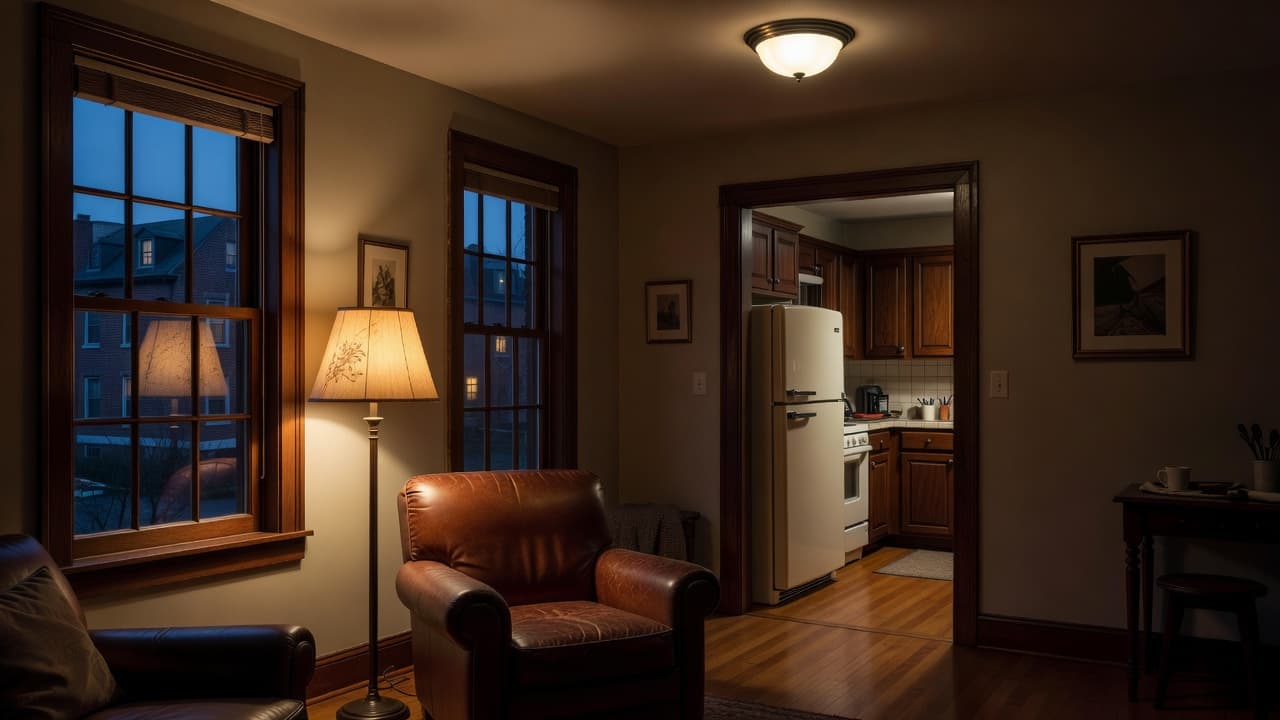
A brief dim at startup can be normal. A repeated sag across several rooms is a different story.
Why Greater Boston Homes Show the Problem More Often
Homes in Greater Boston cover a wide range of ages. Some have newer electrical work, while others still rely on systems that were built for smaller loads. That matters because modern homes use more power than older ones were designed to carry.
A house with a crowded panel can run into trouble faster. So can a home where the kitchen, laundry room, and basement share circuits that should be split apart. Long wire runs also play a role, especially in larger homes or homes with additions.
Older service equipment can make the issue more noticeable too. If the main panel is near capacity, every new load puts more stress on the system. In that situation, lights may dim more than they should when a big appliance starts.
This is where the cause starts to matter. A single dim light in one room points to one kind of problem. Dimming across the whole house points to another. That difference helps a licensed electrician narrow down the fix.
Sometimes the issue is a loose connection, not a lack of power. A loose wire or worn connection can act like a narrow pipe in a wide road. Power still gets through, but not as smoothly as it should.
If the dimming happens more often in winter, summer, or during laundry loads, that pattern can be useful. It can point to the appliances that push the system hardest and the circuits that need the most attention.
Appliances That Often Make the Lights Dip
Some appliances are more likely to trigger a visible dim because they pull a strong startup load. That does not always mean something is broken. It does mean the electrical system is working harder than usual.
The usual suspects are easy to spot:
- AC units can pull a heavy startup load, especially on hot days.
- Refrigerators cycle on and off all day, so the dip may come and go.
- Microwaves can cause a quick flicker in kitchens with shared circuits.
- Washers use motor power that can make lights twitch at start.
- Dryers draw a lot of power and may affect nearby lighting.
- Sump pumps can cause a dip when they kick on during wet weather.
The location of the dimming matters too. If kitchen lights dim when the microwave runs, the cause may stay close to that circuit. If the living room, hallway, and bedroom lights all dim when the AC starts, the problem may be farther upstream.
A home can also show a stronger dim when several appliances run at once. Running a washer, dryer, and microwave at the same time can stack the load quickly. Add a refrigerator compressor or a sump pump to that mix, and the system may show its limits.
That is why one short flicker is not the same as a housewide dim. The more rooms that react, the more likely the issue sits in the panel, service, or main wiring path.
When a Small Dip Is Fine and When It Is Not
A brief flicker when a motor starts can be normal. Many homes do it. The key is how often it happens, how long it lasts, and how far it spreads.
If the lights recover right away and the appliance seems to run normally, the system may be handling a regular load change. That said, a steady pattern of dimming still deserves attention, especially in an older home.
Use the pattern as a warning sign. A single room dimming when one appliance starts is less serious than several rooms dimming every time. A quick dip is also less concerning than a slow, heavy fade.
Watch for the signs that point to a real electrical problem:
- The dimming happens often, even with everyday appliances.
- It gets worse over time.
- Multiple rooms dim at once.
- Lights flicker when nothing major has turned on.
- Breakers trip along with the dimming.
- You hear buzzing from a switch, outlet, or panel.
Burning smells, warm outlets, and repeated breaker trips need fast attention.
If any of those signs show up, stop treating the dimming as a minor nuisance. The issue may involve overload, loose wiring, or a failing connection. Those problems can get worse without much warning.
What a Licensed Electrician Will Check
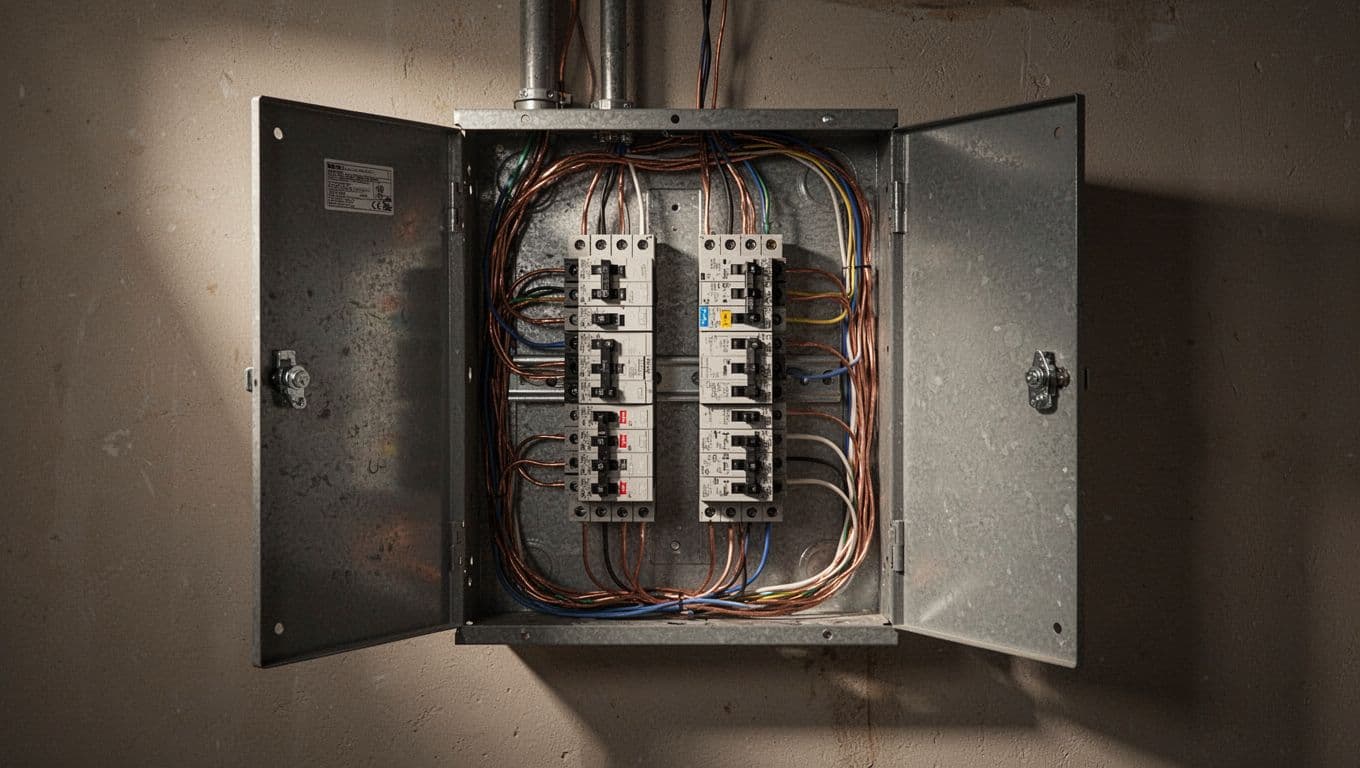
A licensed electrician will look at the whole picture, not just the light bulbs. That usually starts with the panel, the circuit layout, and the appliances that trigger the dimming. The goal is to find where the power loss begins.
An electrician may test the voltage drop, inspect connections, and check whether certain circuits are overloaded. They may also look for aging breakers, loose neutrals, or wiring that no longer matches the home's power use. If the trouble is isolated, the fix can be simple. If it is housewide, the answer is usually bigger.
In some homes, the panel itself is the limit. If it is old, crowded, or undersized, a modern electrical panel replacement may be part of the solution. In other cases, a dedicated circuit for a big appliance can stop the lights from dipping every time it starts.
The electrician may also recommend separating heavy loads so they are not competing on the same circuit. That can help with kitchen appliances, laundry equipment, or a basement sump pump. The right fix depends on what the test results show.
An important detail: do not keep resetting breakers that trip over and over. A breaker is trying to warn you. If you see heat, smell something burning, or notice scorch marks, shut off the circuit if you can do so safely and call right away.
What the Dimming Is Telling You
Lights that dim when appliances start are sending a message. Sometimes that message is harmless and tied to a normal power surge. Other times it points to an overloaded circuit, aging equipment, or a panel that can no longer keep up.
If the dimming is frequent, getting worse, affecting more than one room, or showing up with buzzing, warm outlets, burning smells, or breaker trips, it needs a licensed electrician. In Greater Boston homes, that kind of pattern often means the system is due for a closer look.
A brief flicker is easy to ignore. A repeat pattern is the part that deserves attention.