

Why Your Breaker Panel Is Buzzing in Greater Boston Homes

Contact Us
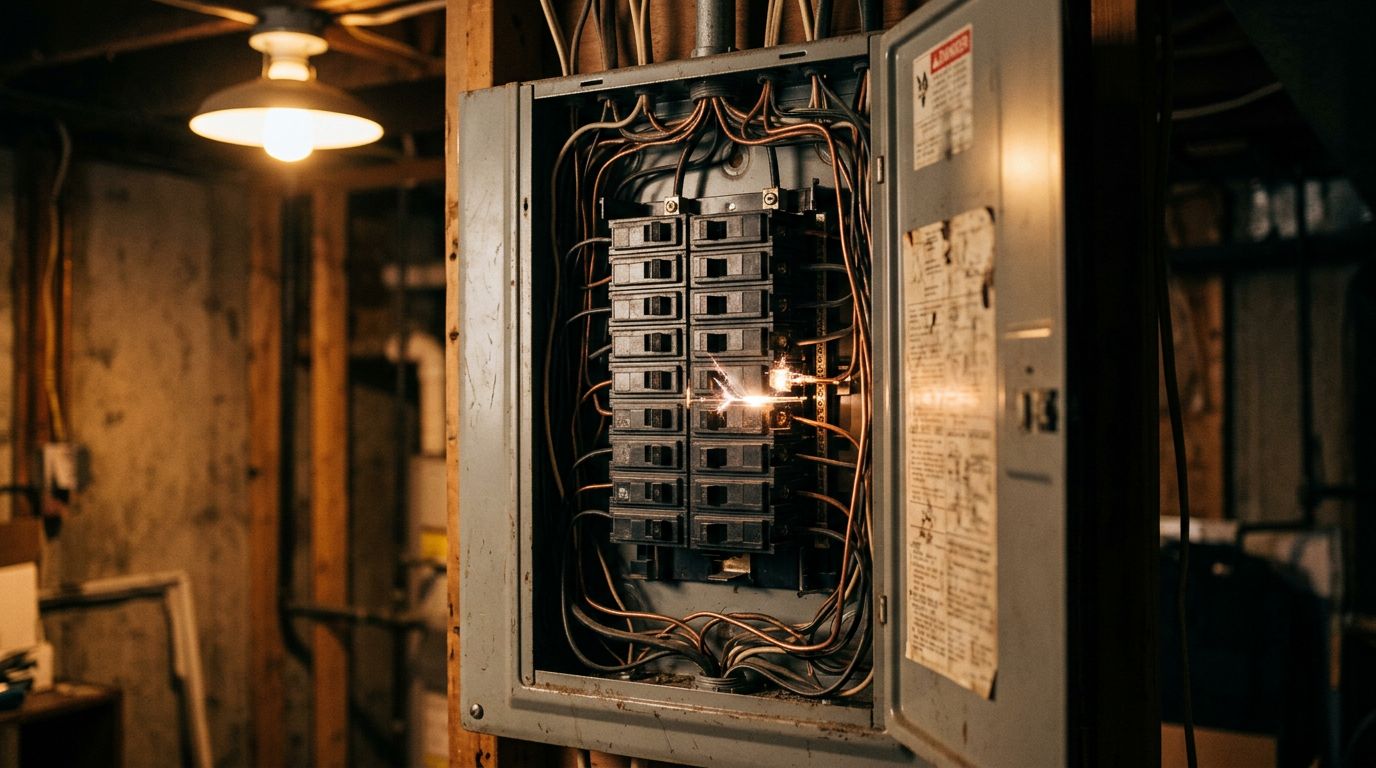
A buzzing breaker panel is more than an annoying sound. In a Greater Boston home, it can point to a loose connection, an overloaded circuit, a failing breaker, arcing, or panel wear.
Older housing stock, updated kitchens, and heavier appliance use put real strain on electrical systems built for simpler loads. When the noise starts, the real question is whether it's a small vibration or a warning sign.
The clues around the panel usually tell the story.
What a buzzing breaker panel usually means
A breaker panel should stay mostly quiet. A soft hum can happen in some homes, but a clear buzz is different.
Buzzing often means electrical parts are vibrating because something is not working the way it should. A loose wire can vibrate under load. A breaker may not be seated correctly. Contacts inside the breaker can wear down over time, and that creates heat and noise.
Arcing is another concern. That happens when electricity jumps across a gap where it should not. It can start small, but it can damage metal, insulation, and nearby wiring fast.
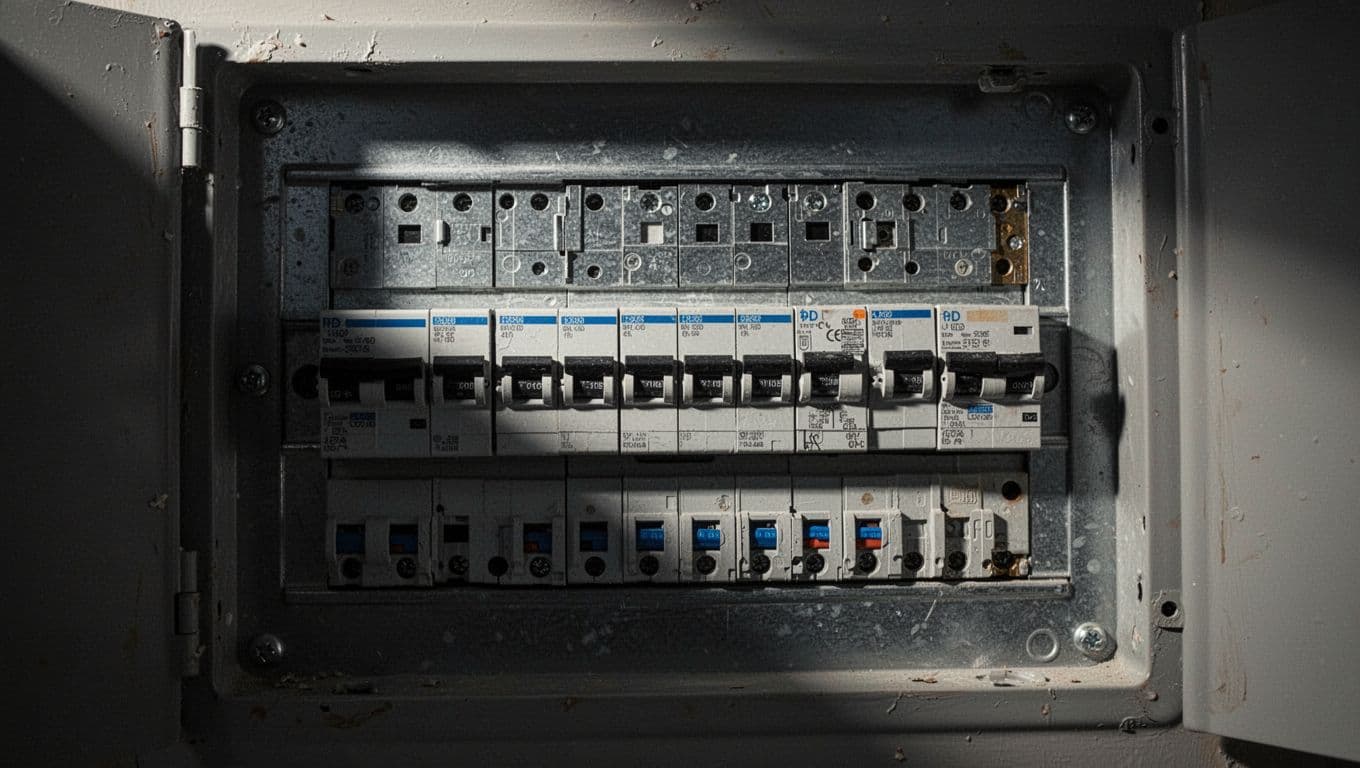
If the sound changes when a dryer, microwave, or heater turns on, the panel may be handling more than it should. If the buzzing is there all day, the panel itself may be the problem.
A breaker panel should stay quiet. When it starts buzzing, something inside the system deserves a closer look.
Why this shows up so often in Greater Boston homes
Greater Boston has a lot of older homes. Triple-deckers, capes, colonials, and remodeled properties often carry electrical systems that were built for a very different kind of day-to-day use.
Years ago, homes ran fewer large appliances. Today, the load is bigger. Kitchens may have stronger ranges, dishwashers, toaster ovens, and coffee makers all in the same space. Basements often hold freezers, dehumidifiers, and finished living areas. Many homes also add central AC, heat pumps, EV chargers, and home office gear.
That shift matters. A panel that was fine for older habits can start to strain when new demands show up. A buzzing breaker panel may be the first sign that the system is working harder than it should.
Seasonal demand adds even more stress. Winter brings space heaters, boilers, and sump pumps. Summer loads stack up with AC units and fans. When those appliances cycle on and off, weak points in the panel can become obvious.
Age matters too. Connections loosen over time. Metal parts corrode. Panels installed decades ago may no longer match the home's current load. If your home also shows electrical panel warning signs, the buzzing may be part of a larger issue, not a one-off annoyance.
When buzzing turns urgent
Any buzzing panel deserves attention, but some signs mean the problem needs prompt service.
- The panel cover feels warm or hot.
- The buzzing gets louder when large appliances run.
- Lights dim or flicker at the same time.
- You hear crackling, snapping, or popping.
- There is a burning smell near the panel.
- A breaker trips again and again.
- You see scorch marks, rust, or melted plastic.
If one or more of those signs shows up, treat the situation as urgent. Loose connections and arcing can damage the panel fast. They can also affect circuits elsewhere in the house.
A panel that buzzes only under load may be telling you that a circuit is overloaded. A panel that buzzes even when the house is quiet may point to a failing breaker, loose internal parts, or deterioration inside the enclosure. Either way, the issue belongs in the hands of a licensed electrician.
If smoke appears, the noise turns sharp, or the smell gets stronger, stop using the affected area and call for service right away.
What you can do before an electrician arrives
You don't need to open the panel to take a few safe steps. In fact, you should not.
First, reduce the load if that can be done safely. Turn off high-demand devices that are easy to reach, such as a space heater, portable AC, or other large appliance that seems tied to the sound. Then listen for a change. If the buzzing fades when the load drops, that detail helps with diagnosis.
Next, keep the area around the panel clear. Boxes, stored items, and laundry bins should not crowd the space. Good access matters when an electrician arrives.
Also, pay attention to the pattern. Does the noise happen only in the evening? Does it start when the oven kicks on? Does it come back after certain appliances run for a while? Those details help pinpoint the cause.
Do not remove the panel cover, tighten anything inside, or try to reset and test parts of the system yourself. The panel contains live components, and the risk is not worth it. If the buzzing keeps going after you lower the load, stop there and call a licensed electrician.
Repair, upgrade, or full replacement
A buzzing panel does not always mean the entire system has to go. Sometimes the fix is a loose connection, a worn breaker, or a circuit that needs to be rebalanced.
A licensed electrician may inspect the panel, check for heat, test the breakers, and look for signs of damage inside the enclosure. Thermal imaging can help reveal hot spots that do not show up during a quick visual check. That kind of inspection is useful when the sound is inconsistent or the damage is hidden.
When the panel is old, rusted, or short on capacity, patching may not be enough. In those cases, professional breaker panel installation and replacement can be the safer long-term move. That is often true in homes that have added major appliances, EV charging, or new finished space without a matching electrical update.
A good rule is simple. If the panel keeps buzzing, trips often, or shows signs of age and heat, it needs a proper inspection. A panel should support the home without drawing attention to itself.
Conclusion
A buzzing breaker panel is a warning, not background noise. In Greater Boston homes, that warning often appears where older electrical systems meet modern power needs.
The cause may be a loose connection, an overloaded circuit, a failing breaker, arcing, or panel deterioration. A licensed electrician can sort out the source and decide whether repair or replacement makes the most sense.
If the sound is new, recurring, or paired with heat, smell, or flickering lights, the safest move is to get it checked before the problem grows.