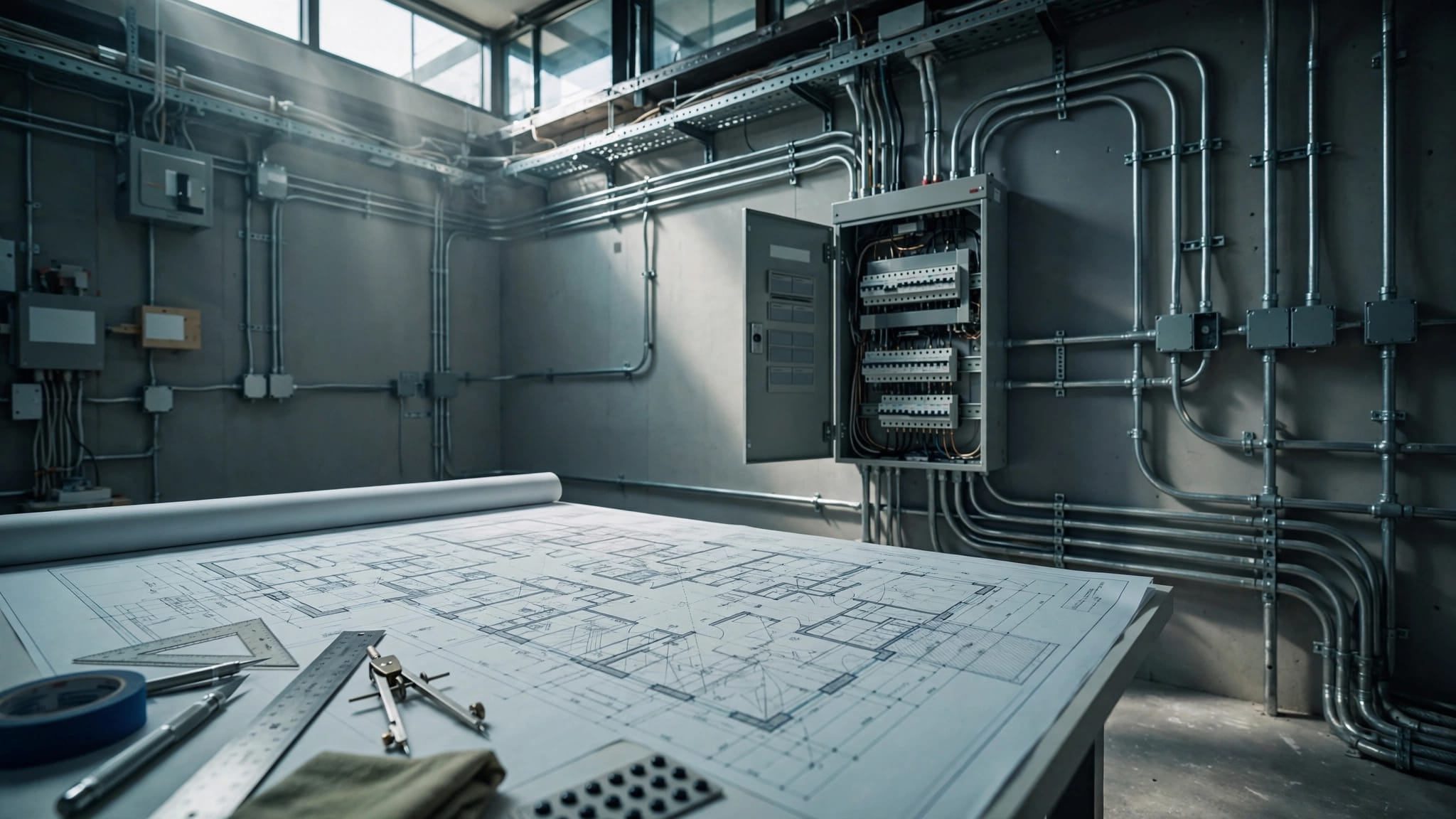

Why Your Breaker Trips at Night in Greater Boston

Contact Us
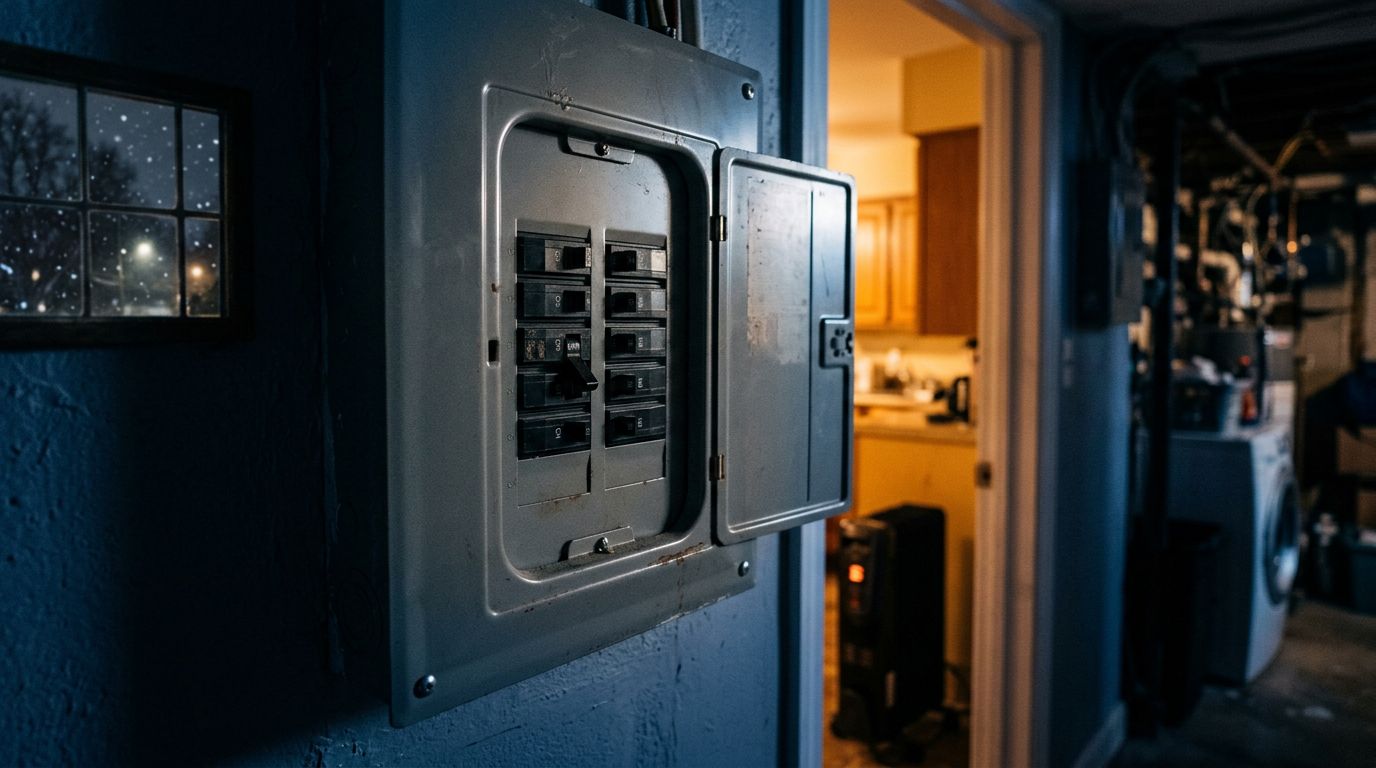
When your breaker trips at night , the clock usually isn't the cause. Evening routines can put several high-demand appliances on one circuit, while heat, moisture, a faulty device, or a worn breaker can turn a normal load into a trip.
That pattern deserves attention in a Greater Boston home with cold-weather electric heating, basement equipment, or seasonal appliances. A few safe observations can reveal whether the problem follows a particular load, but recurring trips need a licensed electrician. Start with the timing, then look for the pattern.
Why a breaker trips at night in Greater Boston homes
A circuit breaker responds to electrical current, not darkness. Nighttime changes what runs at the same time, including cooking equipment, a clothes dryer, dishwasher, electric heat, portable heaters, sump equipment, and chargers.
If those devices share a branch circuit, their combined demand can exceed the breaker's rating. A breaker may trip after several minutes because sustained overload creates heat inside the device. The trip protects the wiring from carrying more current than it can safely handle.
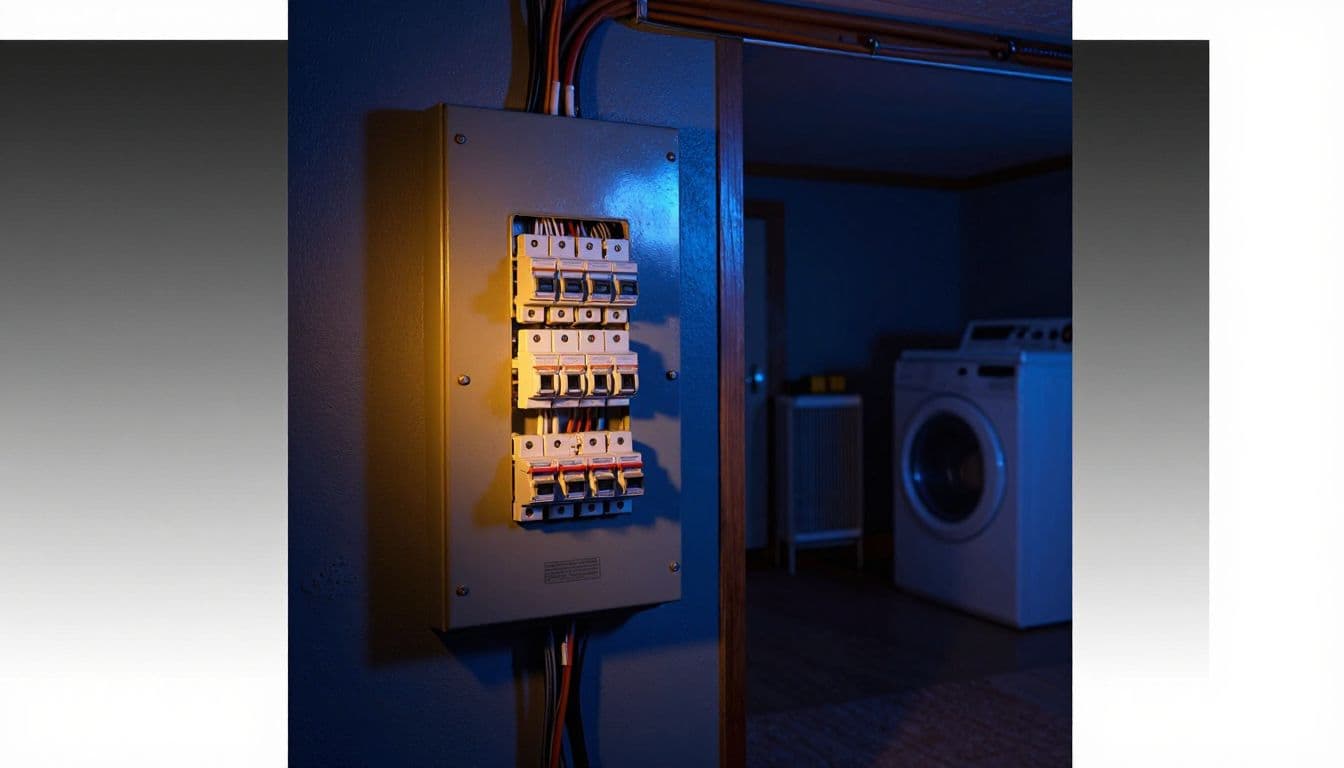
Multiple appliances create a combined load
The trip often happens when the last device starts, not when the first one turns on. For example, a heater may already be running when a dryer or microwave begins a cycle. That timing can make the breaker seem random, even though the load is predictable.
Seasonal use also changes demand. Winter heating, holiday lighting, window air conditioners, dehumidifiers, and basement freezers can add loads that weren't present a few months earlier. The appliances don't need to be defective for the circuit to trip.
Intermittent faults can appear after dark
Nighttime trips can come from a fault that appears as an appliance warms up, a motor cycles, or moisture affects a connection. A damaged cord, loose receptacle, short circuit, or hardwired appliance may trip the breaker even when the overall load seems modest.
Basement circuits deserve care because damp locations and motor-driven equipment can affect AFCI or GFCI protection. The clock may show when the fault occurs rather than cause it.
Common reasons a breaker trips at night
A nighttime trip is a symptom, not a diagnosis. The most useful clue is what happens after you remove portable loads and note which breaker moved.
An overloaded branch circuit
An overload is likely when the breaker trips only while several appliances operate together. A single 15- or 20-amp circuit may feed more outlets than you realize, especially if a basement or kitchen changed during a renovation.
Electric heaters, hair dryers, microwaves, toasters, dryers, and air conditioners draw substantial current. Two high-demand devices on the same branch circuit can push it beyond its safe limit, even when each appliance works normally by itself.
Don't solve an overload by installing a larger breaker. The breaker size must match the circuit wiring and equipment. A higher-amperage breaker can allow unsafe current through wiring that wasn't designed for it.
A faulty appliance, cord, or connection
If the breaker trips when one device starts, unplug that device and leave it out of service. Look only for visible damage, such as a blackened plug, melted plastic, frayed insulation, a crushed cord, or a hot receptacle. Don't touch a damaged or wet plug.
A refrigerator, sump pump, boiler control, washer, or other hardwired equipment can also cause a trip. Since you can't safely disconnect those components yourself, leave the circuit off and call an electrician if the pattern follows one device.
AFCI and GFCI protection can change the pattern
AFCI and GFCI devices protect against different problems, so their trips don't always look like a standard overload. Both can respond to conditions involving an appliance or wiring, not only to too many watts on a circuit.
AFCI breakers detect arc-fault conditions
An arc-fault circuit interrupter, or AFCI, monitors a circuit for electrical patterns associated with arcing. Damaged cords, loose connections, failing appliances, and some electronic loads can cause an AFCI breaker to trip. Some nuisance trips occur, but repeated trips still need attention.
Many AFCI breakers have a test button and an indicator that can help identify the trip condition. Follow the manufacturer's reset instructions only from outside the panel. If the breaker trips right away, won't reset, or fails its test, leave it off and arrange professional service.
GFCI protection reacts to current leakage
A ground-fault circuit interrupter, or GFCI, trips when current leaves its intended path. Moisture, a damaged appliance, or contact with a person can create that condition. Basements, laundry areas, bathrooms, kitchens, garages, and outdoor circuits often use GFCI protection.
One GFCI device can interrupt power to outlets farther along the same circuit. If a GFCI won't reset, unplug portable devices and check for visible moisture or damage. For more detail, see why a GFCI outlet will not reset. A recurring trip still calls for an electrician, not repeated button presses.
A safe checklist for tonight
You can gather useful information without opening the electrical panel or taking anything apart. Stop immediately if you see damage, smell burning, or feel heat.
- Identify the breaker that trips. Look at the closed panel door and note which handle moved to the middle or off position. Read the label if one exists. Don't remove the panel cover or flip several unidentified breakers to see what happens.
- Record what was running. Write down the time and appliances that were operating, such as electric heat, laundry equipment, cooking appliances, a dehumidifier, or a basement pump. Note whether the trip happened when one device started or after several had run together.
- Unplug portable loads only if it's safe. Use dry hands. Leave any plug, cord, outlet, or appliance that is hot, wet, loose, scorched, or damaged alone. Don't disconnect hardwired equipment or move a damaged plug.
- Reset the breaker once, after the load is off. Move the handle fully to OFF, then to ON, following the breaker's normal motion. If it trips again, leave it off. If it holds, restore portable loads one at a time and stop if the breaker trips.
Never remove the panel cover, bypass a breaker, wedge its handle in place, or replace it with a higher-amperage breaker. Repeatedly resetting a tripping breaker can leave an active fault energized and damage equipment.
If a breaker trips while portable loads are unplugged, the problem may be in fixed wiring, a hardwired appliance, or the breaker itself.
When recurring trips need a licensed electrician
A breaker that trips at night repeatedly, even after you remove obvious loads, needs more than observation. A licensed electrician can test the circuit, inspect connections, check the breaker, and measure whether the circuit matches the home's actual demand.
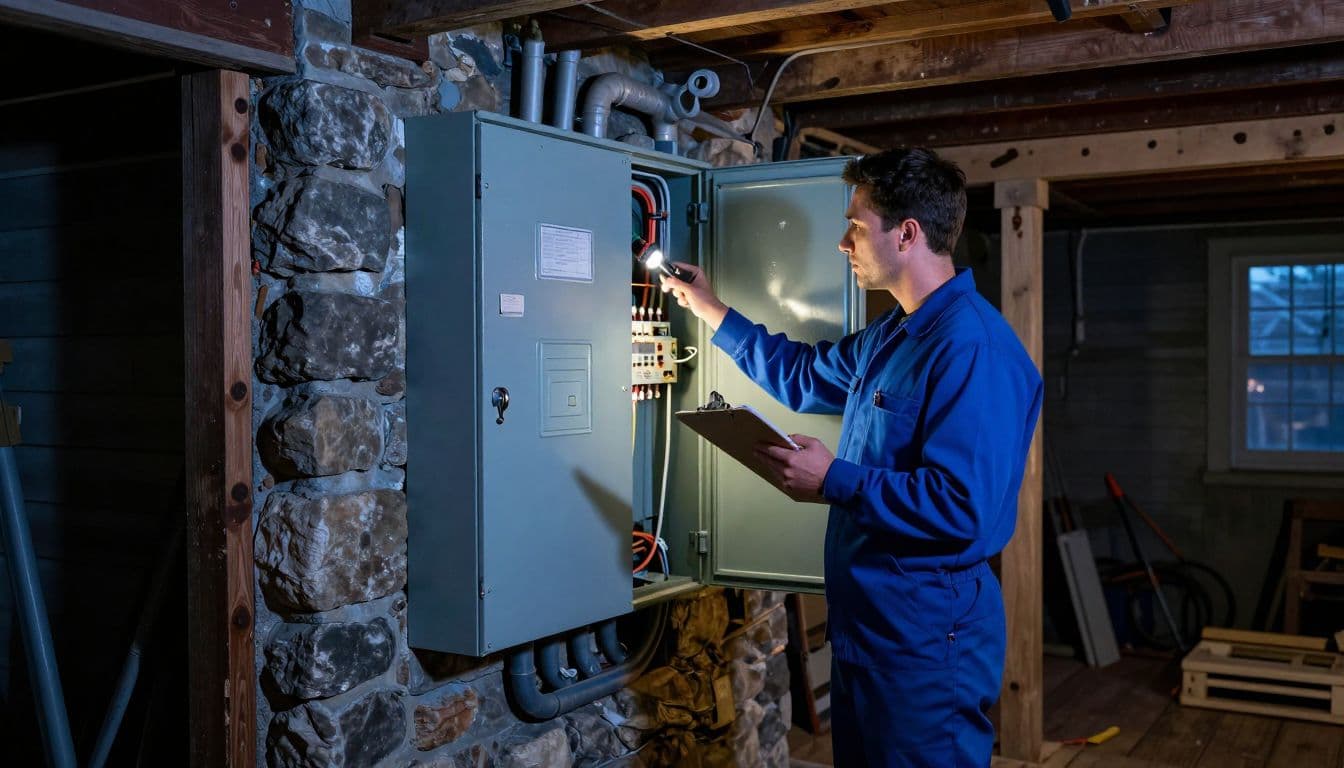
A light load can still hide a serious fault
If the breaker trips immediately, trips with almost nothing connected, or trips at different times without a clear load, overload isn't the only possibility. The cause may be a short circuit, damaged wiring, a loose connection, moisture intrusion, a faulty AFCI or GFCI device, or a breaker that no longer works correctly.
An electrician can separate those causes with testing. The repair may involve replacing a damaged device, correcting a connection, repairing wiring, changing a protective device, or redistributing loads. A panel upgrade may help when total demand exceeds available capacity, but it isn't a shortcut for one faulty circuit.
Older homes and basements add useful context
Greater Boston includes homes with many different ages, wiring systems, and renovation histories. In an older house, past additions may leave circuits difficult to identify. Older panels may have limited capacity, while basement moisture can affect equipment or protective devices. Age alone doesn't prove that a system is unsafe.
Cold weather can increase electric heating demand while residents use dryers, kitchen appliances, and portable heaters. In warmer seasons, window AC units, dehumidifiers, pool equipment, and freezers may change the load. If trips continue across seasons, schedule a professional electrical system inspection instead of guessing at the cause.
Emergency signs require immediate action
Some symptoms turn a nuisance trip into an immediate safety issue. Stop using the affected circuit and keep people away from the area if you notice:
- Smoke, sparks, or active arcing near an outlet, appliance, or panel.
- A burning odor, buzzing, crackling, or a breaker, outlet, switch, or cord that feels hot.
- Blackened outlets, melted plastic, scorch marks, visible damage, or exposed wiring.
- A shock or tingling sensation from an appliance, fixture, switch, or metal surface.
If there is a fire, smoke, active sparking, or another immediate danger, leave the area and call 911 or local emergency services from a safe location. Don't use water on an electrical fire, and don't open the panel to investigate. After the immediate danger is controlled, a licensed electrician should inspect the system before normal use resumes.
Conclusion
The reason a breaker trips at night is often simple: several appliances start or cycle together. Repeated trips, however, can point to an overloaded circuit, faulty appliance, wiring damage, AFCI or GFCI sensitivity, moisture, or a failing breaker.
Identify the breaker, record what was running, unplug only safe portable loads, and reset it once after the load is off. If it trips again, leave it off and call a licensed electrician. A nighttime pattern is useful evidence, not permission to keep resetting the breaker.