

EV Charger Load Management: When Does a Home Need It?

Contact Us
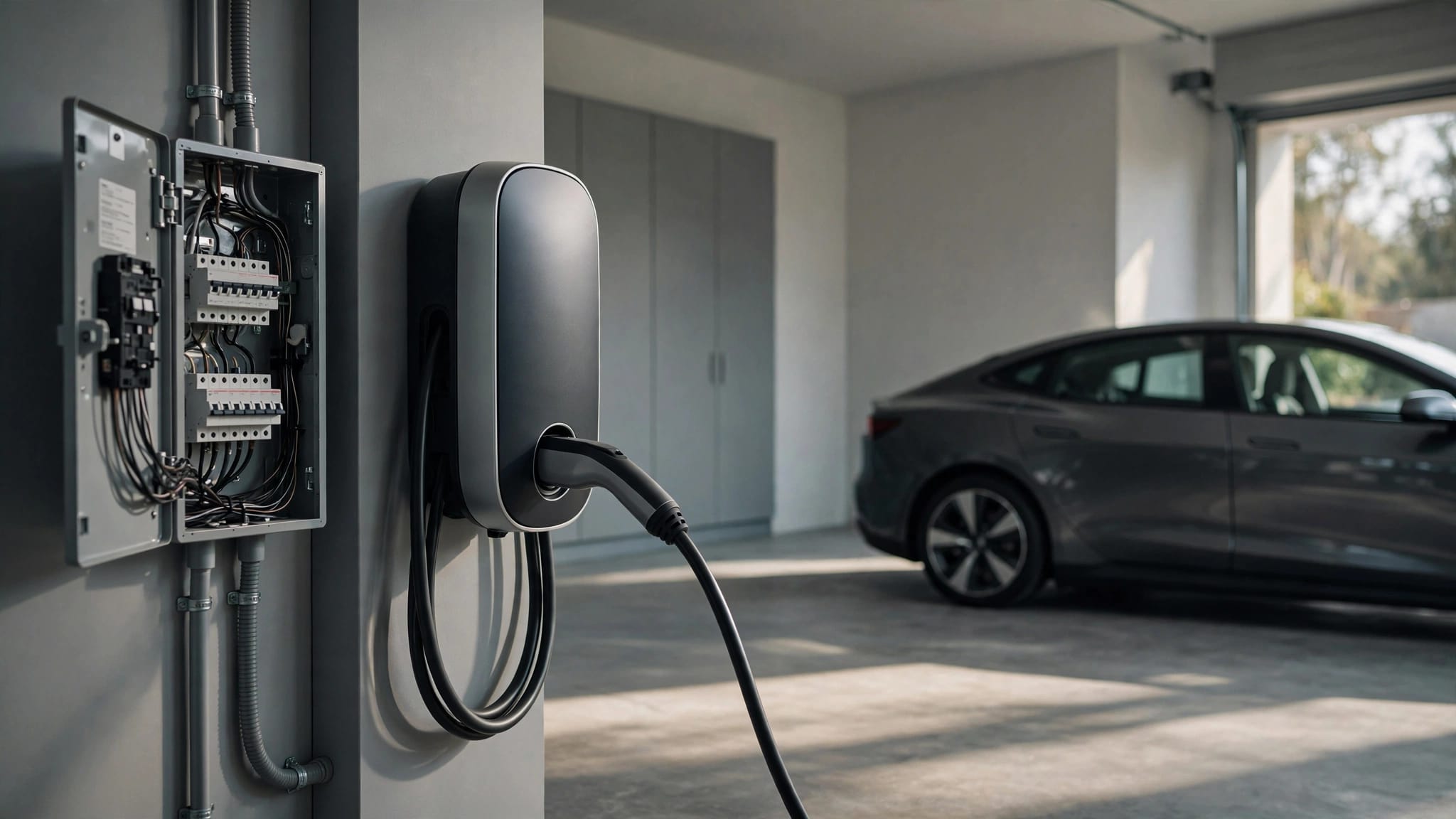
EV charger load management is an approach to fitting home charging within the electrical capacity a house has available. It can be useful when adding a charger would otherwise put too much demand on the service.
For some households, the existing service has enough capacity for charging without additional controls. Others may benefit from load management or need a service upgrade. The right answer starts with the home's electrical system and the way you plan to use your vehicle.
What EV Charger Load Management Does
Load management accounts for EV charging as part of the home's overall electrical demand. Its purpose is to make charging possible within the limits of the existing electrical system, where the system and the proposed installation are suitable.
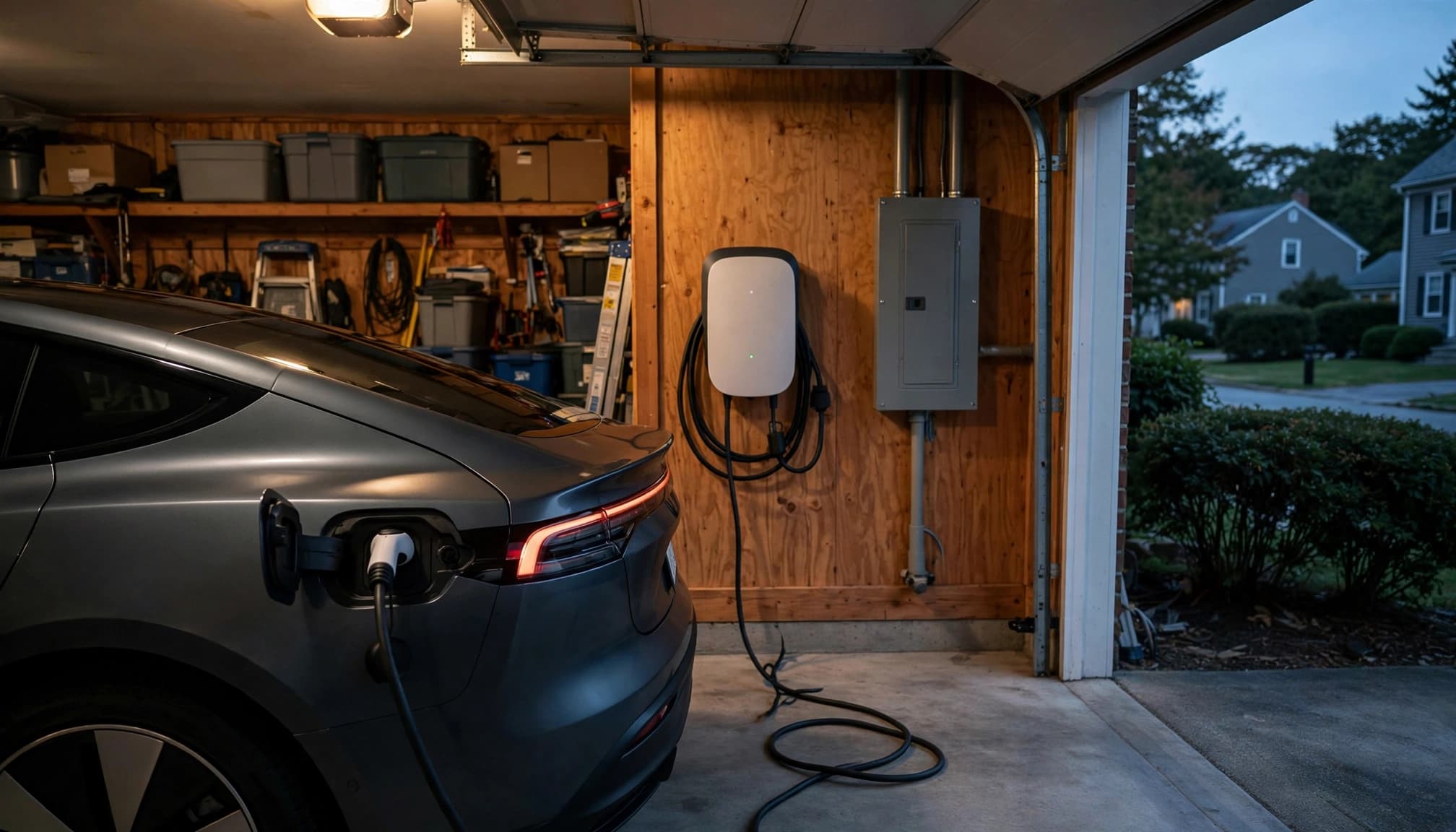
That matters because a charger doesn't operate in isolation. Your heat pump, electric range, water heater, and other equipment all draw from the same electrical service. Adding a charger can change the capacity picture, even if the rest of the system has worked well for years.
Load management doesn't increase the amount of electricity supplied to your home. It also doesn't repair an aging panel or make an undersized circuit suitable for a charger. An electrician has to evaluate those parts of the installation separately.
For a broader look at the project, our Greater Boston EV charger installation guide covers the home setup and installation process.
When Limited Panel Capacity Matters
A home may benefit from load management when its existing service has limited room for an additional charging load. However, the number printed on the panel doesn't answer that question by itself.
A 100-amp service can still be suitable
Some homes with 100-amp service have modest electrical demand and enough available capacity for an EV charger. A smaller home with gas-fired appliances, for example, may have a different capacity picture than an all-electric home with the same service rating.
The calculation also needs to account for proposed equipment. A home that has room for one charger today may need a different plan if the owner also intends to add electric heat or a major addition.
Open breaker spaces aren't the same as spare capacity
An unused breaker slot gives an electrician a possible place for a circuit. It doesn't establish that the panel, feeder, or service can carry the added load.
The reverse can also be true: a panel may need more circuit space even though the service has adequate capacity. In that case, the panel configuration and equipment condition affect the solution. Our comparison of main lug and main breaker panels explains how those configurations differ.
How Multiple EVs Change the Calculation
Two electric vehicles can change both the electrical design and the household's charging needs. The important details include how often each vehicle needs charging, how long each typically stays parked, and whether the household plans to install one charging point or more than one.
One charging point for two vehicles
Some households can use one charger for both vehicles. That approach may fit when the cars don't both need charging on the same night, or when one vehicle is parked at home for longer periods.
A shared charging point also means moving a vehicle or cable between charging sessions. That inconvenience may be acceptable for a household with predictable routines, but less practical when both drivers need their vehicles early each morning.
Separate charging points
Two charging points offer more flexibility, but they also add equipment and electrical demand to the project. The electrician must account for both chargers in the design rather than assuming the second one can be added later without changes.
Load management may be worth considering when a household wants two charging points but has limited service capacity. A larger service may be a better fit if the home also has substantial electrical additions planned.
Other Large Loads Affect the Decision
EV charging is only one part of the electrical load. In a Massachusetts home, heating and cooling equipment can make a substantial difference, particularly during periods of extreme weather.
An electric range, water heater, dryer, hot tub, or workshop equipment can also affect the calculation. A home with a heat pump and electric cooking equipment may have less room for a charger than a similarly sized home with gas-fired appliances.
Seasonal use matters too. A capacity review based only on a mild day may miss the demands of electric heating in cold weather or air conditioning during a summer heat wave.
Tell the electrician about equipment you expect to add, as well as equipment already installed. A planned kitchen renovation or heat pump can affect whether an installation that fits today remains practical. When a home has several large loads, an electrician may calculate total demand before recommending permanent changes. Our guide to how heavy loads affect circuit breakers covers related warning signs.
The Main Choices for Adding Home Charging
A capacity review can lead to several different project plans. The right choice depends on the equipment already in place and how much charging the household needs.
| Approach | When it may fit | Main consideration |
|---|---|---|
| Add a charger using existing capacity | The calculated load leaves sufficient room | The charger still needs an appropriate circuit and installation |
| Consider load management | Existing capacity is limited, but the home's system is suitable | Charging needs must fit the proposed solution |
| Upgrade electrical service | The home needs more capacity for charging or other planned loads | The work can extend beyond replacing the panel |
The table compares project approaches, not guarantees. An electrician's review may also identify a need to replace damaged equipment or change a panel configuration.
A lower-power charging setup may be another option when it meets the driver's routine and the electrical design supports it. Faster charging can be convenient, but it isn't automatically necessary for every household.
Load Management vs. an Electrical Service Upgrade
The distinction is capacity. Load management addresses how EV charging fits within an existing electrical system. A service upgrade changes how much electricity the home can receive.
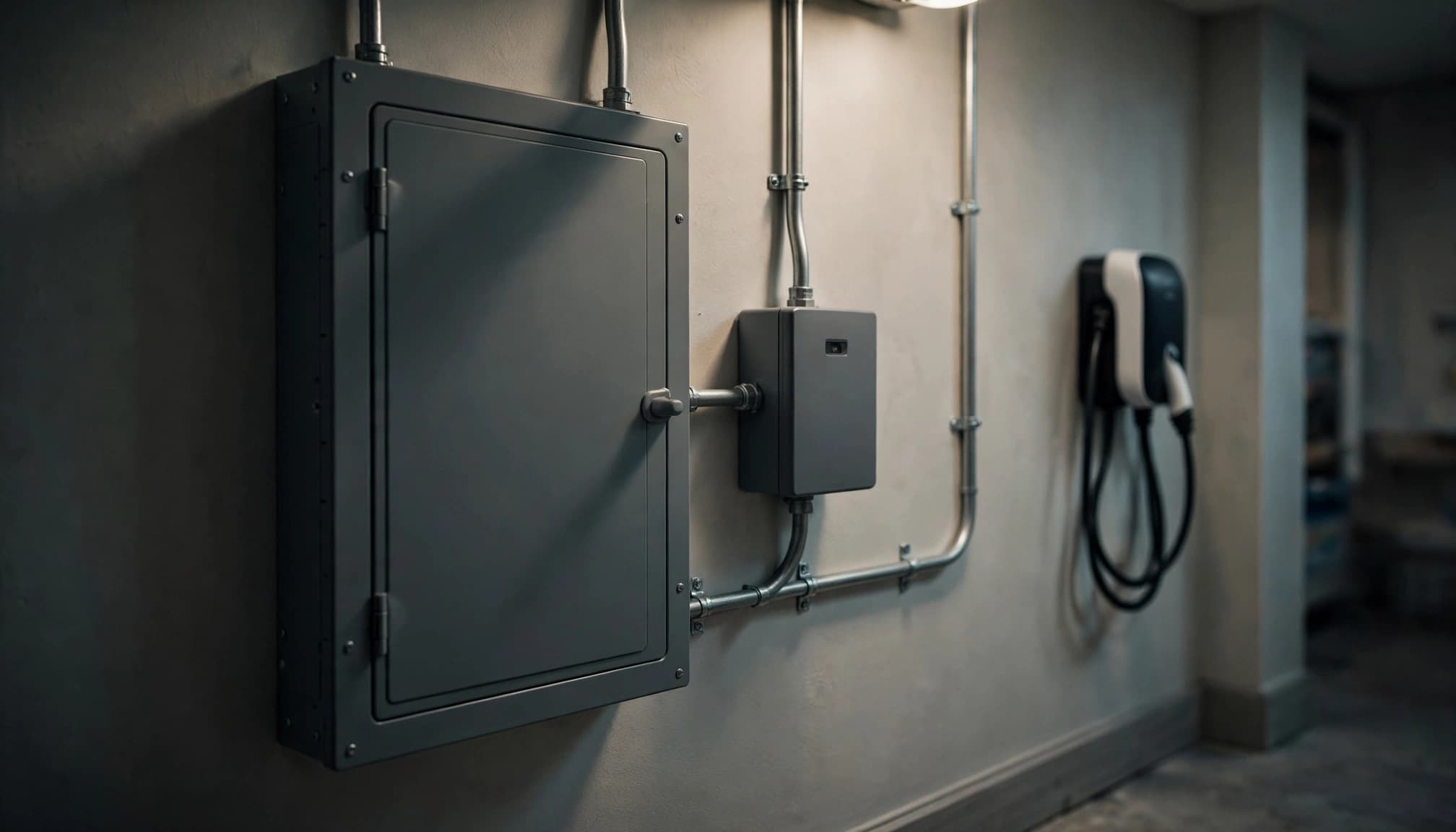
What a service upgrade can involve
Moving from 100-amp to 200-amp service may involve a new panel, larger service conductors, meter equipment, and grounding or bonding work. Some projects also require changes to the service entrance or coordination with the electric utility.
The work depends on the existing installation. A new panel alone doesn't necessarily increase service capacity if the conductors and other equipment supplying it remain unchanged. Our guide to Greater Boston panel replacement and service upgrades explains the difference in more detail.
When a larger service may make sense
A service upgrade can be a better long-term choice when the household plans several substantial electrical additions. Multiple EVs, electric heating, a renovated kitchen, and an addition can add up to a different capacity need than one charger alone.
A 200-amp service isn't automatically necessary, though. The load calculation and condition of the equipment should guide the decision.
What an Electrician Looks at Before Recommending a Solution
A useful assessment covers more than the panel label. The electrician reviews the service rating, panel and feeder, existing circuits, and major electrical equipment. The proposed charger and any planned renovations belong in that review too.
The load calculation
A residential load calculation gives the electrician a way to assess the home's electrical demand under the applicable requirements. Equipment details matter, including the home's heating system, cooking equipment, and proposed charging installation.
The calculation helps identify whether there is room for the project and whether load management is a suitable option. It doesn't replace an inspection of the physical electrical system.
Equipment condition and installation route
A panel with adequate capacity may still have corrosion, damaged components, or other problems that need attention. Similarly, the route between the panel and parking area affects the installation work.
A charger may require a new circuit, and the available space for that circuit is a separate consideration from service capacity. The electrician also accounts for the equipment supplying the panel and the requirements for the proposed installation.
Factors That Affect Whether Load Management Fits
A solution should support the way your household uses its vehicles. If both drivers regularly return home with low batteries and leave early, charging needs may differ from those of a household with one vehicle parked at home for long stretches.
Future plans matter as well. Load management may be a reasonable choice for a home adding one charger, while a household planning several electrical upgrades may prefer the additional capacity of a service upgrade.
The existing equipment's condition can settle the decision. Load management doesn't correct corrosion, heat damage, or unsuitable wiring. Those issues need their own repair or replacement plan.
For a condominium, the review may extend beyond the panel inside the unit. Feeders, meter equipment, and building distribution equipment can be shared. Work involving those components may require association approval and review by the local authority having jurisdiction.
Planning the Project Around Your Home
Before choosing a charger, consider how many vehicles the household uses and when they are normally parked. Include expected changes, such as a second EV or a planned heat pump, in the conversation with your electrician.
An installation estimate should describe the work being proposed. Depending on the home, that can include a charger circuit, changes to electrical equipment, permits, inspection, or utility coordination. The scope helps you understand whether an estimate covers the same work as another proposal.
Don't remove a panel cover or handle internal wiring yourself. Service conductors can remain energized even when individual breakers are off. If you see smoke, sparks, or signs of active overheating, move away from the equipment and seek emergency help.
Choose the Capacity Plan That Fits
EV charger load management can give some households a way to add charging within their existing electrical capacity. Other homes have enough room without it, while some benefit from a larger service.
The best decision starts with a complete load assessment and a look at the condition of the equipment. At Sirois Electric, we install EV chargers for homes in Greater Boston and can help you understand what your electrical system needs for the project.