
Massachusetts Electrical Requirements for Steam Showers

Contact Us
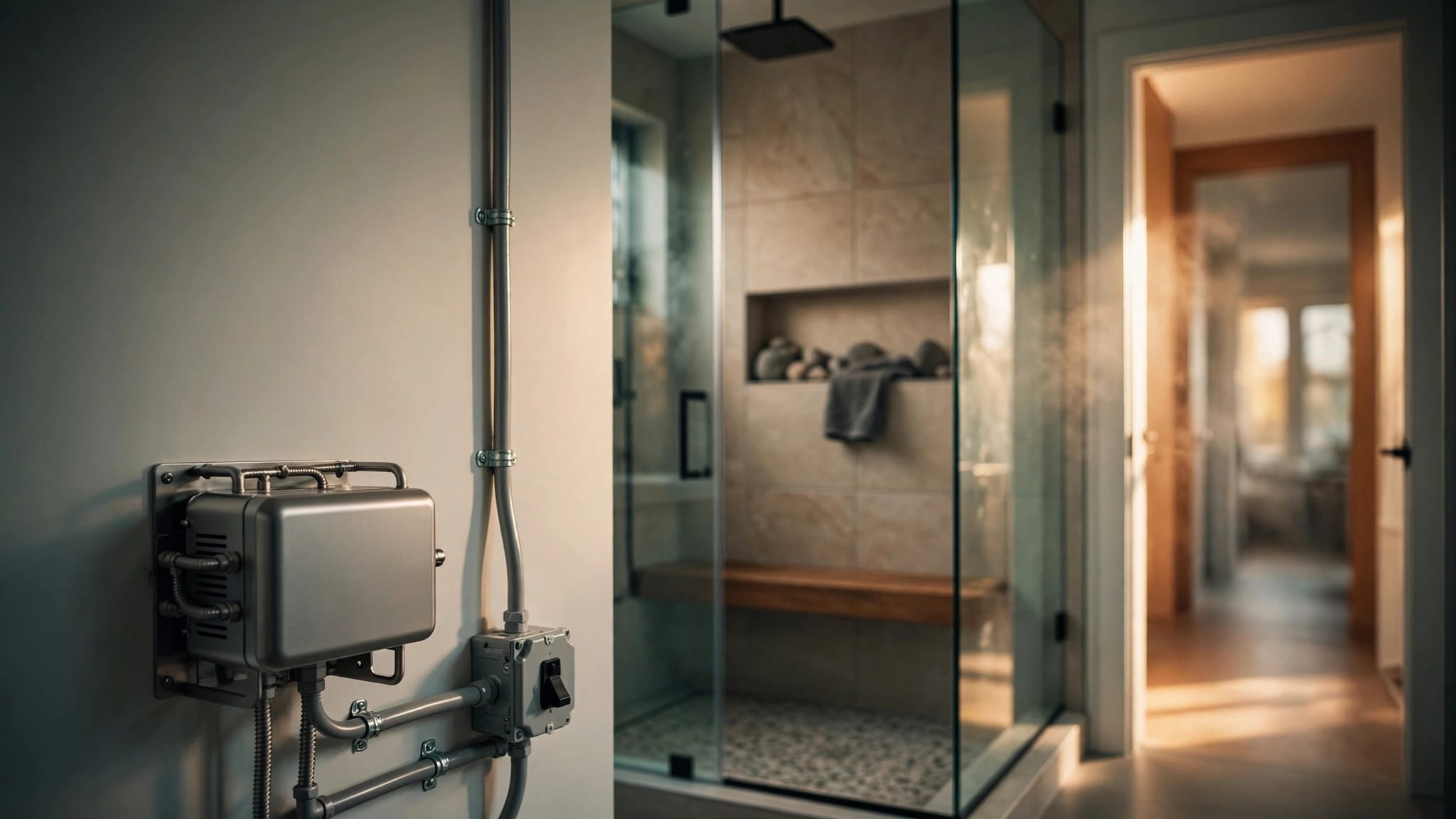
Massachusetts steam shower electrical requirements depend on the generator's specifications, the applicable state code, and the conditions in your bathroom. The circuit, breaker, wiring, and disconnect must suit the specific equipment , not a generic steam shower plan.
For permits granted after April 24, 2026, Massachusetts uses the 2026 Massachusetts Electrical Code, including state amendments. A licensed electrician can use the generator's nameplate and instructions to plan the installation before walls and tile go in.
Key Takeaways
- Massachusetts electrical installations follow 527 CMR 12.00, which incorporates the National Electrical Code with state amendments.
- Generator models can have different voltage, circuit, conductor, and GFCI instructions. There is no single breaker size for every steam shower.
- The electrical plan needs to address service capacity, a suitable disconnecting means, grounding, bonding, and the equipment's location.
- The local authority having jurisdiction, or AHJ, administers permits and inspections. Its procedures can vary by municipality.
Which Massachusetts Electrical Code Applies?
The Massachusetts Electrical Code is published as 527 CMR 12.00. Its 2026 edition is based on NFPA 70, the National Electrical Code (NEC), with Massachusetts amendments.
The code addresses electrical installations, including branch circuits, equipment connections, grounding, wiring methods, and working space. The state amendments matter because the NEC book alone doesn't contain the complete Massachusetts rules.
The permit date matters
The 2026 Massachusetts code took effect April 24, 2026. Its transition rule applies to installations for which a permit was granted after that date. Work permitted earlier may fall under the previous code cycle.
For a project that crosses a code change, the electrical permit date is more useful than the date you selected the shower or started demolition. Your electrician and the local inspector can address the applicable edition as part of the permit process.
State rules and local review have different roles
Massachusetts sets the statewide electrical framework. The local AHJ, often the municipal wiring inspector or building department, administers permits and inspections.
Towns can have different application forms, documentation requirements, and inspection schedules. However, local procedure doesn't replace the state electrical code or the generator's installation instructions.
Electrical Permits for a Steam Shower Project
Adding a generator often involves a new circuit or changes to existing wiring. That work commonly requires an electrical permit and inspection. A larger bathroom renovation may also involve separate building and plumbing approvals.
The electrician should handle the electrical scope as permitted work and coordinate inspection timing with the other trades. Rough electrical work may need inspection before walls are closed. A final inspection can then cover the completed electrical installation.
A building permit for the bathroom shouldn't be assumed to cover the electrical work. In a condo, the route to the generator may also pass through common areas or depend on a shared electrical system. Our guide to Massachusetts condo renovation electrical requirements covers those planning concerns.
Keep the permit and inspection records with the generator's manual. They provide a useful record when the equipment needs service or the property changes hands.
Start With the Generator's Nameplate and Manual
A steam generator heats water electrically, but its power requirements vary by model. Before designing the circuit, the electrician needs the equipment nameplate and installation instructions for the exact unit.
The nameplate identifies electrical characteristics such as voltage and load. The manual may add requirements for the circuit, overcurrent protection, conductor type, grounding connection, and installation clearances.
For example, the Steamist TSG/SMP manual covers models 20, 24, and 30. Depending on the model, it specifies 208- or 240-volt connections, 90°C copper conductors, and breaker or fuse sizing from the manufacturer's equipment chart.
Those details don't establish the wiring for a different Steamist product or another brand. A generator's control panel also doesn't necessarily use the same voltage or wiring method as the heater supply.
The selected model drives the design. If the generator changes after rough wiring begins, the original circuit may no longer be suitable.
The same equipment-specific approach applies to other electric heating appliances, as our guide to Massachusetts electric water heater wiring requirements explains.
How to Size the Circuit and Breaker
The generator's circuit must provide the correct voltage and carry its electrical load. Its breaker or fuse must also provide the overcurrent protection required for the equipment and wiring.
Use the rated load, not the bathroom size
A larger shower may need a larger steam generator, but room dimensions don't determine breaker size directly. The electrician starts with the selected generator's electrical ratings and instructions.
For a single-phase load, watts divided by volts gives the current in amps. That calculation can help explain the load, but it doesn't replace the manufacturer's circuit and protection requirements. The design may also need to account for code rules that apply to the load and installation.
A dedicated circuit keeps the generator's supply separate when the product instructions require one. Kohler's generator installation guide, for example, calls for a dedicated breaker and a 240-volt AC connection for the equipment it describes.
Match the conductors and overcurrent protection
Breaker size and wire size are related, but they aren't interchangeable. Conductor ampacity depends on the wiring material, insulation, installation conditions, applicable code adjustments, and equipment terminals.
For example, Steamist specifies 90°C copper conductors in the TSG/SMP manual. That insulation rating alone doesn't mean every termination can be sized using a 90°C ampacity value. The electrician must account for the full installation.
A replacement breaker with a higher rating isn't a shortcut for an undersized circuit. Changing the protection without addressing the wiring and equipment can leave the installation unsafe.
Provide a Suitable Disconnecting Means
A disconnect gives a qualified person a way to isolate the generator's electrical supply for servicing. The required arrangement depends on the applicable code, the equipment, and its location.
The disconnect must be properly rated and installed where it can be used without creating a hazard. Depending on the installation, the electrical plan may use a qualifying breaker or a separate disconnect. The generator's instructions may also specify a disconnect arrangement.
A wall control that starts or stops steam isn't automatically a service disconnect. Controls may switch the equipment electronically while parts of the generator remain energized.
Plan the disconnect before finishing the surrounding space. Cabinets, stored items, or a relocated generator can otherwise make access difficult. The electrician will account for the equipment's service access and the applicable disconnect rules rather than relying on the shower control.
Grounding and Bonding Protect the Installation
Grounding and bonding provide a fault-current path and connect metal parts as required by the electrical system and equipment design. They're especially important where electrical equipment and plumbing are close together.
The generator's instructions identify its grounding connection. The Steamist TSG/SMP manual, for example, calls for an equipment-grounding conductor connected to the generator's grounding lug.
The electrician must also account for the equipment enclosure, wiring method, and any bonding required by the applicable code. Plumbing connections and nearby metal components are part of the installation review, but a pipe connection alone shouldn't be assumed to provide the required electrical bonding.
The equipment-grounding conductor is different from a neutral conductor. One shouldn't be substituted for the other to make an existing cable work.
If an older circuit lacks the conductors needed for the selected generator, reusing it may not be practical. The condition of the panel and grounding system can also affect the scope of the project.
Where Can the Steam Generator Go?
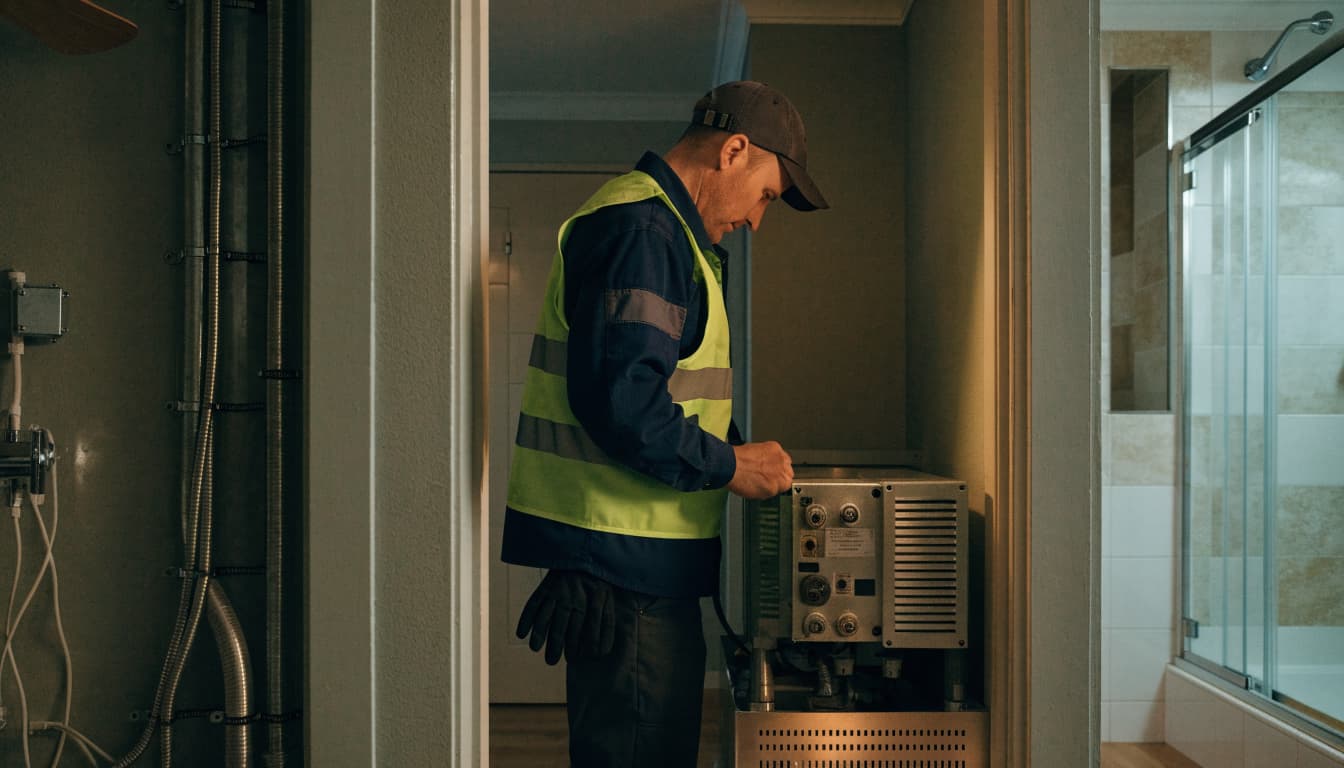
Many generators are installed outside the shower enclosure in an accessible service space. The exact location must suit the model's instructions, the electrical installation, and the plumbing layout.
A nearby closet may shorten some connections, but proximity to the shower isn't the only consideration. The unit needs a suitable environment and enough room for installation and maintenance.
Leave the manufacturer's required clearance
The Kohler guide calls for a 12-inch air gap on all sides of the generator covered by that guide. Another product may have different clearance instructions, so that dimension shouldn't be applied to every unit.
The space also needs to accommodate water piping, drainage, electrical connections, and access to the equipment. A decorative panel or tightly packed cabinet can make future service difficult.
Coordinate the wiring route with other trades
The electrician and plumber need a plan before framing, cabinets, and tile are complete. The electrical route must use wiring methods suitable for the conditions and protect the wiring from physical damage where required.
Junction boxes and equipment connections must remain accessible as required by code. Generator instructions may also limit control cable routes or require separation between control wiring and power wiring.
A location that looks convenient on a bathroom drawing may fail once the steam line, drain, and electrical access are added. Planning those routes together can prevent finished surfaces from being opened.
Coordinate GFCI and Bathroom Wet-Location Rules
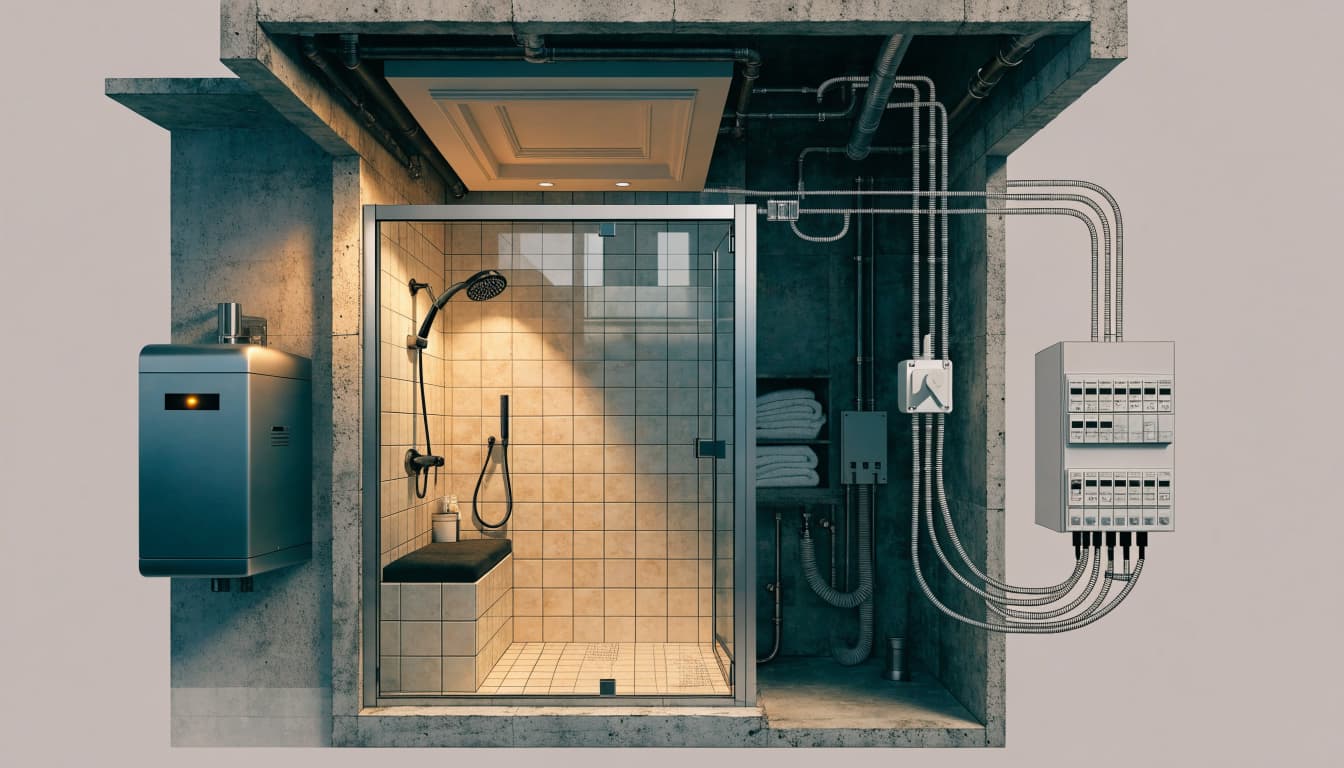
Bathroom electrical work involves more than the generator. Receptacles, lighting, switches, controls, and their locations need review under the applicable bathroom and wet-location provisions.
The illustration shows the relationship between the shower, generator, and electrical supply. It isn't a layout for a particular property.
GFCI instructions differ by model
Ground-fault circuit-interrupter, or GFCI, protection responds to certain current leaks that can create a shock hazard. Whether it applies to a generator circuit depends on the adopted code and the installation.
Product instructions differ. The Steamist TSG/SMP manual says not to use a GFCI-type breaker, while the ZA218 manual calls for a 30-amp, 120-volt GFCI-protected circuit.
A manufacturer's instruction isn't an exemption from the electrical code. If instructions and an applicable code requirement appear to conflict, the electrician needs to address the issue with the AHJ and manufacturer before installation.
Review the rest of the bathroom separately
Rules for bathroom receptacles don't automatically answer where a hardwired generator or disconnect may go. Likewise, an approved generator location doesn't establish that a nearby light, switch, or outlet is suitable for its location.
Steam and moisture can affect equipment outside the enclosure too. The electrician must select equipment and wiring appropriate for their actual conditions and follow the manufacturer's limits for controls used in or near the shower.
Include the Generator in the Home's Load Calculation
A new steam generator can add a substantial electric heating load. An empty breaker space doesn't establish that the panel, feeder, or electrical service has enough capacity for it.
A licensed electrician can calculate the property's load and review the existing equipment. Other planned changes, such as an electric water heater or EV charger, belong in that calculation when they're part of the project.
Panel access matters as well. Our guide to electrical panel clearance in Greater Boston homes explains the need to keep working space clear. A generator or its plumbing shouldn't be placed where it interferes with required electrical equipment access.
Plan the Electrical Work Before the Bathroom Is Finished
A Massachusetts steam shower needs a circuit and protection selected for the actual generator, along with proper grounding, a suitable disconnect, and a location that meets the equipment instructions. The permit date and state amendments determine which code framework applies.
At Sirois Electric, we provide electrical installation and repair services in Greater Boston. Contact us before the bathroom is finished so we can review the electrical scope and coordinate the work.