

How Much Does a Dedicated Circuit Cost in Greater Boston?

Contact Us
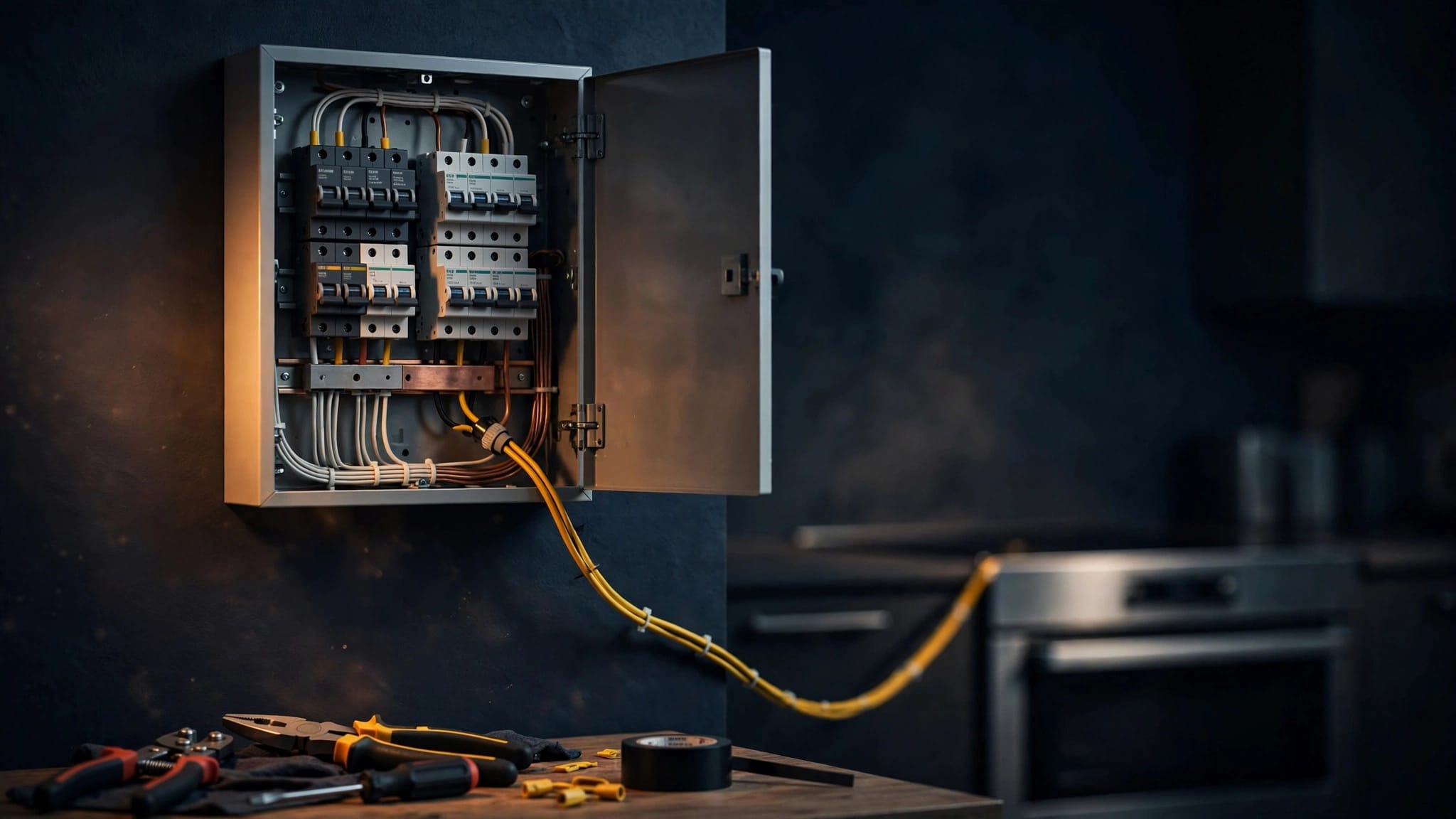
A new appliance can turn a routine installation into an electrical project when the existing wiring can't support it safely. If you're budgeting for one, dedicated circuit cost in Greater Boston can range from several hundred dollars to several thousand, depending on the equipment and the path back to the panel.
A published price range is a starting point, not a quote for your property. The wiring route often matters as much as the circuit's amperage. Here's how to judge the numbers before you hire an electrician.
What drives dedicated circuit cost in Greater Boston?
A dedicated circuit supplies a particular load through its own breaker and wiring. The right design depends on the equipment's instructions, the panel, and the applicable electrical code. Adding an outlet to an existing circuit isn't the same job.
Planning ranges for common installations
Published prices give a useful first look, provided you check what each one includes.
| Circuit and published estimate | Planning range | Stated scope or limitation |
|---|---|---|
| New dedicated circuit in a Boston pricing guide | $550 to $1,400 | General estimate; site conditions determine the final price |
| New 15- or 20-amp circuit from McFarlane Electric | $750 to $1,200 | Unfinished basement or other clear wiring path |
| Washer, disposal, or microwave circuit from McFarlane Electric | $850 to $1,500 | Appliance-specific published estimate |
| 240-volt range or dryer circuit from McFarlane Electric | $1,500 to $2,500 | Routing assumptions aren't detailed in the published price |
The figures come from EvenQuote's Boston electrician cost guide and McFarlane Electric's published pricing. They are estimates, not guaranteed Greater Boston quotes . A contractor may also define "installation" differently, so compare the included work before comparing totals.
Higher-amperage circuits need a closer look
A 240-volt dryer, range, or EV charger may need different wiring, breakers, and connection hardware than a 120-volt appliance. A longer route can increase both material costs and installation time. Amperage alone, however, can't tell you the price.
For a 50-amp EV circuit, one Boston permit and cost guide estimates $1,500 to $3,000. A statewide electrical cost guide lists $400 to $900 for a straightforward garage run from the panel to an outlet. Those figures describe different locations and stated scopes. Neither establishes what a charger installation at your property will cost.
How circuit length and access change the quote
The electrician must get cable or conduit from the panel to the equipment along a safe, code-compliant path. That path is rarely a straight line on a floor plan.
A clear basement route usually costs less
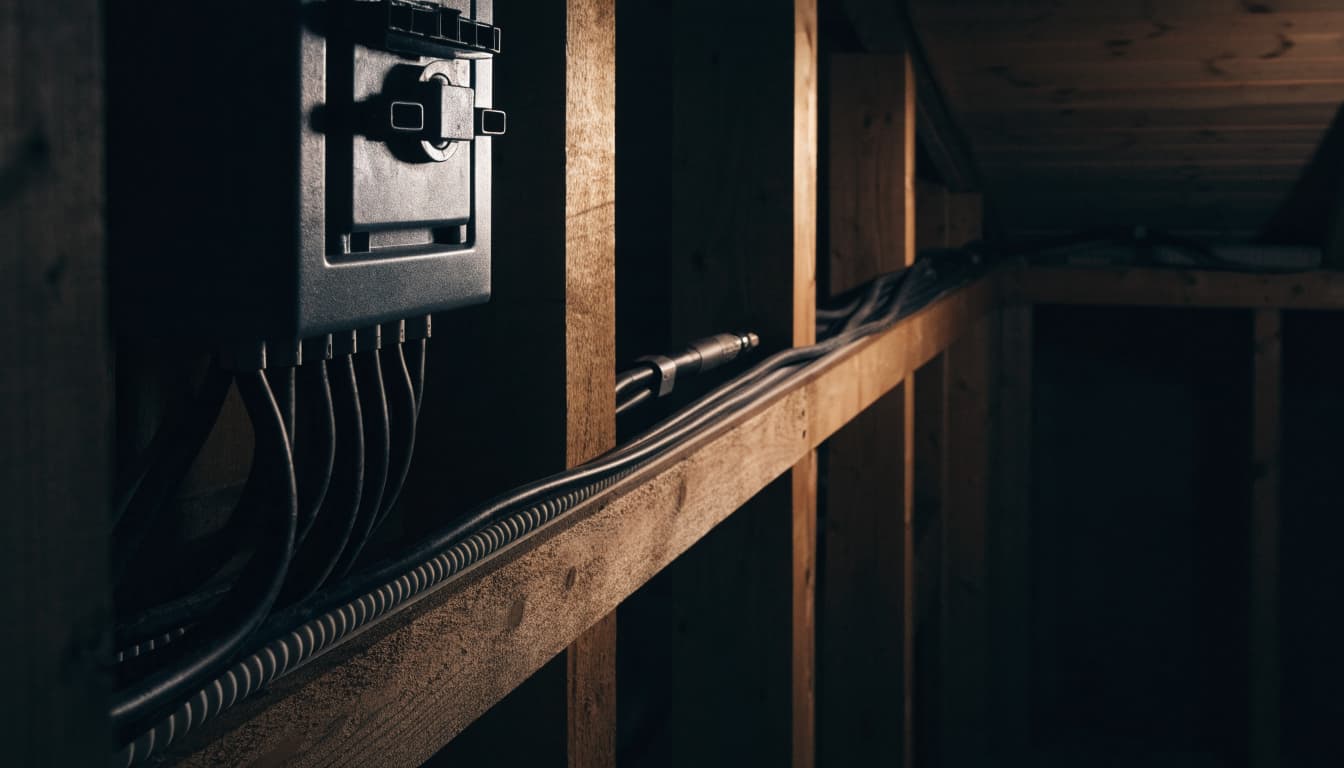
In an unfinished basement, an electrician may be able to see the framing and reach much of the route. A nearby appliance also uses less cable than equipment across the house. These conditions help explain why published estimates for a simple 15- or 20-amp run can be lower.
Distance isn't the only measurement. The route may have to turn around framing, pass through a floor, or reach an exterior wall. The electrician must also account for how the wiring will be supported and protected. Ask where the proposed circuit will travel, rather than relying on the distance between two rooms.
Finished spaces add labor and repair questions
Finished ceilings, tile, cabinetry, and insulated walls can make a short run difficult. Opening a wall may be necessary to route and secure wiring. If it is, clarify who pays for patching and painting; those services may sit outside an electrical quote.
Older properties can reveal damaged wiring or inaccessible junction boxes once work begins. In a condo or commercial space, access to a shared panel room or finished ceiling may need coordination. Larger wiring problems deserve their own assessment, rather than being folded into a simple circuit estimate. For context, see rewiring costs for older Greater Boston homes.
When the panel changes the scope
An accessible panel with suitable breaker space can make a new circuit simpler. Still, an empty space doesn't prove the electrical system can support another load.
Breaker space and electrical capacity are different
An electrician should check the panel's condition, compatible breakers, existing loads, and available service capacity. A 100-amp service may have room for a new appliance in one home and little spare capacity in another.
A subpanel can provide more circuit spaces, but it doesn't increase the capacity of the service feeding the property. If the existing equipment needs work, ask whether the proposal calls for breaker panel installation and replacement, a new circuit, or both. A service upgrade is a separate project with a different price; Greater Boston service upgrade costs provide a useful comparison.
Existing wiring and protection affect materials
The appliance's nameplate and installation instructions help determine the circuit rating and connection. Location matters, too. A garage outlet, kitchen appliance, and outdoor installation can have different requirements for receptacles, grounding, and protective devices.
An electrician may also find corrosion, improper breaker substitutions, or wiring that needs correction before the new circuit can be connected safely. These conditions aren't visible in an online estimate. If a breaker trips repeatedly, the panel feels hot, or you notice a burning smell, arrange an inspection before adding another load. Don't use an extension cord as a substitute for a properly designed circuit.
Labor is more than time spent pulling wire
Boston electrician benchmarks published by ConsumerAffairs put hourly labor at about $55 to $115, with dispatch fees commonly around $100 to $200. A dispatch fee may cover the first hour. These are market benchmarks, not Sirois Electric rates or a formula for your final bill.
On a short run, the electrician still needs to assess the load, select suitable materials, install the breaker and wiring, make connections, and test the result. More difficult work takes longer: fishing cable through finished walls, working around occupied rooms, or arranging access to a commercial electrical room.
For a business, scheduling can affect the proposal as well. Work in a restaurant, retail store, or office may need to avoid operating hours or coordinate a shutdown. Ask whether the price includes that scheduling and any return visit for inspection. The hourly figure alone won't show those costs.
Permits and inspections in Boston-area communities
Massachusetts sets the electrical code, while local authorities administer permits and inspections. For permits granted after April 24, 2026, the applicable statewide electrical code is 527 CMR 12.00 under the updated rules. The local wiring inspector determines the process for the property and reviews the completed work.
Boston's fee schedule is only one part of the bill
Boston lists a $20 electrical permit application fee. Its electrical permit fee schedule also uses scope-dependent charges, including $0.25 per amp for certain service additions or upgrades up to 240 volts, $1 per fixture, plug, or outlet when there's no service change, or $10 per $1,000 of estimated cost when neither method applies.
The $20 application fee isn't the total installed cost, and it shouldn't be treated as the full permit charge. Burlington, Cambridge, and other Greater Boston communities have their own schedules and procedures. Confirm the fee and required inspections with the municipality before work starts.
Ask who handles approval
Adding a circuit commonly calls for an electrical permit and inspection. A separate building or renovation permit doesn't automatically cover electrical work. Confirm who will apply, who will request inspections, and whether wiring must remain visible for a rough inspection.
Sirois Electric's guidance on Massachusetts electrical permit requirements explains why permit planning belongs in the project scope. Its 2026 Massachusetts electrical code updates also cover the timing of the newer rules.
How to get a useful onsite estimate
Photos of the appliance location and panel can help an electrician prepare, but they may not show the route between them. An onsite assessment is especially useful when the panel is crowded, the path crosses finished rooms, or the property has older or shared wiring.
Describe the equipment and location
Provide the appliance make and model if you have them, along with its installation instructions. Tell the electrician whether the equipment will be indoors or outdoors, and point out any future electrical work you already plan. Replacing an appliance doesn't always mean its old circuit will suit the new model.
If you manage a business, identify access restrictions and hours when power can be interrupted. The electrician can then evaluate the load, panel, connection method, and practical route before giving a firm proposal.
Compare what each price covers
A written estimate should identify the proposed circuit, wiring route, breaker, receptacle or connection, and any panel work. It should also say whether permit fees, inspection coordination, wall repair, and equipment such as an EV charger are included.
For example, a low price for wiring to a garage outlet may leave out charger mounting or a panel change. Another proposal may include both. Ask how unexpected wiring problems will be priced if the electrician finds them after opening a wall. Comparable scopes make dedicated circuit cost estimates far more useful than competing totals alone.
Key takeaways
- Published estimates for a straightforward 15- or 20-amp installation often sit in the hundreds to low thousands; more involved 240-volt work can cost more.
- Circuit length matters, but finished surfaces, panel access, and existing wiring can change the labor more than distance alone.
- Permit fees and inspection procedures vary by municipality. Check what the electrician's quote includes.
- Get an onsite assessment when capacity, routing, or wiring condition is uncertain.
Frequently asked questions
Does every large appliance need its own circuit?
Not every appliance needs one simply because it's large. Its electrical requirements, the intended location, and code rules determine the design. Check the manufacturer's instructions and have a licensed electrician review the existing wiring before assuming an available outlet is suitable.
Can an electrician quote a circuit without visiting?
An electrician may offer a planning range using photos and equipment details. A firm quote is harder when the wiring path is hidden or the panel hasn't been inspected. An onsite visit lets the electrician check access, capacity, and conditions that can change the scope.
Conclusion
The lowest published price can be tempting when you need a new appliance connected. But the actual route and panel condition determine what that number means for your property.
Use local ranges to set a budget, then ask a Massachusetts-licensed electrician to assess the site and provide a written scope. That gives you a price you can compare and a circuit suited to the equipment it will serve.