
Laundry Room Electrical Requirements in Massachusetts

Contact Us
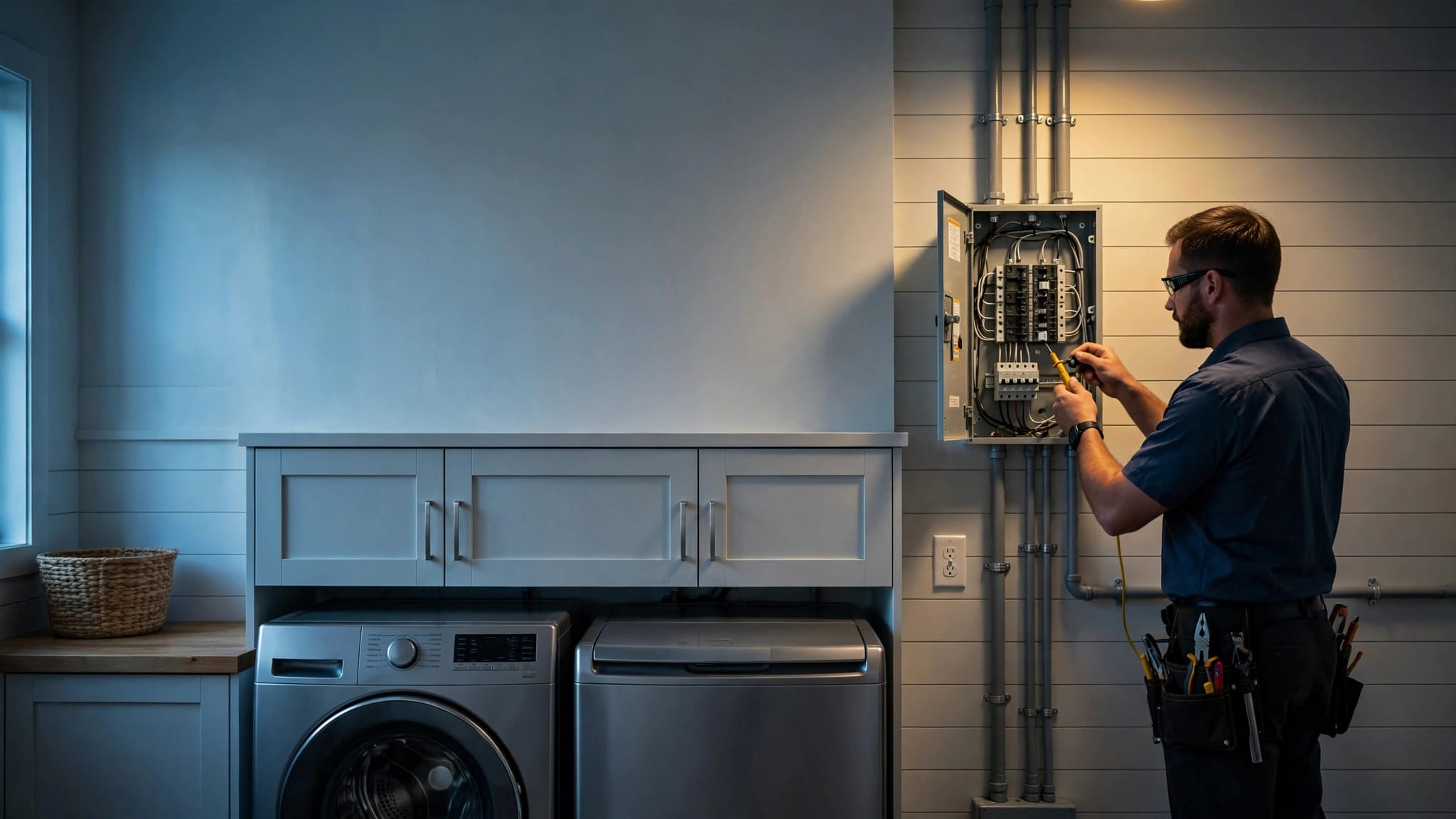
A laundry room can look simple until a new washer, dryer, utility sink, or finished wall exposes what the electrical system can't support. The laundry room electrical requirements in Massachusetts affect circuit capacity, shock protection, outlet location, permits, and inspection.
For homeowners and property managers, the safest plan starts before appliances arrive. A licensed Massachusetts electrician can review the existing panel, the appliance nameplates, and your town's permitting process before work begins.
Massachusetts Laundry Room Electrical Requirements Start With the Current Code
Massachusetts adopted the 2026 National Electrical Code (NEC) through 527 CMR 12.00, effective April 24, 2026. That code is the state baseline for new work, alterations, and many renovation projects.
However, code enforcement happens locally. Your building department or electrical inspector may have site-specific questions about an older home, a basement conversion, or the scope of a permit. A repair can face different requirements than a full laundry-room renovation.
Existing wiring may change the scope
Older Massachusetts homes often have crowded panels, ungrounded outlets, aging cable, or fuse equipment. Some homes also have previous laundry additions that never received a dedicated circuit.
An electrician should inspect the actual conditions before promising that an existing outlet can support a modern appliance. Replacing a washer or dryer can expose a problem that wasn't obvious when the old equipment remained in place.
A laundry-room upgrade often affects more than one outlet. The panel capacity, grounding, circuit protection, and appliance connection all need to work together.
Dwelling-unit rules differ from shared laundry spaces
The common residential laundry circuit rules apply to a dwelling unit. A shared laundry room in an apartment building, condominium, restaurant, or commercial property may require a different design.
Multiple machines, commercial-grade equipment, card-operated systems, pumps, and ventilation equipment add load and equipment-listing concerns. Property managers should request an assessment based on the building's occupancy and installed equipment.
Required Laundry Circuits for Washers and Dryers
A dwelling unit needs at least one 20-amp, 125-volt branch circuit for laundry receptacle outlets. This laundry circuit is intended for laundry use and should not also supply outlets in unrelated rooms.
In practical terms, a washer should not be plugged into a convenient general-purpose basement outlet shared with lights, a freezer, or workshop tools. Overloaded shared circuits can trip breakers and create unsafe workarounds.
Washer receptacles need proper circuit planning
The required 20-amp laundry circuit gives the washer a suitable source of power. If the room includes a gas dryer, its 120-volt receptacle may also need to be part of the circuit plan, depending on the installation and local approval.
Appliance instructions matter. Some high-efficiency washers have electronics, heaters, or pump functions that make an old, loose, or poorly grounded receptacle a bad match.
Electric dryers usually need a separate 240-volt circuit
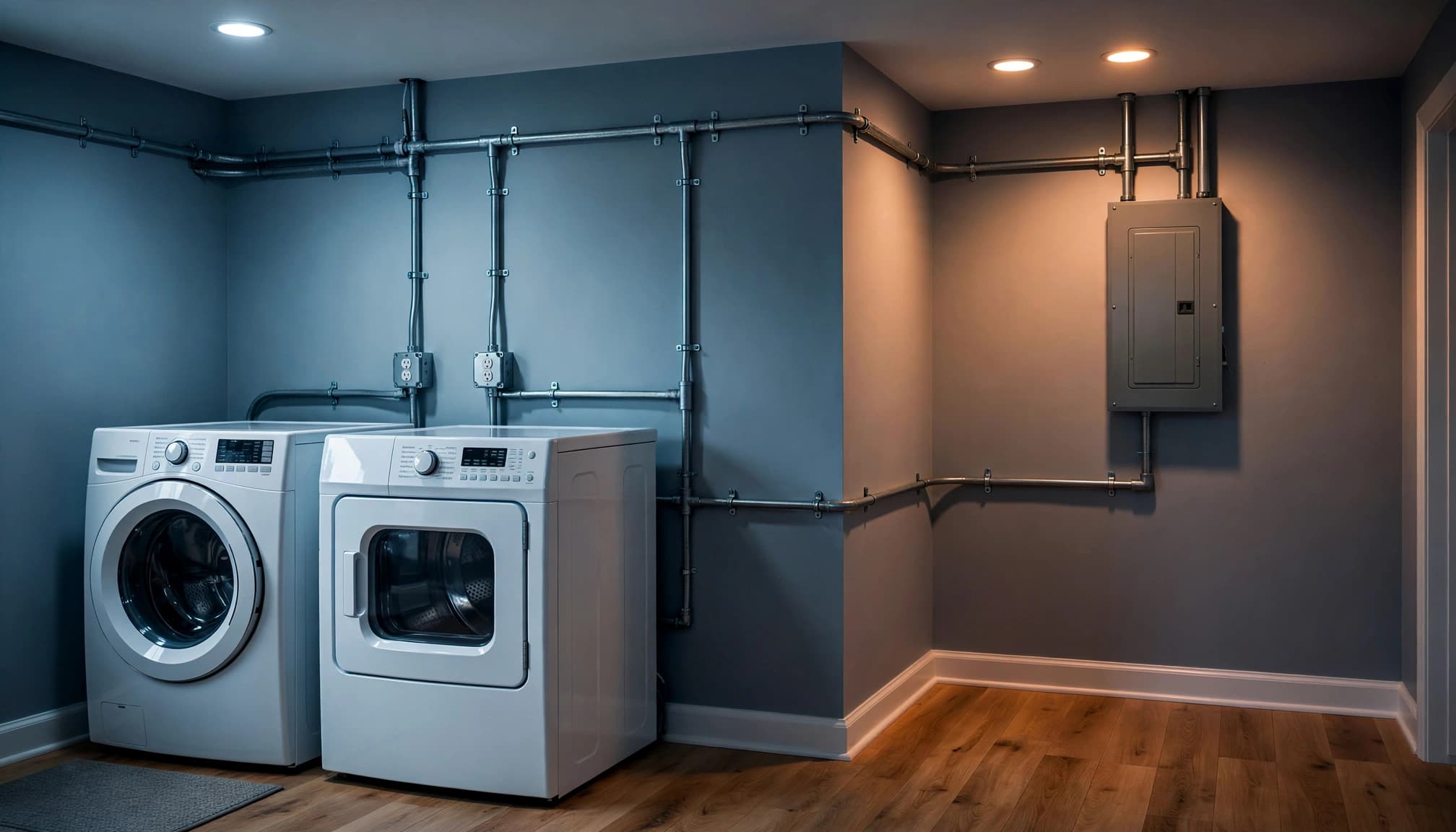
An electric dryer normally needs its own 120/240-volt branch circuit. The required breaker size, receptacle configuration, and conductor setup depend on the dryer's nameplate and manufacturer instructions. Many residential electric dryers use a 30-amp circuit, but the appliance listing controls the final design.
Older homes may have a three-slot dryer receptacle. Don't assume a new dryer can use it without review. An electrician can assess the existing branch circuit, grounding method, and permit scope before the new appliance is connected.
A new dryer circuit may also reveal that the panel has no safe room for another breaker. In that case, electrical load calculations for homes help determine whether the panel and service can handle the added demand.
GFCI and AFCI Protection in Laundry Areas
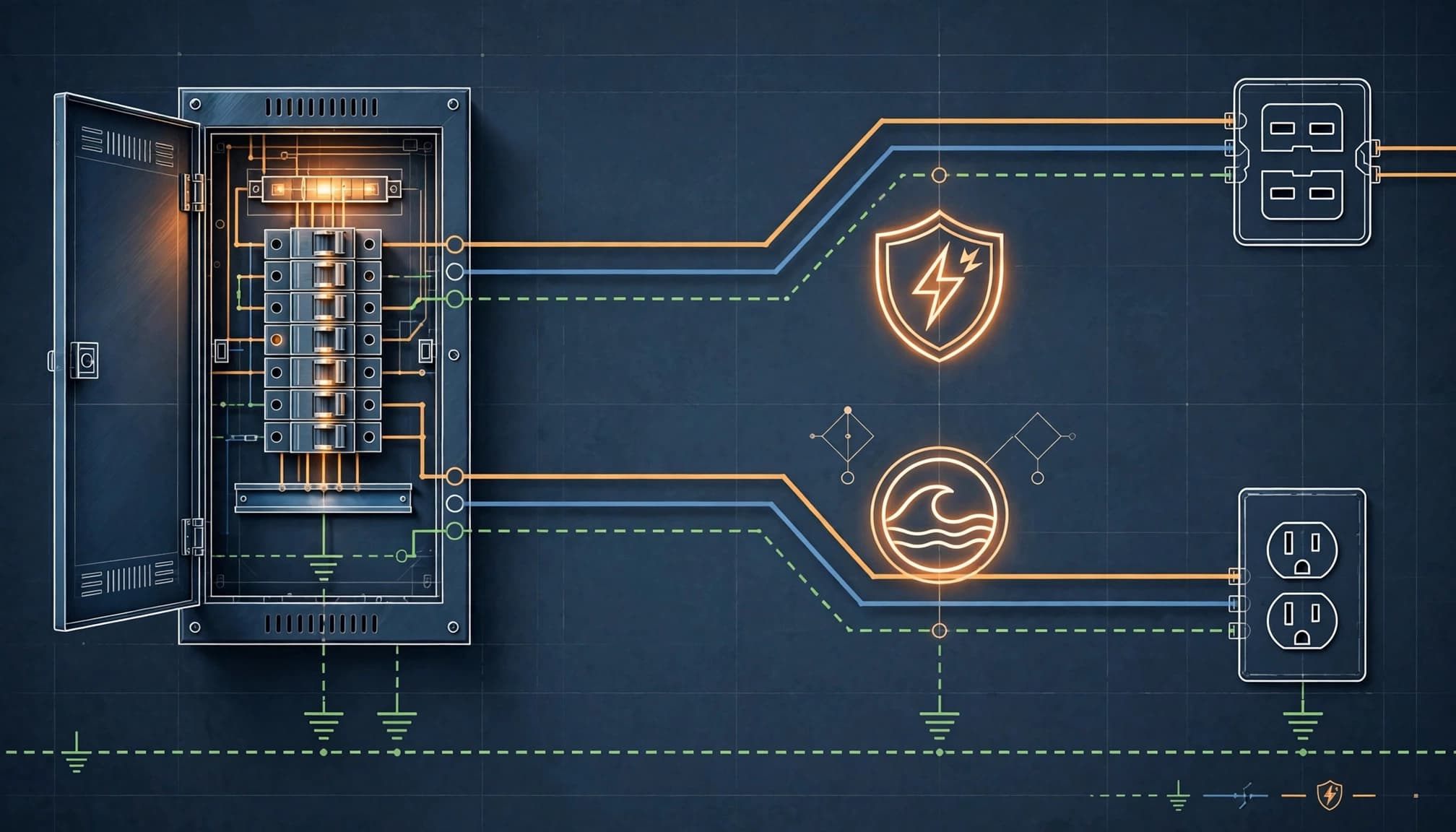
Massachusetts laundry room electrical requirements include both ground-fault circuit-interrupter protection and arc-fault circuit-interrupter protection in many residential situations. These devices address different hazards.
GFCI protection reduces shock risk when electricity meets water or a grounded surface. AFCI protection responds to certain dangerous arcing conditions that can occur in damaged wiring or cords.
GFCI protection covers laundry-area outlets
Under the current Massachusetts code framework, receptacles in dwelling-unit laundry areas need GFCI protection. That can include the washer outlet and, depending on the equipment and circuit, an electric dryer outlet.
A utility sink adds another clear rule. Any receptacle within 6 feet of the top inside edge of the sink bowl needs GFCI protection. A receptacle inside the cabinet supporting that sink also falls within the GFCI requirement.
Basement locations do not erase these requirements. In fact, damp conditions, concrete floors, and utility sinks make careful protection and placement more important.
AFCI protection applies to common 120-volt laundry circuits
AFCI protection applies to 120-volt, single-phase, 15- and 20-amp branch circuits that supply outlets or devices in laundry areas. The 20-amp washer circuit commonly falls into that category.
A dual-function AFCI/GFCI breaker may provide both forms of protection where it suits the panel and circuit. In other cases, the electrician may use a different approved arrangement. The right choice depends on the panel manufacturer, the wiring method, existing conditions, and the inspector's requirements.
Receptacle Placement and Panel Access
Laundry rooms do not follow the same general 6-foot wall-spacing rule used in many habitable rooms. Instead, the focus is on supplying required laundry equipment, protecting outlets near water, and keeping electrical equipment accessible.
A receptacle should be located where the appliance cord reaches without an extension cord. It also needs to remain serviceable when the appliance is installed. Tight utility closets and stacked laundry setups deserve extra planning before walls are closed.
Keep the electrical panel clear
A panel located in or near a laundry room needs working space in front of it. The NEC generally requires a clear area 30 inches wide, 36 inches deep, and 6 feet 6 inches high around electrical equipment.
Washers, dryers, shelving, hampers, and stored detergent cannot block that space. A finished basement project sometimes creates this issue when cabinetry or appliances are moved closer to the panel.
Don't treat cord access as an afterthought
The dryer receptacle, washer outlet, and any shutoff equipment should match the final appliance layout. Appliance cords should not pass through walls, under flooring, or behind construction that prevents inspection and service.
If a layout puts the receptacle directly behind a large dryer, discuss access before installation. A small change in outlet location can prevent a frustrating service problem later.
Panel Capacity and Load Checks Before an Upgrade
A new laundry circuit adds demand to a home's electrical system. The issue is often larger in Greater Boston homes with 100-amp service, full breaker panels, or older heating equipment.
A licensed electrician should evaluate the service, feeder, panel rating, available breaker spaces, and the home's calculated load. The answer may be a new branch circuit, a panel replacement, or a larger service upgrade.
Signs the existing panel needs attention
Frequent breaker trips, heat marks, rust, buzzing, missing labels, and crowded breakers all call for a closer look. A panel with no available capacity shouldn't be forced to accept another heavy appliance circuit.
For homes that need more room or safer equipment, breaker panel installation and replacement can address the panel as part of the laundry-room project.
Plan for other electrical upgrades
A laundry renovation often happens alongside a kitchen remodel, heat-pump installation, EV charger, or finished basement project. Those additions compete for the same service capacity.
Property managers should also account for future appliance replacement. Running an approved circuit during a renovation is usually less disruptive than opening finished walls later.
Permits, Inspections, and Professional Installation
Most new circuits, panel work, and major electrical alterations require a permit and inspection in Massachusetts. The local building department or electrical inspector can confirm the process for your city or town.
Ask early who will pull the permit, what the inspection schedule looks like, and whether wall access must remain open until the rough inspection. That conversation prevents delays when flooring, cabinets, or appliances are already scheduled.
Why appliance swaps can still need review
Replacing an appliance may sound routine, yet an electric dryer can expose an outdated receptacle or undersized circuit. A washer replacement can also reveal that the existing outlet lacks required GFCI or AFCI protection.
A professional review protects residents, maintenance staff, and the building itself. It also creates a clear record for future sales, insurance questions, and property maintenance files.
Key Takeaways and a Laundry Room Checklist
The best laundry-room design gives each appliance appropriate power, protects people from shock and arc hazards, and leaves the panel accessible. Verify the final scope with a licensed electrician and the local authority having jurisdiction.
Before scheduling the work, confirm these points:
- Check the washer and dryer nameplates before choosing circuits or receptacles.
- Provide at least one 20-amp, 125-volt laundry branch circuit for dwelling-unit laundry receptacles.
- Plan a separate circuit for an electric dryer based on its listed electrical requirements.
- Include GFCI protection for laundry-area receptacles and outlets within 6 feet of a utility sink.
- Confirm AFCI protection for applicable 120-volt, 15- and 20-amp laundry circuits.
- Keep required working clearance in front of the electrical panel.
- Verify permit, inspection, and existing-wiring requirements with the local building department.
Conclusion
Safe laundry room electrical requirements go beyond adding an outlet beside a new appliance. The current Massachusetts code calls for the right circuits, GFCI and AFCI protection where required, clear panel access, and a design that matches the equipment.
A licensed electrician can identify problems hidden behind a finished wall or inside an overloaded panel before they become costly delays.
Common FAQs
Does every laundry room need a dedicated washer circuit?
A dwelling unit needs at least one 20-amp, 125-volt branch circuit for laundry receptacle outlets. That circuit is reserved for the laundry area rather than general outlets elsewhere in the home.
The final layout can vary, especially in an older home or a compact laundry closet. A licensed Massachusetts electrician should confirm how the circuit serves the installed washer and any other laundry equipment.
Do laundry outlets need both GFCI and AFCI protection?
In Massachusetts, laundry areas fall within both GFCI and AFCI requirements for many dwelling-unit circuits. The washer's 120-volt circuit commonly requires both protections.
An electric dryer's requirements can differ because it uses a larger 120/240-volt circuit. The electrician should review the appliance, panel, circuit, and local inspection requirements instead of assuming one device arrangement fits every outlet.
Can an existing three-prong dryer outlet stay in place?
An older dryer receptacle needs an on-site assessment before a new dryer is installed. Its condition, grounding arrangement, circuit rating, and the scope of renovation work all matter.
Local enforcement can also affect the answer. Have a licensed electrician review the existing equipment and confirm permit requirements before connecting or replacing the dryer.