

Electric Water Heater Massachusetts: Code and Wiring

Contact Us
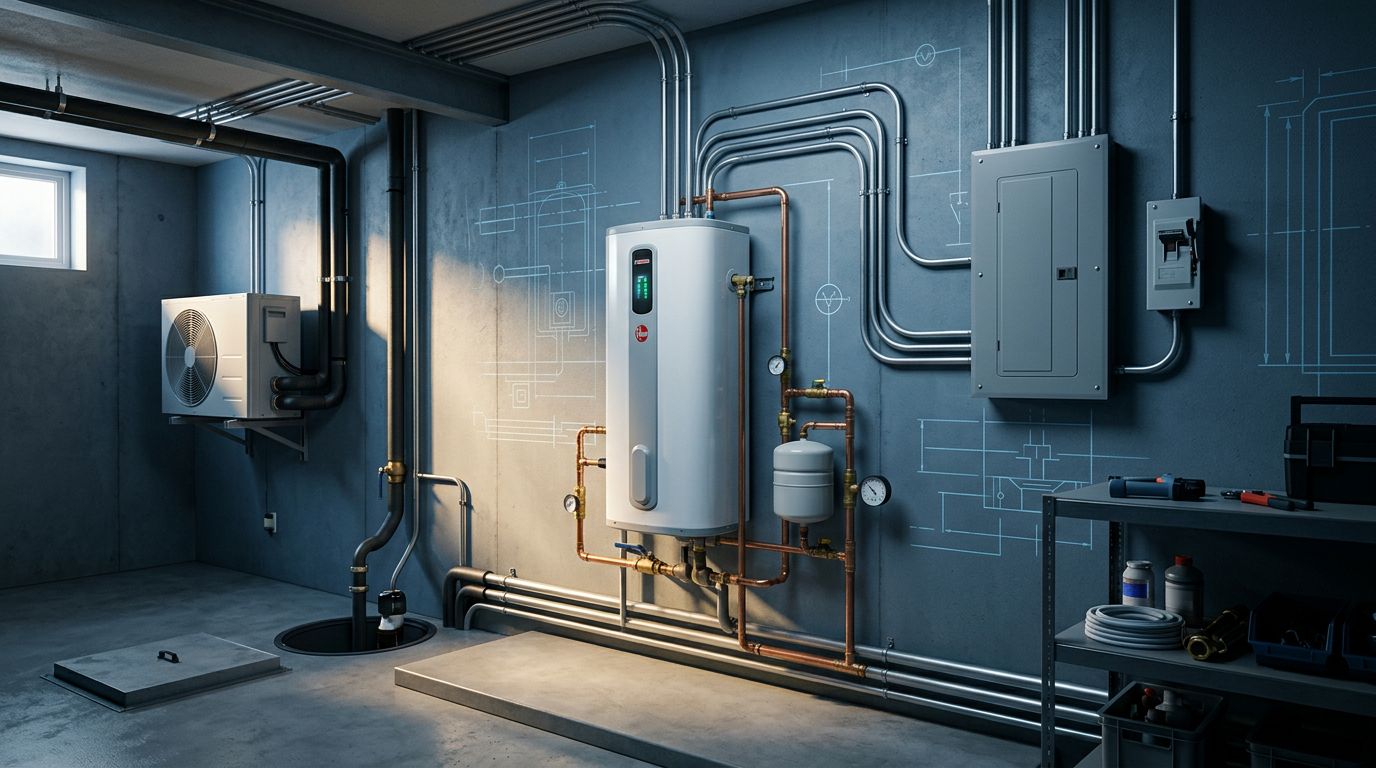
Installing an electric water heater in Massachusetts involves more than choosing a tank that fits the space. The voltage, wattage, branch circuit, disconnect, panel capacity, and permit requirements all need to line up.
An electric water heater Massachusetts homeowners choose still needs wiring that matches its nameplate and installation manual. A 120-volt point-of-use unit, a 240-volt storage tank, and an electric tankless heater can have very different electrical demands. Start with the equipment specifications, then plan the circuit and service around them.
Electric Water Heater Massachusetts Requirements at a Glance
Massachusetts electrical work follows the state-adopted electrical code, but the correct installation still depends on the listed equipment and project conditions.
The current Massachusetts electrical code
As of August 2026, Massachusetts uses the 2026 Massachusetts Electrical Code, 527 CMR 12.00 , which is based on the 2026 edition of NFPA 70, also called the National Electrical Code. State materials identify April 24, 2026, as the effective date for permits granted after that date.
The electrical code applies to the installation. The water heater's listing, nameplate, and manufacturer instructions also control the work. NEC Article 422 covers appliances, including fixed electric water heaters. NEC 110.3(B) requires listed equipment to be installed according to its listing and instructions.
That means an electrician can't select a breaker or wire size from the heater's brand alone. A Rheem, AO Smith, Bradford White, or State heater may have different requirements across models with similar tank capacities.
A 240-volt water heater is common in Massachusetts homes, but "common" doesn't mean universal. The nameplate and installation instructions control the circuit design.
Permit rules depend on the project
A replacement that uses an existing, properly sized circuit may follow a different process than a new installation requiring a branch circuit. A new circuit, disconnect, panel modification, or service change commonly requires an electrical permit and inspection.
Local wiring inspectors enforce the permit process for each municipality. Plumbing, building, or energy-code requirements may also apply, especially during renovations, additions, and new construction. Confirm the required permits with the local building department or have a licensed electrical contractor coordinate them.
The electrical permit date can also determine which Massachusetts code edition applies. For a project permitted after April 24, 2026, the current 527 CMR 12.00 requirements generally govern.
Choose the Voltage Before Planning the Circuit
Electric water heaters usually fall into three practical categories: small 120-volt storage units, full-size 240-volt storage tanks, and high-demand electric tankless systems.
| Heater type | Common electrical arrangement | Main planning concern |
|---|---|---|
| Small 120-volt tank | One 120-volt branch circuit | Nameplate amperage and outlet or hardwire method |
| Full-size storage tank | Dedicated 240-volt branch circuit | Wattage, continuous-load sizing, and disconnect |
| Electric tankless unit | One or more large 240-volt circuits | Branch-circuit capacity, panel space, and service load |
These are common arrangements, not universal rules. A commercial heater may use 208 volts, three-phase power, or a larger feeder. Always use the exact data for the selected model.
When a 120-volt heater makes sense
Small point-of-use and lower-capacity storage tanks often operate at 120 volts. They may serve one sink, a remote bathroom, an accessory space, or a location where a large 240-volt circuit isn't practical.
The circuit might be modest, but the heater still needs overcurrent protection and conductors sized to its nameplate. Some models are cord-and-plug connected, while others require hardwiring. The manufacturer determines which method is permitted.
A standard 120-volt receptacle isn't automatically suitable. The installation may require a dedicated circuit, a specific receptacle rating, GFCI protection based on the location and applicable code, or a local disconnect. The electrician should verify these details before the heater is purchased.
Why 240 volts is common for storage tanks
Full-size electric storage water heaters commonly use 240 volts because the higher voltage delivers more heating power with less current than the same wattage at 120 volts. A typical residential tank may use a 4,500-watt element, although models vary.
Many 240-volt tanks use two ungrounded conductors and an equipment grounding conductor. A neutral isn't automatically required. If the equipment includes 120-volt controls or the manual calls for a neutral, the wiring changes.
For an electric water heater Massachusetts homeowners install during a renovation, the existing panel must have room for the required two-pole breaker and enough service capacity for the added load.
Size the Breaker and Wire From the Nameplate
The nameplate normally provides voltage, wattage, amperage, and sometimes the required overcurrent protection. The installation manual may add requirements for conductor size, disconnect rating, wiring method, and terminal connections.
An electrician uses those details to evaluate:
- The branch-circuit conductor ampacity.
- The circuit breaker or fuse rating.
- The equipment grounding conductor.
- The disconnecting means.
- The wiring method and cable temperature ratings.
- Any installation restrictions in the manufacturer's instructions.
A fixed storage-type water heater can also be treated as a continuous load under the applicable NEC rules. As a result, the circuit design may require more capacity than a simple wattage-to-amperage calculation suggests.
A 4,500-watt example
A 4,500-watt, 240-volt heater draws 18.75 amps when calculated using watts divided by volts. That number helps the electrician begin the design, but it doesn't automatically produce a final breaker and wire size.
The installer must apply the continuous-load rules, check the manufacturer's instructions, and select equipment that meets the code. A residential model with that rating may commonly end up on a 30-amp, two-pole circuit, but another listed product may specify something different.
The same caution applies to wire. One heater might require 10 AWG copper conductors, while a different model or wiring method may have other requirements. Don't replace a heater by copying the old circuit without checking the new nameplate.
Disconnect and grounding details matter
The water heater needs a suitable disconnecting means when the code or manufacturer requires one. Depending on the installation, the circuit breaker may serve that function if its location and locking provisions meet the applicable requirements. A nearby disconnect may be needed instead.
The equipment grounding conductor must connect correctly at the water heater and the panel. Terminals must be tightened according to the manufacturer's specifications. Loose connections can create heat, nuisance trips, or equipment damage.
A qualified electrician also checks whether the water heater is located in a damp or confined area. The location can affect the enclosure rating, wiring method, protection, and access to the disconnect.
Electric Tankless Heaters Need a Larger Electrical Plan
Tankless electric water heaters often create the largest electrical demand. Instead of heating water gradually in a tank, they use high-power heating elements while water flows through the unit.
Many residential tankless models require multiple 240-volt circuits. Others call for a large single load or a feeder with substantial ampacity. Product families such as Stiebel Eltron Tempra and EcoSmart ECO have model-specific electrical requirements that must be taken directly from their manuals.
Branch circuits may not be enough
A tankless unit may need two, three, or more dedicated circuits. Each circuit can require its own overcurrent protection, conductor size, and termination arrangement. The manufacturer's wiring diagram normally identifies the required configuration.
That demand can exceed the capacity of an older panel even when several breaker spaces are available. Adding breakers creates circuit positions, but it doesn't increase the amount of power the service can safely deliver.
The total demand for an electric water heater Massachusetts businesses install may also involve larger commercial equipment, multiple units, or three-phase power. Residential tank assumptions shouldn't be applied to commercial installations.
Service capacity should be checked first
A service load calculation compares the proposed heater with the home's or building's existing electrical demand. The review can include cooking equipment, electric heat, HVAC systems, laundry appliances, EV chargers, pumps, lighting, and other fixed loads.
A tankless installation is more likely to require this review because its connected load can be much higher than a standard storage tank. The result may support the existing service, or it may point to load management, a new subpanel, or a service upgrade.
Before selecting a tankless model, consider an electrical load calculation for a Greater Boston home. It can prevent a costly equipment change after the project has already started.
Massachusetts Energy Rules Affect Heater Selection
Electrical requirements and energy requirements are separate, but both can affect the water heater you choose.
Massachusetts energy-code materials reference the 10th edition of 780 CMR, based on IECC 2021 with Massachusetts amendments. Depending on the applicable code track and project type, a residential service-water-heating system may need to meet an efficiency path such as an electric system with an EF or UEF of at least 2.0, or a solar water-heating system with a solar fraction of at least 0.4.
The exact requirement can depend on whether the work involves new construction, an addition, a major alteration, or a replacement. The building official, energy-code documentation, and equipment certification determine whether the proposed unit qualifies.
Efficiency isn't the same as voltage
A heater can meet an energy requirement and still need a carefully designed electrical circuit. Conversely, a unit can fit an existing 240-volt circuit but fail to meet the energy requirements for a particular project.
Don't assume that every electric water heater must be a heat-pump model. Also, don't assume that an ordinary resistance tank meets an efficiency threshold that calls for a higher-rated system. Check the product certification and the code path before ordering equipment.
Prepare for Wiring, Inspection, and Panel Work
Good planning includes more than the breaker. The electrician needs access to the panel, a workable cable route, space around the water heater, and enough information about the existing electrical system.
Inspection starts with visible workmanship
If new wiring will be concealed behind finished walls, the local authority may require a rough electrical inspection before the walls close. The inspector may review cable protection, box installation, grounding, panel connections, circuit identification, and working space.
Electrical equipment generally needs a clear working area in front of it. A commonly applied dimension is 30 inches wide, 36 inches deep, and 6.5 feet high, subject to the equipment and conditions. Shelving, stored items, doors, or future cabinets shouldn't block the panel.
You can review this Massachusetts electrical rough inspection guide before work begins. The exact inspection sequence remains a local decision.
A panel upgrade isn't automatic
An older 100-amp service doesn't automatically need replacement for every storage water heater. The answer depends on the calculated load, the available breaker spaces, the condition of the equipment, and the heater's requirements.
A panel upgrade becomes more likely when the project adds a large tankless unit, electric space heating, an EV charger, or other major loads. Signs such as frequent breaker trips, flickering lights, damaged equipment, or an overloaded panel also deserve attention.
If the existing equipment can't support the new circuit, a contractor may recommend breaker panel installation and replacement. The scope could involve only the panel, or it could include service conductors, grounding, meter equipment, and utility coordination.
Electrical work should be performed by a qualified, licensed professional. Don't install a larger breaker to stop nuisance trips, and don't reuse conductors without confirming their ampacity and condition. An oversized breaker can allow the wire to overheat before the protection operates.
Conclusion
The right electrical setup starts with the water heater's nameplate, not a standard breaker size found online. Voltage, wattage, continuous-load treatment, conductor ampacity, disconnect requirements, grounding, and panel capacity all have to match the listed equipment.
For an electric water heater Massachusetts property owners plan to install, permits and inspections may also be part of the job. A licensed electrician can verify the current Massachusetts code, complete the load review, coordinate the permit, and install a circuit that fits both the heater and the building.