

Crawl Space Wiring Safety in Older Greater Boston Homes

Contact Us
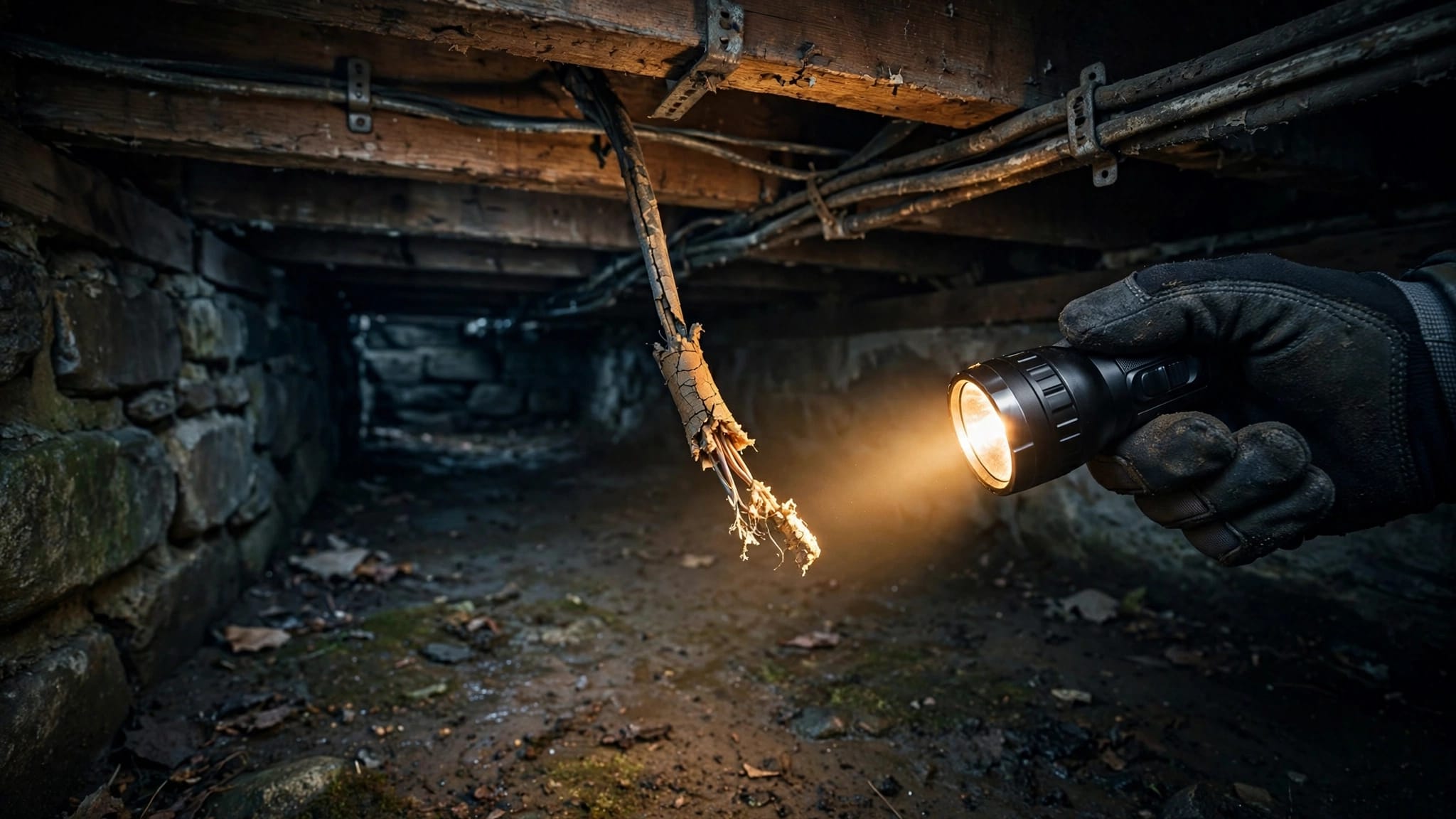
A crawl space can hide electrical problems long after the rooms above it have been renovated. If you own an older Greater Boston home, crawl space wiring deserves attention, especially where moisture, old foundations, and decades of repairs meet.
You don't need to identify every cable yourself. The safer approach is to recognize visible warning signs, stay clear of damaged equipment, and have a licensed electrician evaluate anything uncertain.
Why older crawl spaces deserve a closer look
A finished kitchen can have new outlets while the crawl space beneath it still contains much older branch circuits. In homes that have been expanded or remodeled over time, wiring from different projects may share a tight space. Its appearance alone won't tell you which circuits remain active.
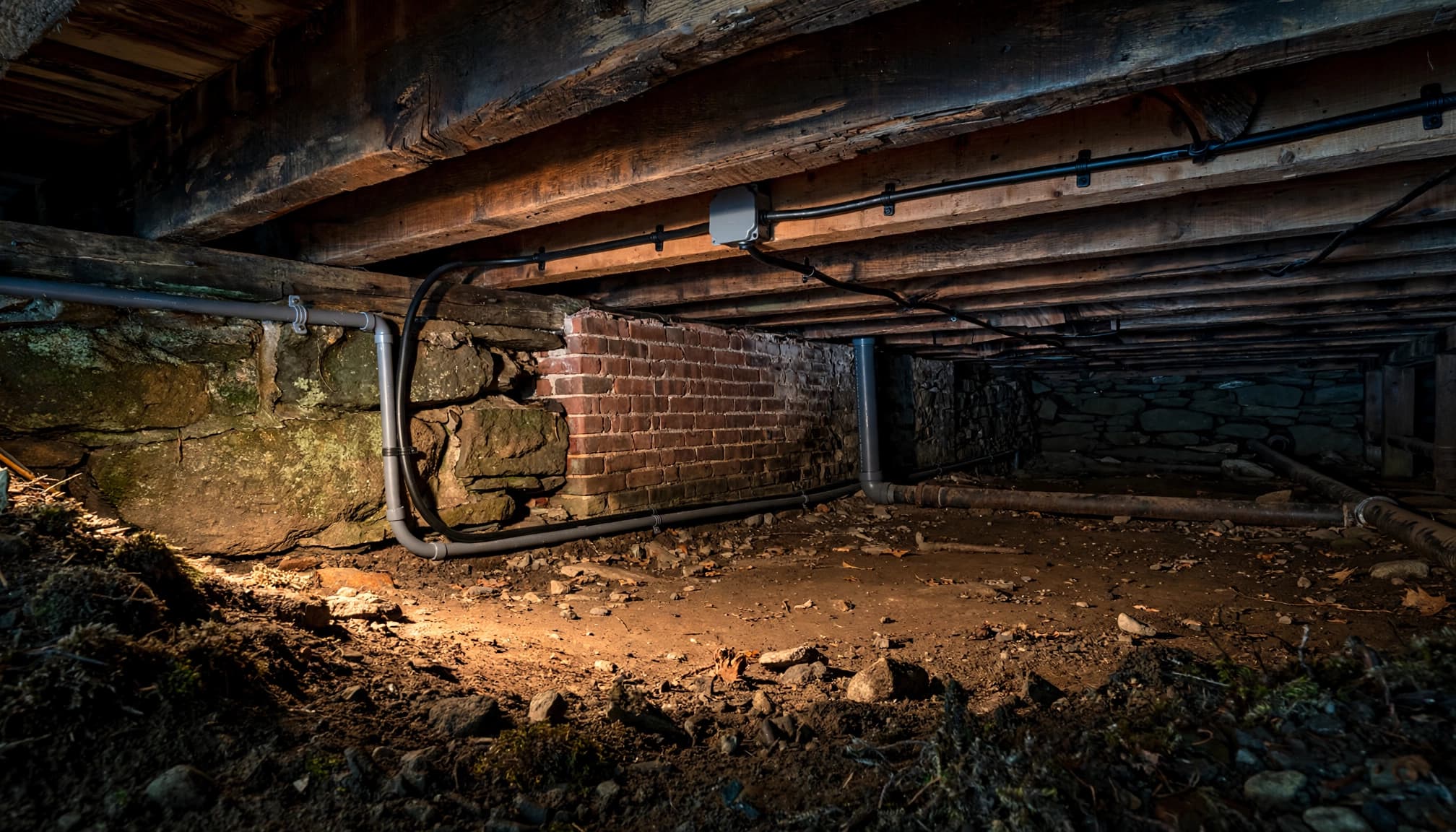
Many Greater Boston homes also have fieldstone foundations, low clearances, or seasonal water entry. Those conditions can make damage harder to see and repairs harder to reach. A cable near the ground may be exposed to water, stored materials, or physical damage, but an electrician needs to assess the actual installation before deciding what must change.
If you're buying a property, include the area beneath the house in your electrical checklist for an older home. A newly painted room doesn't establish the condition of the wiring below it.
What you can check without touching the wiring
A homeowner's check is visual only . Stay at the access opening or on a safe, dry route. Don't enter a flooded space, move insulation, pull cables, open boxes, or touch metal parts to get a better view. If access feels unsafe, leave the inspection to a professional.
Look for changes in the space
Notice standing water, damp soil, staining on joists, or condensation around equipment. Also look for cables lying on the ground, hanging where someone might snag them, or passing through an area used for storage.
These observations don't prove a code violation. They do give an electrician useful information about conditions that could affect wiring. Photos taken from a safe position can help you describe what you saw without disturbing it.
Watch for visible damage
From a distance, note cracked or missing insulation, scorched material, loose-looking boxes, and connections that appear to be outside an enclosure. Chewed cable jackets also deserve a professional assessment.
Older wiring may have cloth covering or visible porcelain supports associated with knob-and-tube systems. Don't assume such wiring is active or abandoned based on appearance. Never test that assumption by touching it , and don't allow insulation or other work to cover questionable wiring before an electrician identifies it.
Warning signs that call for faster action
Some problems can wait for a scheduled assessment. Others mean you should stop using the affected area or equipment and seek help promptly.
Heat, smoke, shocks, or repeated trips
A burning smell, smoke, sparking, or a hot electrical component needs immediate attention. Keep people away. If there's smoke or a suspected fire, leave the building and call 911. Don't throw water on electrical equipment.
Repeated breaker trips and shocks from appliances also warrant a licensed electrician's review. If you know the affected breaker and can reach a dry, safe panel without entering the hazard area, switch it off and leave it off. Otherwise, don't approach the panel to investigate.
Water near electrical equipment
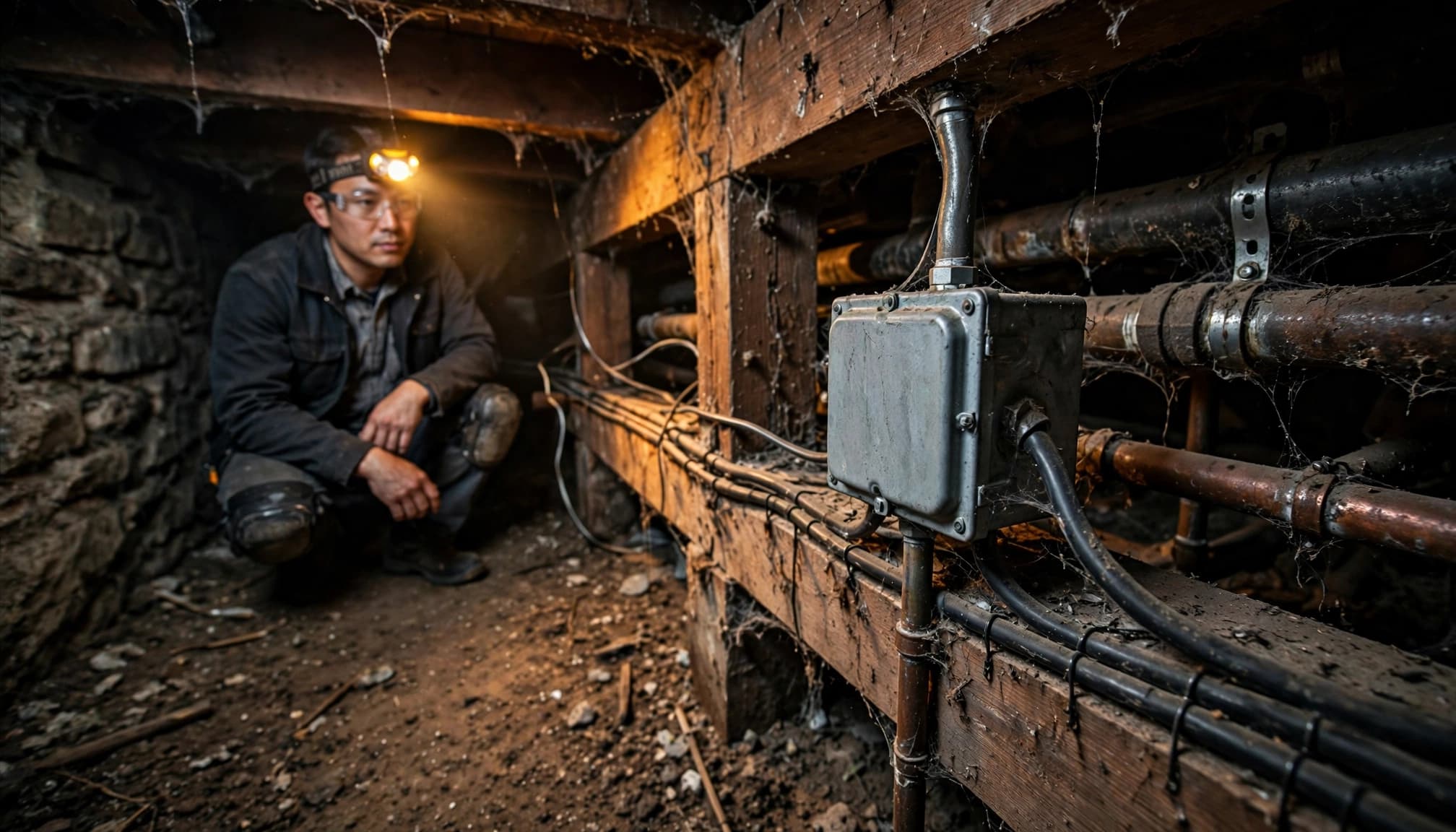
Don't enter a wet crawl space to inspect outlets, pumps, junction boxes, or cables. Water can hide energized parts and make a familiar access route dangerous. Call a qualified professional and explain where the water is and which equipment may be affected.
After a leak or flood, don't assume wiring is safe because it looks dry later. An electrician should assess exposed components before anyone restores or uses affected circuits. Address the water source as part of the repair plan, since electrical work alone won't stop the next leak.
What a licensed electrician should evaluate
Crawl space wiring problems rarely end at the spot you can see. A licensed electrician can trace the circuit, determine what remains in service, and assess conditions at the panel and connected equipment.
Circuit condition and past alterations
The electrician can examine accessible cable runs, boxes, splices, and places where wiring passes through or near framing. They can identify damaged sections and determine whether a connection belongs to an older installation or a later alteration.
That distinction matters when a home has had several owners. A cable may enter the crawl space from a renovated room, then connect to wiring that wasn't replaced. Testing and circuit tracing, rather than color or appearance, establish what it supplies. Sirois Electric offers electrical inspection services in Greater Boston for homeowners who need a broader assessment.
The system beyond the crawl space
Ask the electrician to consider grounding and bonding, panel condition, circuit protection, and any equipment exposed to dampness. A crawl space concern may reveal a problem elsewhere, but it doesn't automatically call for a whole-house rewire.
Request a written explanation that separates immediate hazards from recommended upgrades. It should identify the affected circuits, proposed work, and any areas that couldn't be inspected. That record is useful when coordinating a plumber, insulation contractor, or future renovation.
Moisture, outlets, and shock protection
Crawl spaces can be damp even when they aren't visibly flooded. The right electrical approach depends on the exact location, how the space is used, and the equipment installed there.
Treat moisture as part of the electrical problem
A dehumidifier, sump pump, or service light may put electrical equipment close to water. Don't add an extension cord or temporary power strip to reach an outlet in a damp area. Have an electrician evaluate the location and the equipment's power needs.
If a plumbing leak is wetting a box or cable, arrange for the leak to be repaired and the electrical components assessed. Drying the surface doesn't establish that a damaged connection is safe. The electrician can determine what needs replacement after the moisture source is addressed.
Ask about GFCI protection
Ground-fault circuit interrupter, or GFCI , protection helps reduce shock risk when a ground fault occurs. Crawl-space receptacles may need it, depending on the applicable code and the installation's details. An electrician can check whether existing outlets have appropriate protection and whether that protection works.
Don't assume a receptacle is protected because it has a familiar appearance, or unprotected because it lacks test buttons. Protection can be located elsewhere on a circuit. Testing and tracing provide a more reliable answer than a visual guess.
Massachusetts rules and local inspections
Electrical work in Massachusetts falls under 527 CMR 12.00 , the state electrical code. As of September 2026, it is based on the 2026 National Electrical Code with Massachusetts amendments. The state applies that edition to installations with permits granted after April 24, 2026.
Existing wiring and new work are different questions
An older installation isn't automatically required to match every rule for a newly permitted project. Its condition, repair history, and the scope of proposed work all matter. Likewise, age alone doesn't establish that wiring is safe.
If an electrician plans to replace damaged cable, add an outlet, or alter a circuit, ask which code edition applies to that work. A permit granted before April 24, 2026, may fall under a different adopted edition. Your local wiring inspector can confirm the requirements for the job.
Check the permit and inspection sequence
Massachusetts cities and towns administer electrical permits and inspections locally. Cambridge, for example, states that work performed under the Massachusetts Electrical Code requires an electrical permit. The application steps and inspection arrangements for your address come from your municipality.
Before work begins, ask your electrician who will obtain the permit and when the inspector needs to see the installation. New wiring shouldn't be concealed before any required inspection. For projects that include wiring behind walls or ceilings, see what to expect during a Massachusetts rough inspection.
Plan repairs around the real problem
A useful repair proposal names the affected circuits and explains why each change is needed. It should also address access: tight crawl spaces can make it difficult to inspect an old connection or route a replacement cable without opening a nearby finished area.
Ask whether the work will affect a sump pump, boiler, outdoor equipment, or rooms above the crawl space. Then plan any necessary downtime with the household. If plumbers or insulation crews will be working nearby, coordinate their schedules so nobody moves or covers wiring before the electrician and inspector have finished.
Keep copies of the permit, inspection approval, and updated circuit information. If the electrician finds old wiring that is no longer in use, ask for that finding in writing. A documented answer is more useful than a guess the next time someone opens the crawl space.
Key takeaways
- Keep homeowner checks visual. Don't touch wiring, open boxes, or enter a wet crawl space.
- Treat burning smells, smoke, shocks, and water near electrical equipment as reasons to stop and seek help.
- Have a licensed electrician identify active circuits and assess damaged or questionable connections.
- Confirm the applicable code edition, permit, and inspection process with the electrician and local wiring inspector.
Frequently asked questions
Is old crawl space wiring automatically unsafe?
No. Age tells you when to look more closely, not whether a circuit is safe to use. An electrician needs to identify the wiring, check its condition, and review any alterations. Visible knob-and-tube components, for example, don't establish whether that circuit remains active.
Can I replace a damaged cable myself?
Leave cable replacement, splices, box work, and circuit testing to a properly licensed electrician. Turning off a breaker doesn't make every nearby wire safe: older homes can have confusing circuit routes or undocumented changes. A professional can verify what is energized and handle any required permit and inspection.
When should I schedule an inspection?
Schedule one if you see damage, notice repeated trips or shocks, or plan work that could disturb existing cables. Buying an older house is another useful time to arrange a review. For broader warning signs, see when to schedule a home electrical inspection.
A safer next step for an older home
The space under a renovated room can tell a different electrical story. Look without touching , record what you can see safely, and let a licensed electrician determine what needs repair.
That gives you a plan based on the circuits in your home, not assumptions about its age.