

Temporary Electrical Service for Renovations: Costs and Timing

Contact Us
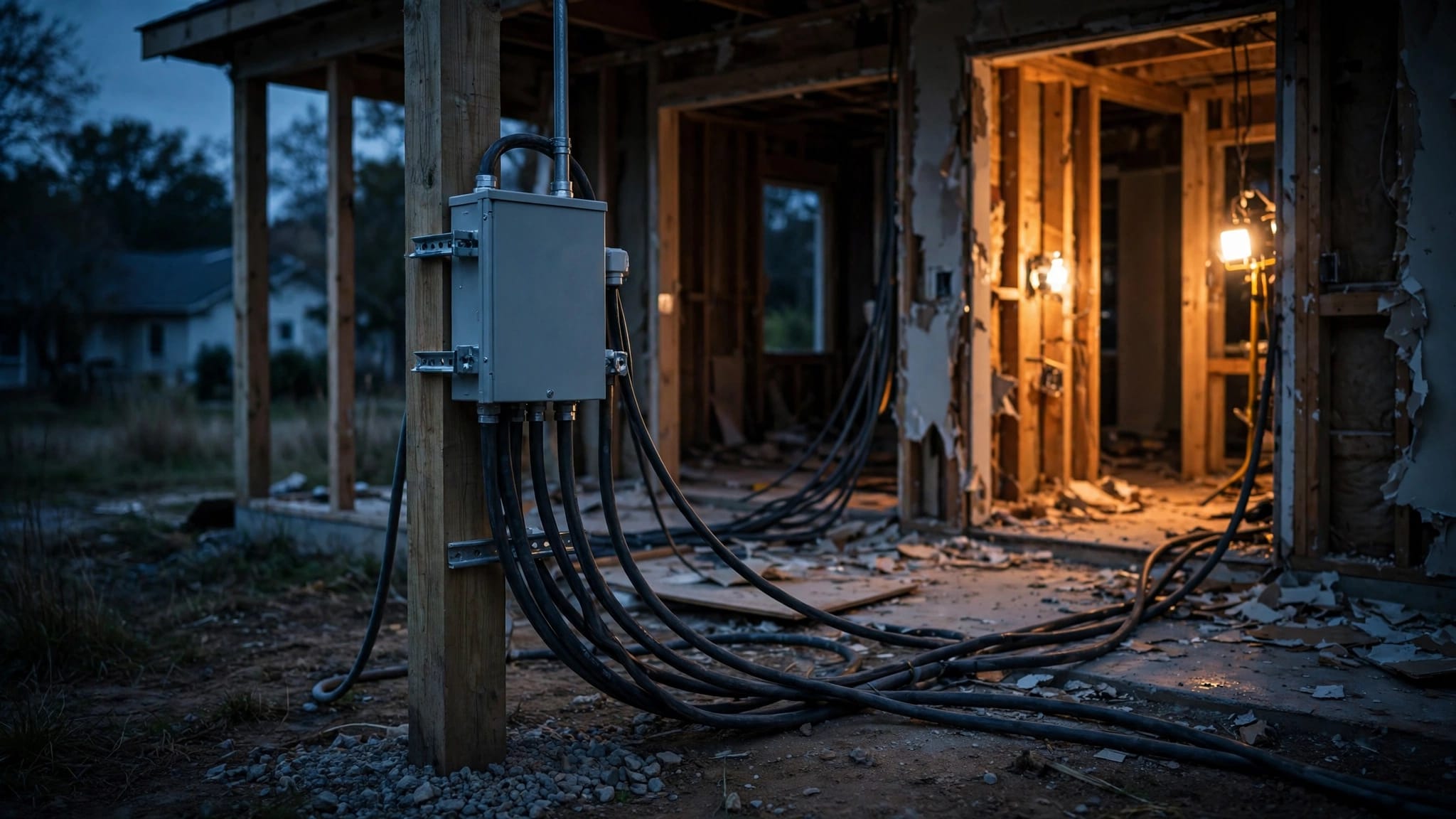
A demolition crew can lose its power source when the wall holding a home's electrical equipment has to come down. Temporary electrical service can keep a renovation moving while the permanent system is unavailable. Still, many remodels can safely use the existing supply, so a separate hookup isn't automatic.
The right plan depends on what stays energized, where crews will work, and how long the permanent service will be out of use.
When temporary electrical service makes sense
A kitchen remodel usually doesn't need a separate utility connection if the home's existing service can remain safely in place. The electrician may arrange planned outages for particular phases while other parts of the house retain power.
A major addition, full rebuild, or extensive exterior renovation is different. Crews may need to remove the meter location, replace the service entrance, or disconnect equipment before permanent wiring is ready. In that case, temporary power can supply approved construction loads without relying on the equipment being replaced.
Tell the electrician early if you'll live in the house during the work. Refrigeration, heating, medical equipment, and a home office create different needs than an empty construction site. A temporary setup sized for tools and work lights shouldn't be assumed to support normal household use.
The first question is whether the existing service can remain safe and accessible throughout construction. If it can't, the electrician should discuss a temporary supply before demolition begins.
Common power setups for a home renovation
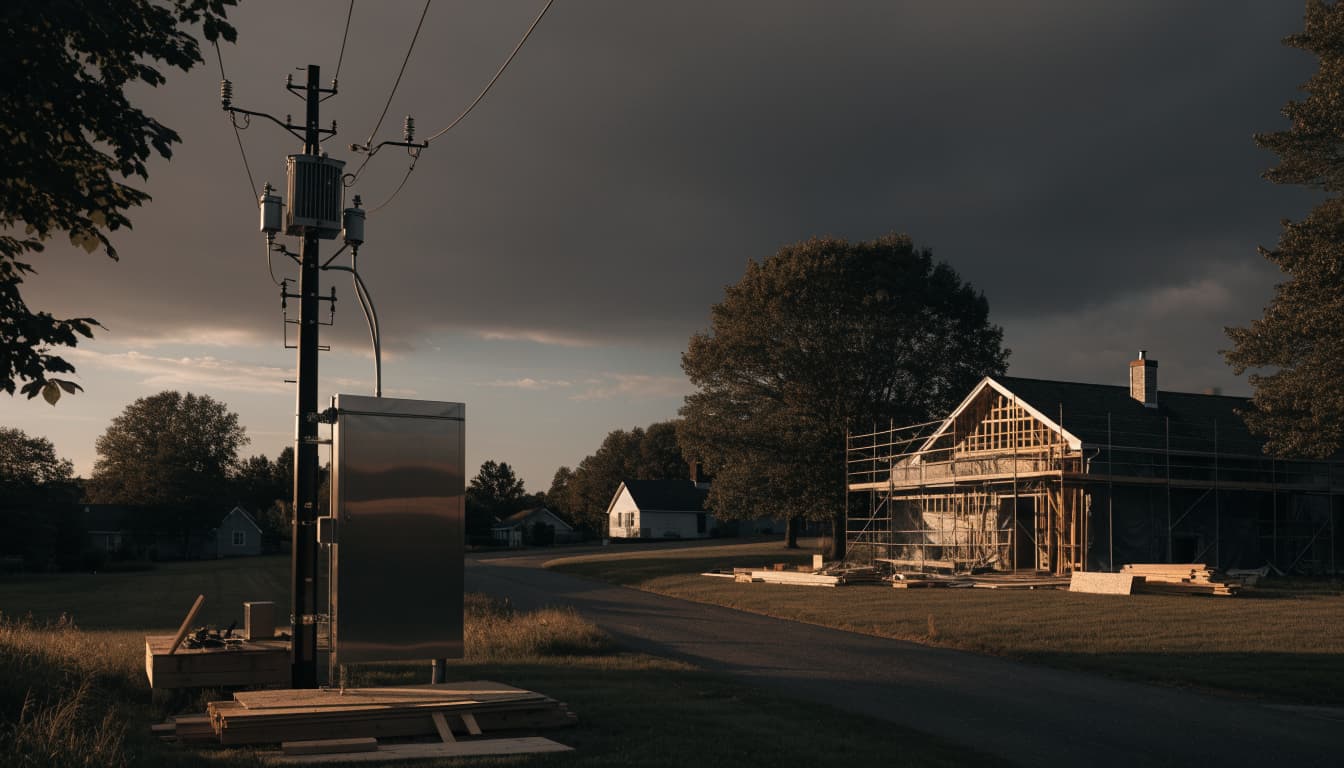
A separate construction service
For a substantial renovation, an electrician may install a temporary service on an approved pole or other utility-accepted support. The setup generally includes metering equipment and a protected distribution point for construction circuits. Its location must work for the utility connection, jobsite access, and the planned building work.
A pole isn't appropriate for every property. The utility and local electrical inspector decide what equipment and placement they accept. If the site needs excavation or an underground connection, that adds coordination and may affect the schedule.
Existing service or a generator
Keeping the home's permanent service in use can be simpler when the service equipment won't be disturbed. A licensed electrician must assess its condition and available capacity before crews depend on it. An older panel or damaged service entrance may change that plan.
A generator can provide power for certain loads, but it isn't a direct substitute for utility-supplied temporary service. Fuel, noise, runtime, and safe connection methods matter. Ask an electrician whether a professionally installed generator fits the project's needs. Never let a crew improvise a connection to the house wiring.
Match the power plan to the renovation
Check construction and household loads
Give the electrician the contractor's equipment list and expected work schedule. Saws, compressors, drying equipment, and temporary lighting may run at the same time. If you'll remain in the home, include the household loads that must stay available.
The electrician can use that information to assess the supply and plan suitable protected circuits. A temporary setup that works for early demolition may need review when new equipment arrives. Confirm who will revisit the plan if the scope changes.
Plan the finished service separately
Temporary power doesn't answer whether the completed house needs more capacity. An addition with a heat pump, induction range, or EV charger calls for a review of the permanent service and projected load. A new breaker panel alone doesn't increase what the utility can deliver.
Discuss the future equipment list before choosing the final design. The electrical requirements for a Massachusetts home addition show why service capacity, panel space, and utility coordination belong in the same conversation.
Permits, inspections, and the utility connection

Confirm the local approval path
Temporary electrical service is regulated work. Have a qualified, properly licensed electrician design and install it, arrange the electrical permit, and coordinate inspections. The local authority having jurisdiction (AHJ), often the municipal wiring inspector, determines the applicable requirements.
Ask whether the temporary service needs its own permit and inspection, and whether the town requires separate approvals for service work and interior rough wiring. Keep the permit and inspection records with your renovation documents. Construction wiring should also have the protections required for its location and use, including ground-fault circuit interrupter protection where required.
Get the serving utility involved early
The electric utility controls its connection and metering requirements. It may need to review service location, capacity, clearances, or trenching before the electrician can finalize the setup. Inspection approval doesn't mean a homeowner may energize the service. The utility handles its connection and energization process.
Requirements differ across Greater Boston and neighboring states. Danvers Electric, for example, uses a utility work authorization process and requires inspection and utility approval before energization. Its construction-site temporary-service rules also set a one-year maximum. Check your own AHJ and utility rather than treating another town's rules as your project's requirements.
Build the schedule around approvals
Allow time before construction starts
Temporary service needs planning time before a crew can use it. The electrician first assesses the site and submits the required applications. Equipment installation, inspection, utility review, and connection follow in an order set by local rules.
Eversource Massachusetts asks customers to request new, altered, or temporary service as far ahead as possible. For eastern Massachusetts, it targets installation within five business days after final city or town wiring-inspector approval , once its requirements are met. That target doesn't include the earlier design, permitting, and inspection work.
National Grid gives a minimum of 60 to 80 business days for a new electric construction project. That broader project estimate isn't a guaranteed wait for every temporary hookup, but it shows why utility coordination belongs near the start of a major renovation.
Identify the handoffs
Ask your general contractor and electrician when the existing supply will be disconnected, when temporary power must be ready, and when the permanent service can take over. The utility may also need to schedule an outage or a return visit.
Don't set demolition or move-in dates around an unconfirmed connection. A missed inspection, a utility-requested change, or a meter-location issue can affect several trades. If a temporary setup must remain in place longer than expected, ask who will manage any required extensions and its eventual removal.
What temporary power costs

Permit and utility charges vary
There isn't a reliable single installed price for a renovation's temporary service. Local fees show only a small part of the picture. Published temporary-service permit fees include $75 in Malden , $100 in Bridgewater , and $50 in Danvers under its fee schedule effective March 27, 2025.
A utility may charge separately. Concord Municipal Light Plant's application lists a $550 nonrefundable fee and a $480 refundable security deposit for temporary or permanent service. Those are Concord-specific charges, not a statewide rate or a complete installation quote.
Read the contractor's scope closely
The full price depends on equipment, labor, service location, utility requirements, inspection work, and removal. Underground work, a difficult connection point, or changes to the permanent service can add costs.
Ask for a written estimate that separates temporary equipment and installation from the finished electrical work. Check whether permit fees, utility charges, excavation, site restoration, and removal are included. If the renovation also calls for a new panel, compare that work as a separate scope; Greater Boston panel replacement costs depend on more than the temporary hookup.
Questions to ask before approving the plan
A short conversation before demolition can settle who owns each handoff. Ask the electrical contractor and utility questions that apply to your site:
- Can the existing service stay in use safely, or does this renovation need a separate connection?
- What power will be available to the crew, and will any occupied rooms remain supplied?
- Who applies for permits, requests inspections, and submits the utility paperwork?
- Where will temporary equipment go, and will it interfere with excavation or exterior work?
- When will the existing service shut off, and who confirms the temporary supply is ready?
- What does the quote exclude, and who pays if the utility requires a change?
- When will permanent service take over, and who removes the temporary equipment?
Also ask which company will perform the electrical work and whether its electricians hold the licenses required for the job. For a shared building, confirm any property-manager rules for shutdown notices and equipment locations. Those requirements may affect timing even when the electrical design is otherwise approved.
Key takeaways
- Start with an assessment. Many renovations can use the existing service; major work that removes or interrupts it may need temporary power.
- Treat the setup as permitted electrical work that requires a qualified electrician, local AHJ approval, and utility coordination.
- Budget for the full installation and removal, not only the published permit fee. Set dates around confirmed approvals rather than an assumed connection time.
Frequently asked questions
Is a temporary service pole required for every renovation?
No. The existing service may remain usable during a limited remodel if an electrician finds it suitable for the planned work. A separate pole or other approved temporary arrangement becomes more likely when demolition affects the service equipment or the utility must disconnect the permanent supply. Your electrician, AHJ, and utility determine the appropriate arrangement for the property.
Can the house stay occupied while temporary power is in use?
Possibly, but confirm the plan before assuming normal household power will continue. A construction supply may be intended for tools and site lighting, not all the home's circuits. Tell the electrician about essential equipment and ask exactly which rooms and appliances will have power during each phase. Arrange for outages before work begins.
What happens when permanent power is ready?
The electrician and utility coordinate the change to the approved permanent service, following local inspection and connection requirements. The temporary setup then needs to be disconnected and removed as required. Before closing out the job, ask for the final inspection record and confirmation that temporary equipment and associated charges have been addressed.
Plan power before demolition
The costliest surprise is discovering that the service feeding the house must disappear before replacement power is ready. Confirm the power plan early , along with the permit path and utility schedule.
A qualified electrician can determine whether the existing supply will work or a temporary connection is needed. That decision gives your contractor a realistic schedule and keeps electrical service in professional hands.