

How to Compare Electrician Estimates in Massachusetts

Contact Us

The lowest electrical bid can leave you paying separately for work you assumed was included. When comparing electrician estimates for a Massachusetts renovation, start with matching scopes , then review pricing, credentials, and contract terms.
Your costs depend on the home's existing wiring, the renovation plans, and your municipality's requirements. Before choosing a contractor, make sure every proposal describes the same finished result.
Match the Scope Across Electrician Estimates

Give each bidder the same plans, appliance specifications, and fixture selections. Also arrange a site visit so contractors can assess access and existing conditions.
Specify rooms, devices, and circuits
A useful proposal identifies the rooms involved and the quantities and locations of receptacles, switches, lights, and equipment connections. It should distinguish new wiring from existing circuits that will remain.
For kitchens, confirm connections for the range, dishwasher, disposal, and other planned appliances. Include applicable ground-fault circuit-interrupter (GFCI) and arc-fault circuit-interrupter (AFCI) protection.
Ask whether the work includes demolition, temporary power, circuit labeling, and testing. "Kitchen electrical work" leaves too much open to interpretation.
Separate panel work from service upgrades
A panel replacement and an electrical service upgrade have different scopes. Replacing the panel doesn't automatically increase the home's available electrical capacity.
Ask whether the bid includes a load calculation, grounding and bonding work, utility coordination, and any meter or service-entrance changes. Also identify equipment you expect to add later, such as a heat pump or EV charger.
For background on checking electrical capacity before a renovation, review what a load calculation evaluates before assuming an upgrade is necessary.
Compare Labor, Materials, and Pricing Methods
A total price alone doesn't explain what you're buying. Although contractors format proposals differently, each should give you enough detail to compare the work.
Understand how labor gets billed
Determine whether the proposal is a fixed price, an estimate, or time-and-materials billing. Ask what can change the amount you owe.
For time-and-materials work, request hourly rates, material markups, travel charges, and any minimum billing period. Also ask how the contractor will report hours and spending.
With a fixed-price bid, confirm that the price covers the written scope. A contractor doesn't need to reveal every internal cost, but should explain the pricing basis and conditions.
Identify the specified equipment
Compare fixture models, dimmers, panel specifications, breakers, and other major components. The phrase "standard materials" doesn't establish equivalent quality or features.
Confirm who purchases fixtures and whether installation includes mounting hardware and compatible controls. Owner-supplied products can introduce missing parts or compatibility issues.
If panel work accounts for a large portion of the bid, review the factors behind panel replacement estimates in Massachusetts. However, panel pricing isn't a benchmark for an entire renovation.
Separate Exclusions, Allowances, and Contingencies
These terms explain where the quoted price stops. Review them before treating any proposal as a complete project budget.
Assign responsibility for excluded work
Common exclusions include drywall patching, painting, trenching, masonry repairs, and hazardous-material handling. Ask who completes each excluded task and whether another contractor has priced it.
Older homes also present uncertainty behind walls. The bid should explain how the electrician handles concealed wiring defects, inaccessible junction boxes, or conditions that require correction.
Ask what the site visit established and what remains unknown. An exclusion for concealed conditions deserves a clear discovery and authorization process.
Define allowances and unused balances
An allowance reserves an amount for an item you haven't selected. Confirm whether it covers the purchase alone or also includes delivery, installation, and associated charges.
Ask how the contractor calculates an overage and whether an unused allowance produces a credit. Meanwhile, keep your own contingency separate from the contractor's allowances.
A fixture allowance may cover the product while leaving specialty mounting or extra installation labor outside the quoted amount.
Choose major fixtures early when possible. That gives contractors a firmer basis for pricing.
Verify Massachusetts Licensing and Insurance
Before weighing price, request the contractor's legal business name and the responsible electrician's Massachusetts license number. Massachusetts licenses electricians through the Board of State Examiners of Electricians .
For ordinary residential electrical work, the relevant licenses are Class A, Master Electrician, and Class B, Journeyman Electrician. Classes C and D address fire-warning and security-system work, so those credentials alone don't establish qualifications for general renovation wiring.
Use Massachusetts' Find a License Search to check the license type, status, expiration date, and disciplinary information. Match the record to the person or business identified in your proposal.
Also request current proof of general liability insurance. If the contractor has employees, request workers' compensation coverage, which Massachusetts generally requires for employees regardless of hours worked.
Verify coverage with the insurer or agent, including policy dates covering your project. If subcontractors will participate, ask who hires them and how their credentials and coverage are checked.
A license and insurance protect different interests. Verify both rather than relying on a business card or an unsigned insurance statement.
Confirm Permits and Inspection Responsibilities
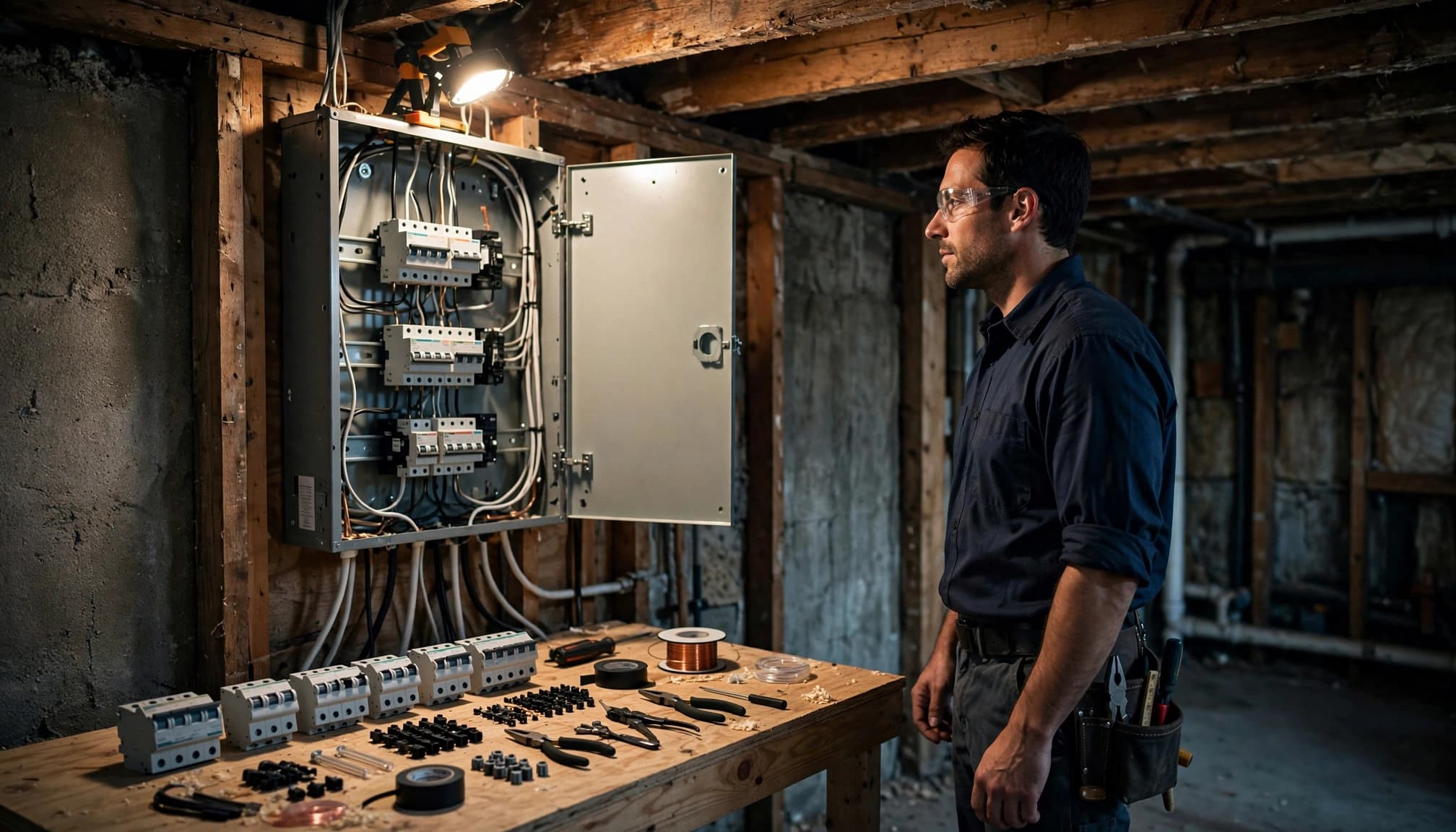
Don't assume the general contractor's building permit covers electrical work. Confirm the separate electrical permitting requirements with your municipality before work begins.
For permits granted after April 24, 2026, Massachusetts uses 527 CMR 12.00, based on NFPA 70's 2026 edition with state amendments. Ask the local Inspector of Wires which edition and procedures apply to your project.
The proposal should identify who applies, pays the fees, communicates with the inspector, and arranges inspections. Also clarify whether the price includes inspection attendance, corrections, and any reinspection charges.
Because Massachusetts electrical permit fees vary by municipality and project, compare the actual local charges rather than assuming a statewide amount.
Electrical work that requires inspection must remain visible until inspected. Coordinate rough approval before insulation or drywall conceals wiring. Final inspection generally follows completion of fixtures, devices, and connections.
Rule 10 provides inspection windows after proper notice: 24 hours for excavations and 72 hours for other installations, excluding Saturdays, Sundays, and holidays. Confirm local request procedures before digging or scheduling cover-up work.
Compare the Schedule With Your Renovation Plan
Ask for an expected start date, rough-in duration, and return date for finish work. Also identify dependencies, including demolition, framing, cabinet installation, and equipment delivery.
Electrical renovations often require multiple visits. Therefore, a promise to "finish in a week" needs clarification about which phase it covers.
Confirm who coordinates with the builder and other trades. If service work requires a utility appointment, ask whether that appointment is confirmed or still pending.
Discuss planned outages and how long affected areas may be without power. That matters when you occupy the home during construction.
Finally, ask how delayed selections, failed inspections, or hidden conditions affect the schedule. A realistic proposal identifies these dependencies without guaranteeing dates outside the contractor's control.
Review Payment Terms and Change Orders
Clear financial terms let you compare the amount due and when it becomes due. Get them in writing before authorizing work.
Tie payments to defined milestones
Compare the deposit, progress payments, and final payment requirements. Ask which work or material purchases each payment covers.
Milestones should describe observable progress, such as completed rough-in or finished installation. If a payment is tied to inspection approval, the agreement should say so.
Also identify payment methods, invoice deadlines, and any applicable fees. Avoid making a large advance payment without a clear explanation of what it funds.
Confirm the documents and remaining work required before final payment becomes due.
Require written authorization for changes
A change order should describe the added or removed work, the price adjustment, and the schedule effect. Ask whether overhead or material markups apply.
Distinguish owner-requested changes from concealed-condition work and corrections to the contractor's installation. The agreement should explain responsibility for each category.
For discoveries behind walls, establish a process for documenting the condition and obtaining approval before extra work proceeds, except for necessary immediate safety measures.
Verbal approvals can create disputes. Keep revised plans, pricing, and authorizations together with the original agreement.
Compare Warranties and Closeout Documents
Ask for the workmanship warranty in writing, including its duration, coverage, exclusions, and service-request process. Also determine when coverage begins.
Manufacturer warranties address equipment and may differ from the contractor's workmanship coverage. Ask who handles a defective fixture or breaker and whether related labor is included.
Inspection approval doesn't replace a workmanship warranty. Likewise, a product warranty doesn't necessarily pay for troubleshooting or replacement labor.
At completion, request permit records, inspection approvals, an updated panel schedule, and relevant equipment instructions. Keep warranty information and approved change orders with those records.
These documents help with future repairs and give you a clearer record of what the renovation included.
Key Takeaways: Compare the Complete Proposal
Use a comparison sheet to record each bidder's answer.
| Item | What to confirm |
|---|---|
| Scope | Same quantities, locations, and equipment |
| Price | Billing method, allowances, and exclusions |
| Credentials | Active license and current insurance |
| Approvals | Permit and inspection responsibilities |
| Contract | Schedule, payments, changes, and warranty |
Then request revised proposals where important details differ. Don't silently add guessed amounts to fill gaps; obtain written pricing or keep the uncertainty visible.
A low bid can be competitive and complete. However, it can also omit work another contractor included. Choose based on the complete scope and terms , supported by clear communication and verified credentials.
Frequently Asked Questions
Should I get more than one estimate?
Multiple estimates can help you identify differences in scope and pricing. However, they are useful only when contractors receive the same information.
If your plans change after a site visit, send the revision to every bidder before comparing their proposals.
Can I negotiate an electrical estimate?
You can ask about pricing and scope adjustments. Request separately priced options for discretionary fixtures or controls rather than removing required protection, permits, or inspections.
Any agreed reduction should appear in a revised proposal that identifies exactly what changed.
Choose a Bid You Can Verify
Reliable electrician estimates describe the finished work, the approval process, and your financial responsibilities. The lowest total deserves consideration only after those details match.
Before signing, resolve missing scope items and verify credentials. A clear written agreement gives you a stronger basis for managing the renovation and fewer surprises when the walls open.