

Massachusetts Bathroom Outlet Requirements for Homeowners

Contact Us
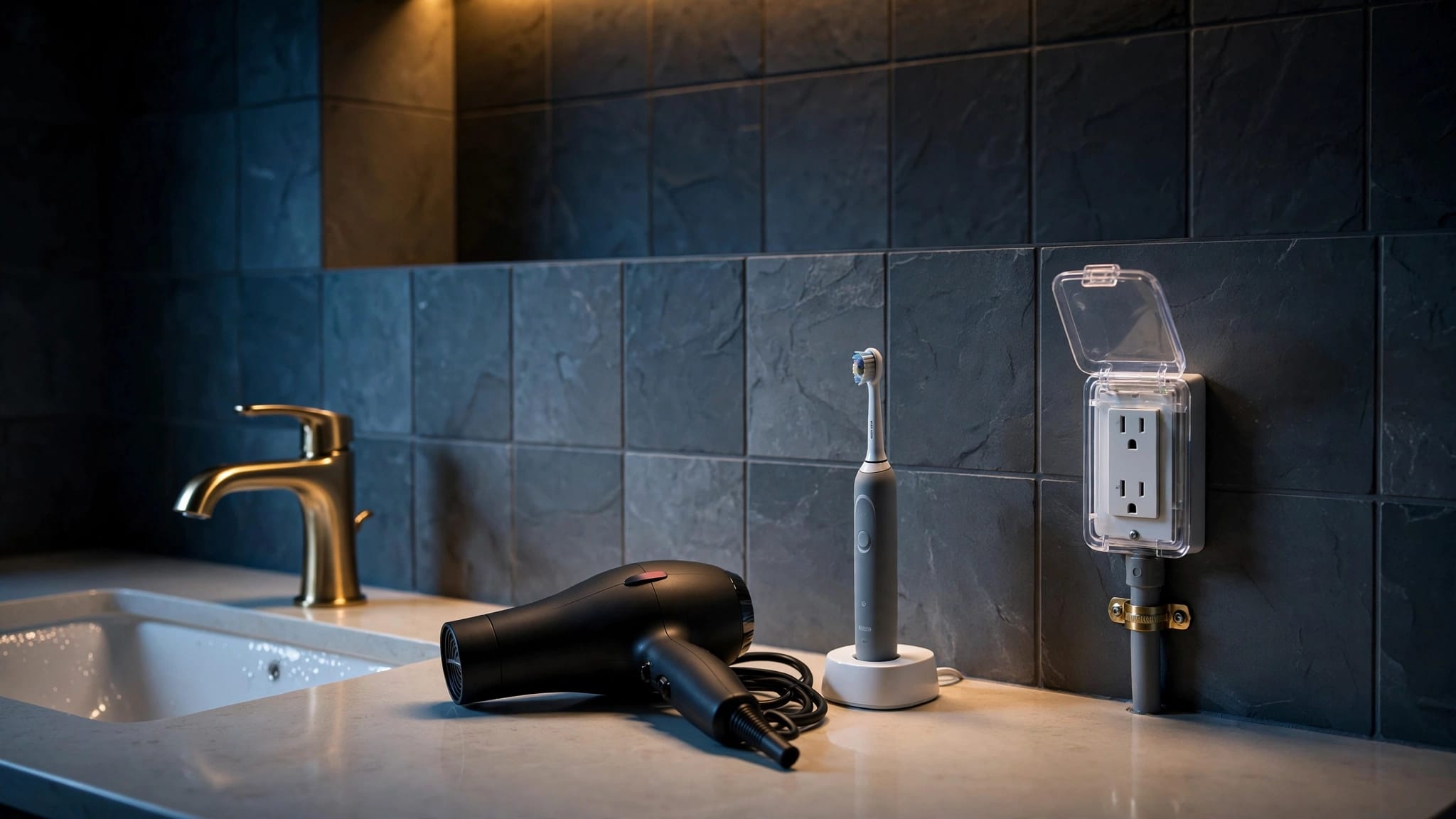
A bathroom outlet may look like a small detail, yet it sits where water, bare feet, and electricity meet. Massachusetts bathroom outlet requirements set clear rules for protection, placement, and circuits so everyday tasks like charging a toothbrush or using a hair dryer are safer.
Those rules matter most during a remodel, but older bathrooms deserve attention too. A loose receptacle, a missing GFCI device, or an outlet squeezed beside a sink can create trouble long before a renovation begins.
The right plan starts with the rules that apply to your home and your project.
Massachusetts Bathroom Outlet Requirements at a Glance
Massachusetts regulates residential electrical work through 527 CMR 12.00, the Massachusetts Electrical Code. The state posts amended, NEC-based code materials, including updates effective in 2026. However, the edition applied to your work can depend on the permit date, project scope, and local enforcement policy.
For a new bathroom or major renovation, the basic expectations are consistent: provide a receptacle near the basin, protect it with GFCI technology, and supply it from an appropriate bathroom circuit.
A receptacle is required near every bathroom basin
NEC 210.52(D) requires at least one receptacle outlet in every dwelling-unit bathroom. The required outlet must be within 3 feet of the outside edge of the basin.
It also needs to sit on a wall or partition next to the basin or its countertop. A receptacle across the room may be convenient, but it doesn't satisfy the required basin location.
A bathroom with a long vanity and two separate sinks often needs careful planning. The code's basin rule can affect where the electrician places outlets, switches, mirrors, and light fixtures.
Every standard bathroom receptacle needs GFCI protection
Under NEC 210.8(A)(1), all 125-volt, single-phase, 15- and 20-amp receptacles in dwelling-unit bathrooms require ground-fault circuit-interrupter protection.
A GFCI monitors the electrical current. If it detects an imbalance that can point to current traveling through water or a person, it disconnects power quickly.
Protection may come from a GFCI receptacle, a GFCI circuit breaker, or another listed method that covers the outlet. The device location and wiring arrangement matter, so an electrician should determine the correct approach.
The 20-Amp Bathroom Circuit Rule
Bathroom outlets need more than a protective device. They also need enough circuit capacity for the equipment people use near the vanity.
NEC 210.11(C)(3) calls for at least one 120-volt, 20-amp branch circuit to supply bathroom receptacle outlets in a dwelling. This requirement helps avoid loading a general lighting circuit with hair dryers, curling irons, electric razors, and similar appliances.
The circuit usually can't supply other rooms
The required 20-amp bathroom receptacle circuit generally cannot supply outlets outside the bathroom. That means it should not also feed a bedroom, hallway, basement, or kitchen receptacle.
This detail often surfaces in older Greater Boston homes. An existing bathroom outlet may share a circuit with nearby rooms because the home was wired before current requirements applied. Reusing that circuit during a renovation can create a permit issue.
One-bathroom exception can allow lighting
There is a limited exception for a circuit that supplies only one bathroom. In that case, the same 20-amp circuit may also supply other equipment in that bathroom, such as lights or an exhaust fan, if the installation complies with the applicable load and circuit rules.
The exception does not allow that circuit to extend into another room. A licensed electrician can determine whether a proposed circuit arrangement qualifies before walls are closed.
A dedicated bathroom circuit doesn't always mean a separate circuit for every device. It means the circuit's permitted loads and locations must match the code rule used for the installation.
Sink, Shower, and Tub Placement Limits
An outlet belongs where it can be used safely and where it remains accessible. Bathroom layouts can make that harder than it sounds, especially in compact powder rooms and renovated historic homes.
Massachusetts amendments include additional wet-area location language that homeowners should not overlook.
Keep receptacles out of shower and tub spaces
Massachusetts rules prohibit receptacles within or directly over a bathtub or shower stall. A receptacle placed close to a shower enclosure may look useful for grooming equipment, but it can violate the location restriction.
This is one reason an outlet plan should come before tile, glass, and cabinetry go in. Moving a box after waterproofing and finish work is more disruptive and more expensive.
Vanity cabinets need extra review
Massachusetts code language also addresses receptacles located within 6 feet of the top inside edge of a sink bowl. It includes receptacles inside a cabinet that supports a sink.
That doesn't mean every vanity cabinet outlet is automatically prohibited. It means the location needs a close code review. Hidden outlets can be difficult to access, exposed to plumbing leaks, or improperly placed near the sink.
If you want power for a built-in hair dryer dock, electric toothbrush charger, or lighted medicine cabinet, discuss the equipment during design. An electrician can plan the wiring without compromising the bathroom's layout or inspection path.
New Construction, Renovations, and Existing Bathrooms
The same bathroom can face different requirements depending on whether it is new, renovated, or untouched. Massachusetts bathroom outlet requirements apply most directly to newly installed work, while existing installations require a more project-specific review.
New work gets the current rule set
New construction and a newly built bathroom usually need the full modern arrangement. That includes a properly placed receptacle, GFCI protection, and a compliant 20-amp bathroom branch circuit.
The electrician also considers box placement, grounding, wiring protection, device listing, load calculations, and the final wall finish. A receptacle that sits crooked, loose, or too deep behind tile can cause problems even if the circuit itself is correct.
A remodel can trigger upgrades
Changing a vanity, relocating a sink, adding a shower, or opening walls may bring portions of the electrical work under the code edition used for that permit. The inspector may require updates that an untouched older bathroom did not need.
For example, moving an old receptacle could require a new GFCI-protected outlet within 3 feet of the basin. Reusing a shared 15-amp circuit may also be rejected when new bathroom receptacle work is part of the project.
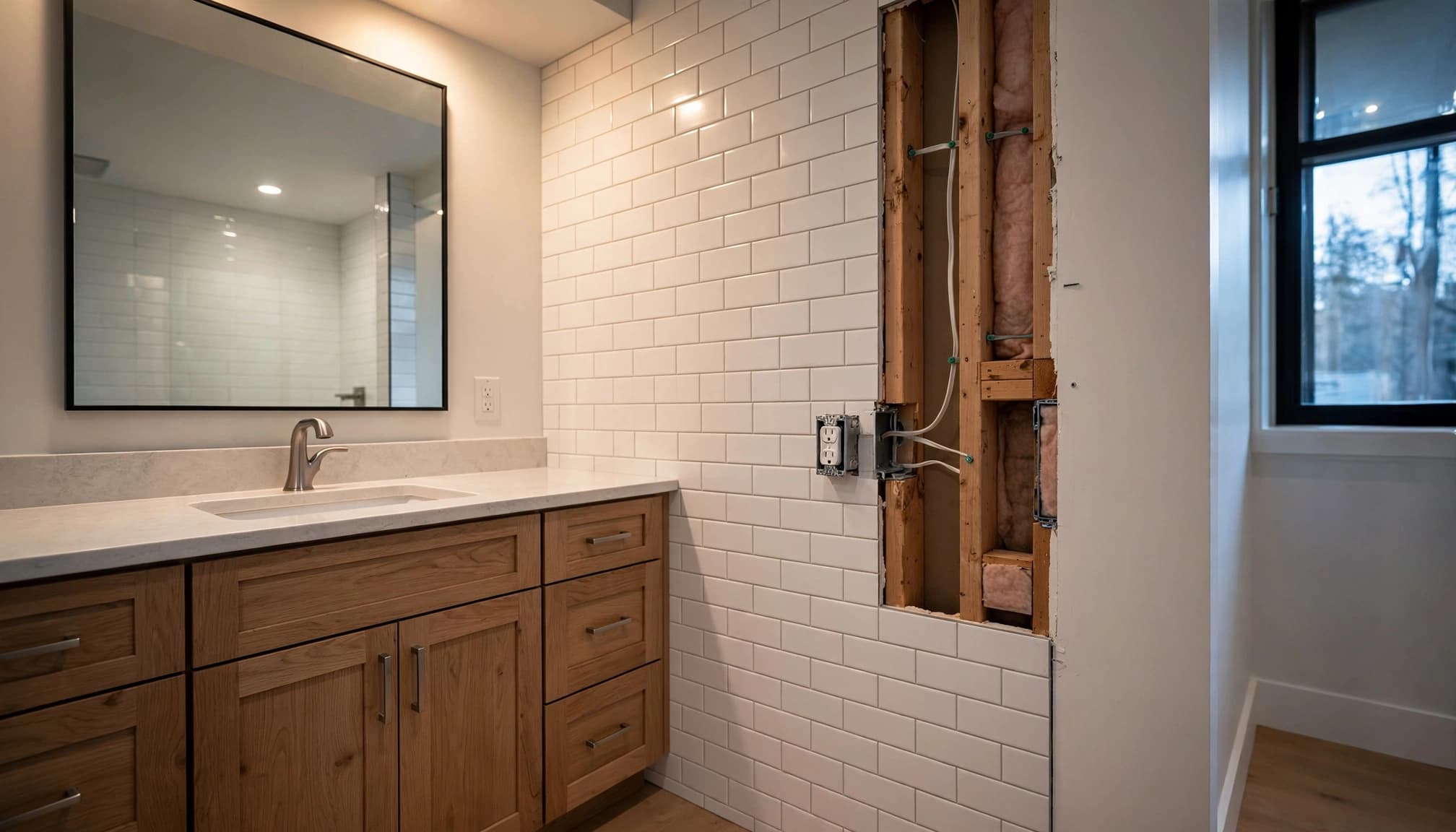
Before drywall goes up, review what happens during a Massachusetts electrical rough inspection. Inspectors may need to see cable routing, box locations, grounding, and protection before finished surfaces hide the work.
Existing outlets aren't automatically illegal
An older bathroom outlet does not automatically require replacement just because newer code rules differ. Existing installations can remain in place unless the work changes the system, a dangerous condition exists, or the local authority requires an upgrade for the project.
Still, age matters. Knob-and-tube wiring, ungrounded receptacles, damaged insulation, and loose device boxes need professional attention. An electrician should explain whether a recommendation addresses an immediate hazard, permit-triggered work, or a practical safety improvement.
AFCI Protection and GFCI Protection Are Different
GFCI protection is the central bathroom outlet requirement because it helps reduce shock risk in wet locations. AFCI protection addresses a different risk, electrical arcing that can lead to overheating or fire.
Some homeowners assume that a GFCI outlet covers every protective requirement. It doesn't. A circuit may need one form of protection, both forms, or a particular listed breaker arrangement based on the adopted code and the circuit's location.
Ask about protection before choosing devices
Bathroom wiring can connect to equipment beyond a vanity receptacle. A remodel might include a heated floor, bidet seat, exhaust fan, illuminated mirror, or a circuit that passes through other rooms.
Because Massachusetts code amendments and local interpretations can affect AFCI treatment, have the electrician confirm the requirements for the exact project. This is especially important when a panel has older breakers or limited space for GFCI or dual-function breakers.
Don't treat a tripped GFCI as a nuisance
A GFCI that trips once may have detected moisture or a faulty appliance. One that repeatedly trips, won't reset, feels warm, buzzes, or has discoloration needs professional troubleshooting.
Do not bypass the device, replace it with a standard receptacle, or remove the cover to investigate wiring. For more context on common causes and safe next steps, read why a GFCI outlet will not reset.
Permits, Inspections, and Local Authority
Electrical permits and inspection procedures vary by municipality. Boston, Cambridge, Burlington, and other Greater Boston communities set their own local administrative processes, fee schedules, and reinspection charges.
Boston's electrical fee schedule, for example, includes a $20 application charge plus $1 per fixture, plug, or outlet for work that does not change the service. That municipal fee is separate from the contractor's price for electrical labor and materials.
Confirm the scope before work begins
Ask the electrician who will obtain the permit, schedule inspections, and handle any correction notices. Also ask whether the estimate includes return trips if an inspector requests a change.
A failed inspection can add cost through a municipal reinspection fee and the labor needed to correct the item. Cambridge lists a $50 reinspection fee for code violations, while other communities use different schedules.
Keep your permit, approved plans, inspection results, photographs, and repair invoices with your property records. Those documents can help during a future remodel, home sale, or insurance review.

When a Licensed Electrician Should Step In
Bathroom electrical work is not a place for trial and error. Installation, alterations, circuit tracing, panel changes, and troubleshooting belong with a licensed electrician.
Call for help if an outlet is loose, cracked, hot, discolored, sparking repeatedly, or unable to hold a plug firmly. A burning smell, popping sound, or frequent breaker trip calls for prompt attention as well.
An electrician can inspect the receptacle, test the circuit, check grounding and GFCI protection, and identify hidden issues before they become more serious. For a renovation, the electrician can also coordinate the outlet layout with the vanity plan and local inspection schedule.
Final Thoughts on Bathroom Outlet Safety
A compliant bathroom outlet is placed near the basin, protected by GFCI technology, and supplied by the right circuit. Those details protect more than a final inspection, they help make daily bathroom use safer.
Because code editions, project scope, and municipal practices can differ, treat this article as general information rather than a final code ruling. Your local building official and Inspector of Wires have final authority, and a licensed electrician can confirm what applies to your Massachusetts home.