

Massachusetts EV Charger Installation Requirements for Homeowners

Contact Us
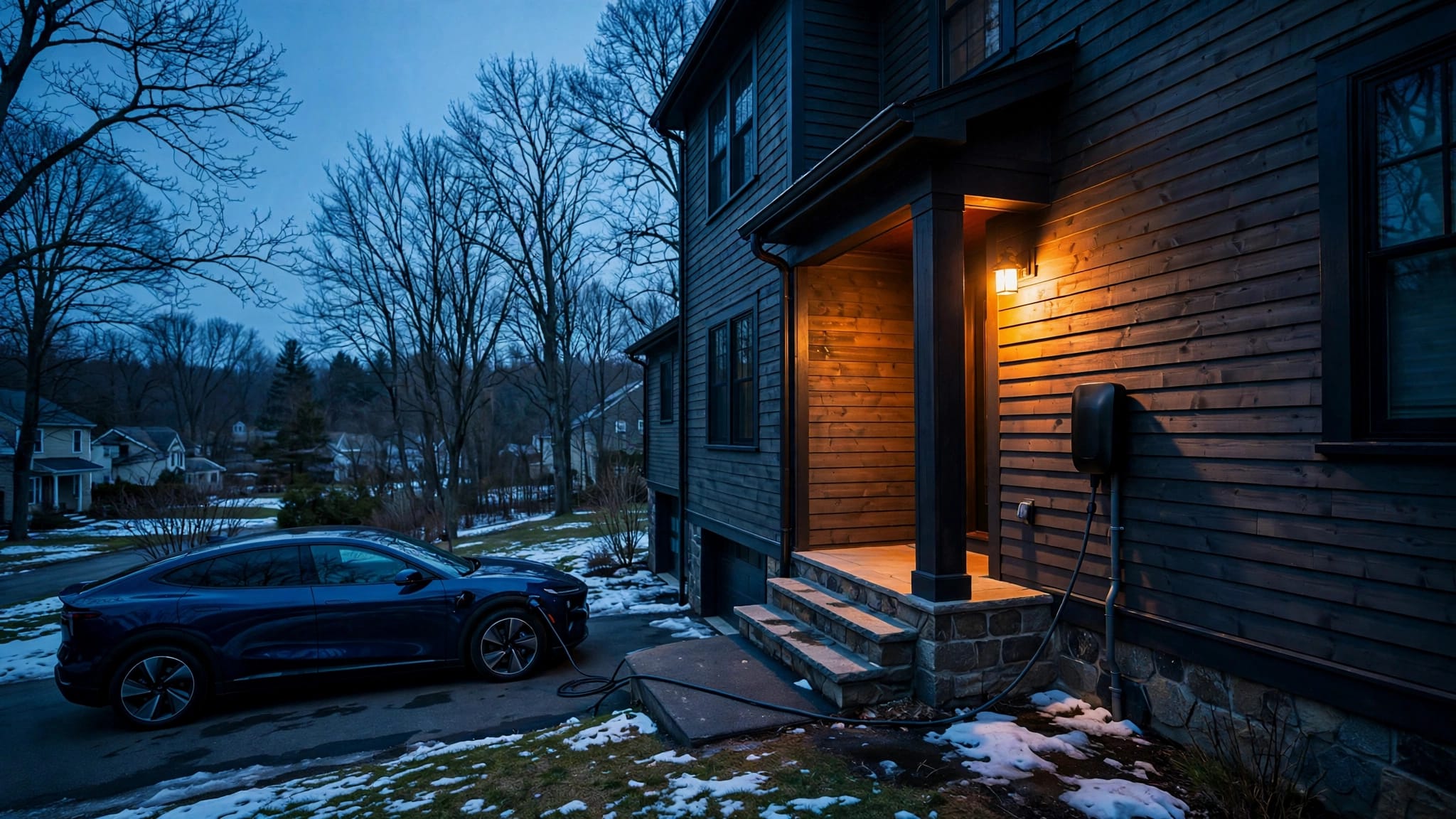
A home EV charger can make daily driving much easier, but it also adds one of the largest continuous electrical loads in your house. A proper Massachusetts EV charger installation starts with your electrical service, not the charger box you plan to buy.
For most homeowners, a Level 2 charger needs a new dedicated 240-volt circuit, an electrical permit, and a final inspection. The details vary by town, your home's age, the charger location, and whether you own a single-family house, condo, or multifamily unit.
Planning the electrical work before ordering equipment keeps the project safer and prevents expensive changes later.
Start With the Statewide Rules and Local Requirements
Massachusetts electrical work follows the Massachusetts Electrical Code, which is based on the National Electrical Code, or NEC, with state amendments. EV charging equipment falls under NEC Article 625, the section that addresses electric vehicle supply equipment.
An EV charger is technically called EVSE , short for electric vehicle supply equipment. The EVSE manages the flow of power to the vehicle and communicates with it during charging. Many people call it a charger because that is the familiar term.
What usually requires a permit
A new Level 2 circuit, panel replacement, subpanel, trenching, and service upgrade are electrical projects that generally require a local permit and inspection. Your licensed electrician typically handles the permit process, although homeowners should confirm who is listed as the permit holder.
A simple replacement of existing equipment may follow a different path, but do not assume a replacement is permit-free. The local wiring inspector decides what documentation and inspection apply.
Why your city or town matters
The statewide code sets the safety baseline. However, each municipality manages its own permit application, wiring inspector, inspection schedule, and local review process.
Some towns may ask for a charger specification sheet, circuit information, a load calculation, or a site plan. Exterior equipment, underground wiring, garage modifications, and service upgrades can also involve building, zoning, or fire officials.
For a helpful local overview, review this Greater Boston EV charger installation guide before scheduling work.
A permit confirms that the installation can be inspected. It does not replace a careful review of the home's panel, wiring condition, and future electrical plans.
Choose the Right Charging Level and Circuit Rating
Most homeowners choose between Level 1 and Level 2 charging. The best option depends on daily mileage, time at home, vehicle capability, and the available electrical capacity.
Level 1 charging uses a standard 120-volt outlet and is slower. It may work well for a plug-in hybrid or a vehicle with modest daily driving. Still, the receptacle and circuit must be in sound condition and suitable for continuous use.
Level 2 charging for daily convenience
Level 2 EVSE uses 240 volts and can replenish much more range overnight. It usually needs a dedicated branch circuit installed for that equipment.
The charger setting and circuit rating must match. For example, EV charging is treated as a continuous load, meaning it can run for three hours or more. The electrical circuit must be sized accordingly, often at 125% of the EVSE's maximum continuous output.
A 40-amp EVSE, for instance, commonly needs a 50-amp circuit. The electrician selects the proper breaker, conductors, wiring method, and equipment based on the EVSE instructions and the applicable code.
Buy equipment that fits the plan
Do not pick charger amperage based only on the largest model available. A lower-amperage setting may meet your needs while avoiding major service work.
Check these items before buying:
- Confirm the vehicle's maximum AC charging rate and connector type.
- Ask whether the EVSE is listed by a recognized testing laboratory.
- Verify whether the manufacturer permits hardwired installation, plug-in installation, or both.
- Compare cable length with your actual parking position, without relying on extension cords.
- Ask the electrician whether the planned circuit can support the EVSE's full output setting.
A charger that charges overnight at a sensible rate is often a better fit than an oversized unit that forces an unnecessary upgrade.
Massachusetts EV Charger Installation and Panel Capacity
A panel label showing 100 amps or 200 amps does not settle the question. Service capacity is the amount of electricity your home can safely support after all required loads are considered.
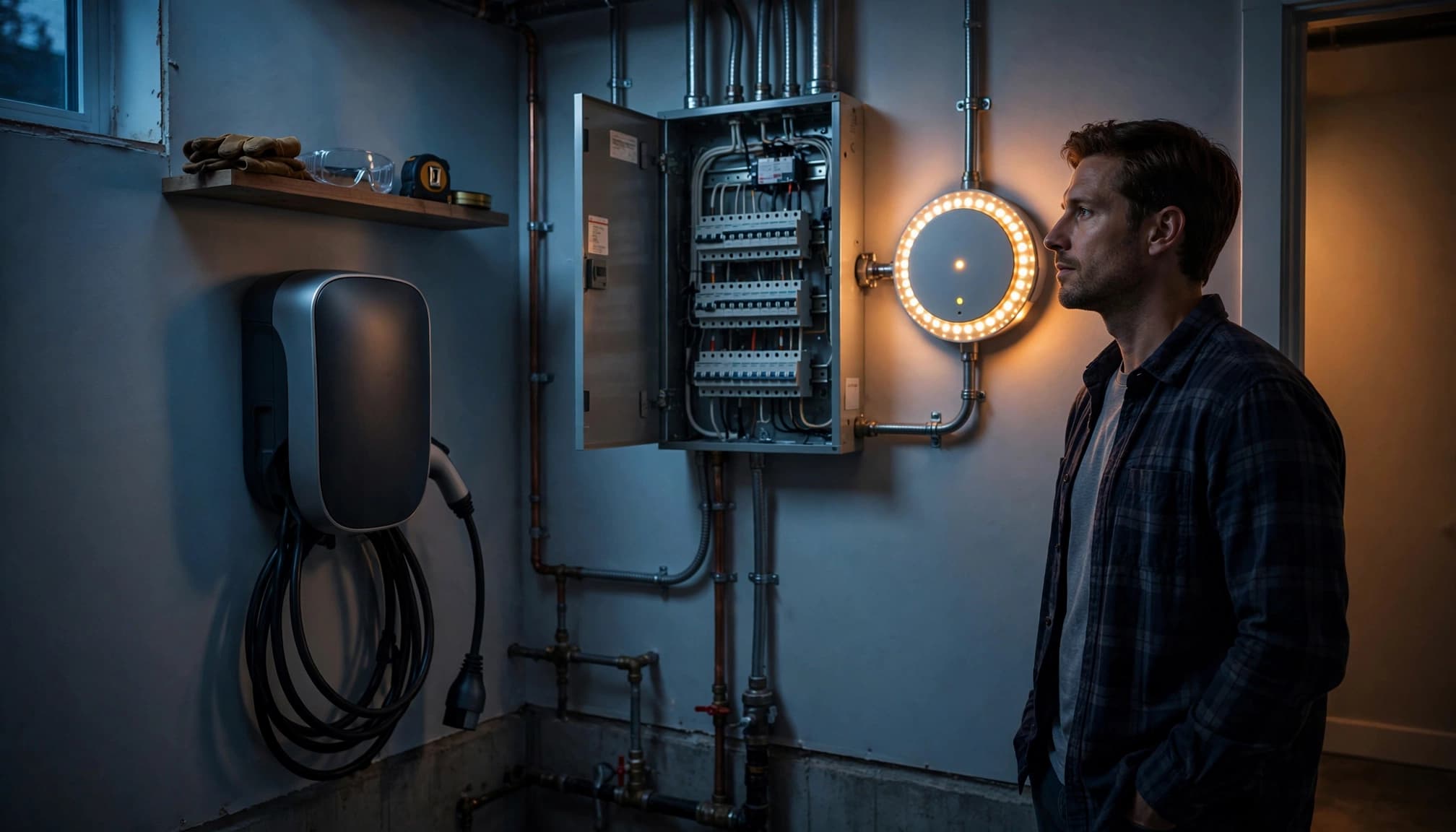
Your electrician should review the service rating, panel bus rating, breaker spaces, existing feeders, major appliances, heating equipment, air conditioning, and planned upgrades. An EVSE adds a substantial new load, especially in homes shifting toward heat pumps, induction ranges, electric dryers, or future battery systems.
What a load calculation measures
A load calculation uses NEC-based methods to estimate the home's electrical demand. It is more useful than counting empty breaker slots.
An empty breaker position does not prove that the service can carry another large load. On the other hand, a 100-amp service does not automatically rule out EV charging. The calculation, actual equipment, and local requirements determine the safe path forward.
A professional residential electrical load calculation also helps you plan for future work instead of paying to reconfigure the panel twice.
When additional electrical work is needed
If the calculation shows limited capacity, the answer may be a panel upgrade, subpanel, service upgrade, reduced EVSE setting, or load-management device.
A subpanel adds breaker spaces and can simplify a garage installation. It does not add power to an overloaded service by itself. A service upgrade may involve the meter equipment, service conductors, grounding, bonding, and utility coordination.
A load-management device monitors the home's demand and temporarily reduces or pauses EV charging when needed. It can be a practical option when the service has little room for another continuous load.
Hardwired vs. Plug-In EV Charger Installations
Homeowners often focus on the EVSE brand first. The connection method matters just as much. A Level 2 unit may be hardwired directly to the branch circuit or connected through a 240-volt receptacle.
Hardwired EVSE installations
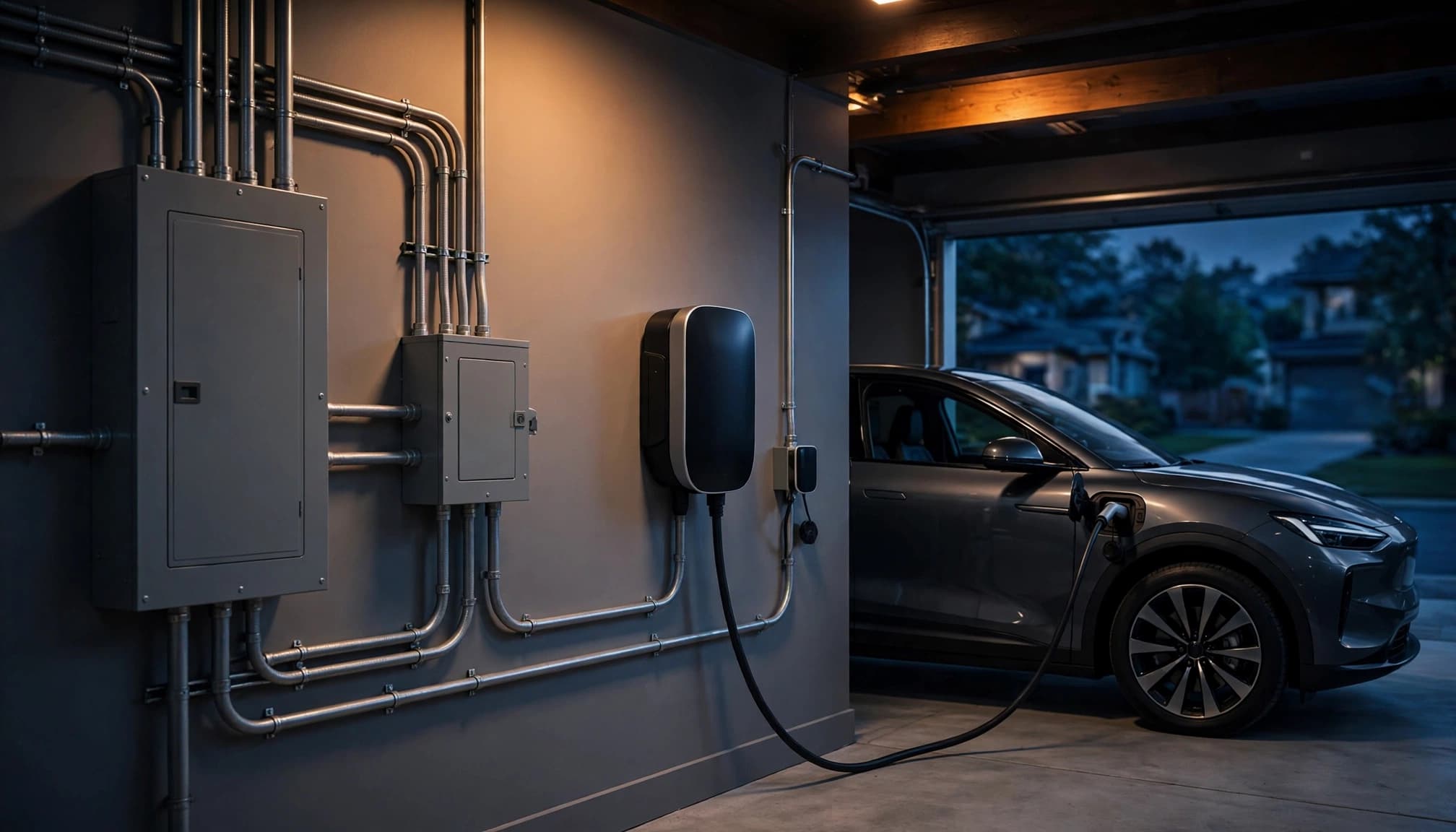
A hardwired unit connects directly to the circuit wiring rather than plugging into an outlet. It can provide a clean, permanent setup and removes the receptacle from the connection point.
The installation still needs a dedicated circuit, proper overcurrent protection, grounding, correct conductor sizing, and compliance with the manufacturer's instructions. Depending on the equipment location and applicable code, the electrician may also need to provide a disconnecting means.
Hardwired equipment can be a strong choice for outdoor installations or higher-output home charging.
Plug-in installations and GFCI protection
A plug-in Level 2 EVSE uses a 240-volt receptacle, often in a garage. The receptacle type, enclosure, location, breaker, and wiring all need to match the charger and code requirements.
GFCI protection shuts off power when it detects current taking an unintended path, which can help protect people from shock. GFCI rules often affect receptacles in garages, basements, exterior areas, and damp locations. The requirements can differ between a receptacle-fed EVSE and a hardwired unit.
Do not use a dryer outlet, adapter, worn receptacle, or extension cord as a shortcut. Repeated heat, loose connections, or a burning smell can damage equipment and create a fire hazard.
Plan a Safe Charger Location and Wiring Route
The closest wall to the electrical panel often reduces labor, but convenience is only part of the decision. The charger needs to work with how you park, open doors, store equipment, and move through the garage.
Choose a spot where the cable reaches the vehicle charge port without crossing a walkway. Keep the EVSE away from places where vehicles, bicycles, shovels, or storage bins can strike it.
Garages, driveways, and outdoor walls
A garage installation often allows a protected route for wiring. Even so, an electrician must consider moisture, physical damage, clear working space around the panel, and cable support.
Outdoor equipment needs a listed enclosure suited to its environment. Weather exposure, snow removal, driveway traffic, and the route of underground wiring all affect the design. Exterior wall penetrations may also need weather sealing and, in some properties, building or fire review.
Older homes need a closer look
Greater Boston homes can have mixed-era electrical work behind finished walls. An EV circuit may expose issues such as crowded panels, outdated grounding, cloth-insulated wiring, aluminum branch wiring, or unprotected cable runs.
Knob-and-tube wiring is common in some older homes. Its presence does not automatically prevent an EV project, but it calls for a careful assessment before adding a major new load. A service upgrade may also prompt updates to grounding and bonding equipment.
Keep junction boxes accessible. A splice hidden behind drywall, flooring, or insulation can delay an inspection and complicate future repairs.
Permits, Inspections, and the Project Sequence
A good Massachusetts EV charger installation follows a clear order. First comes the site review and load calculation. Then the electrician selects the electrical approach, confirms local permit needs, and files the required application.
What inspectors commonly review
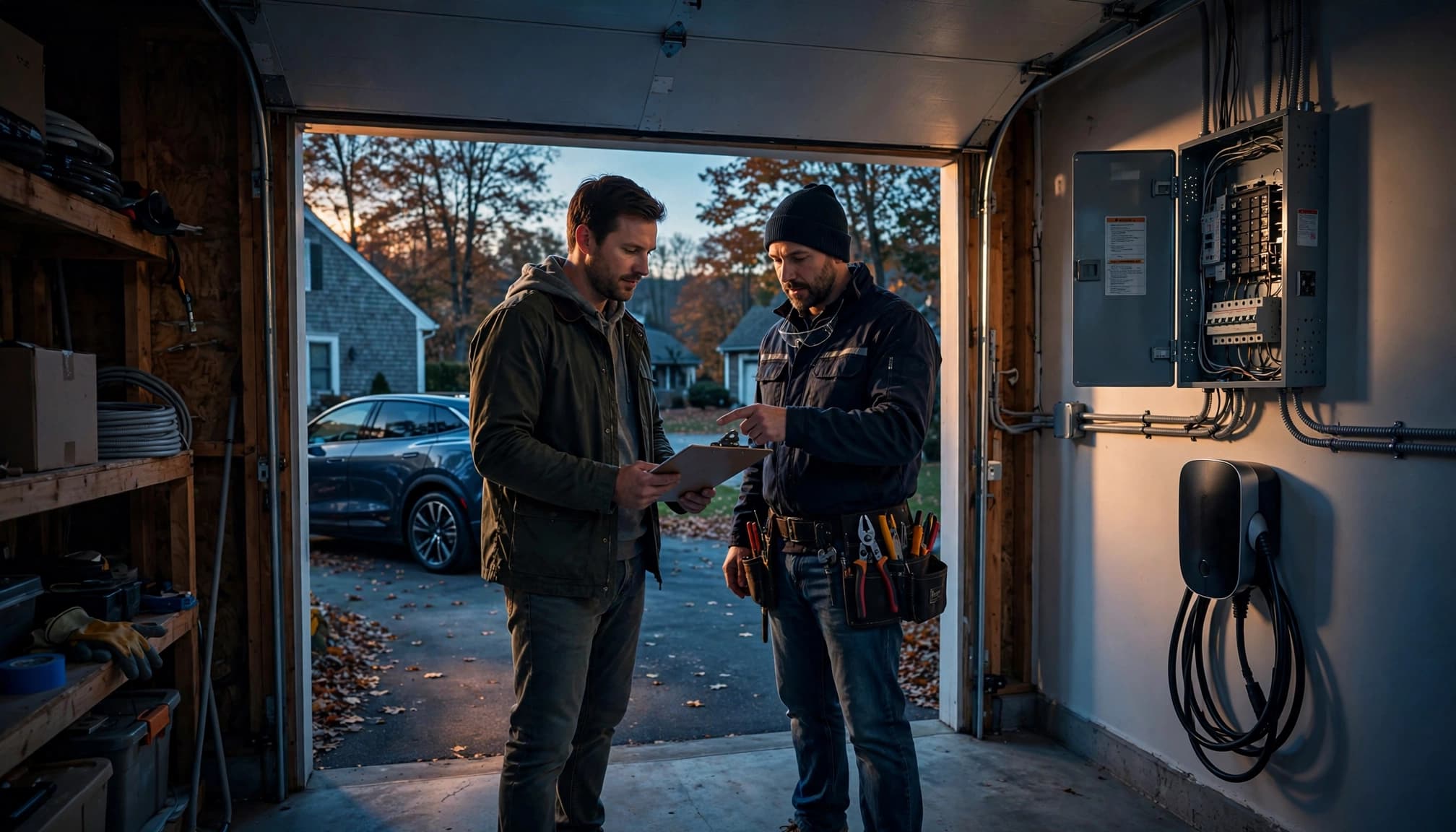
The local wiring inspector may review the circuit rating, wire size, grounding, breaker selection, equipment listing, cable protection, and charger placement. If the work includes a panel, service, trench, or wall opening, other stages or inspections may apply.
Some work must stay visible until inspection. Do not cover conduit, junction boxes, cable runs, or equipment connections before the electrician confirms that the inspector has approved the stage.
This overview of EV charger electrical inspections in Massachusetts can help homeowners understand why an inspector may need access before walls or finishes close.
Final approval is part of the job
After the installation, the electrician tests the equipment and schedules or coordinates the final inspection required by the municipality. Keep the permit record, inspection approval, charger manual, and warranty information with your home documents.
That paper trail can help during a future sale, insurance question, service upgrade, or charger replacement.
Condos, HOAs, and Multifamily Homes Add More Steps
A detached single-family house usually gives the owner more control over charger placement. Condominiums, townhomes, apartments, and shared garages involve additional people and systems.
You may need written approval from a condominium association, HOA, property manager, or landlord before equipment is ordered. Review the governing documents before construction begins.
Shared power and common areas
Common garages may have shared electrical rooms, common meters, limited service capacity, and fire-rated walls. The project may need a method for measuring electricity use or assigning charging costs.
Routing a circuit across a common area can require board approval and may affect other owners. Building management may also set standards for equipment appearance, contractor insurance, work hours, wall penetrations, and restoration.
Local fire and zoning review
Fire-safety or zoning questions are more likely when the work involves common areas, a commercial garage, outdoor pedestals, trenching, or structural changes. Requirements are local and property-specific.
Ask the building department whether the electrical permit is enough or if another department needs to review the plan. Get approvals in writing before walls are opened or equipment arrives.
Check Utility Programs Before You Buy Equipment
Massachusetts utilities may offer EV charging programs, off-peak rates, managed charging options, or incentives tied to charger installation and electrical upgrades. Eversource, National Grid, Unitil, and Cape Light Compact have offered residential EV-related programs, but eligibility and funding can change.
Program terms may depend on your utility territory, electric rate, income qualification, charger model, installation date, participation in managed charging, and proof of completed work.
Timing can affect eligibility
Some programs require enrollment, pre-approval, a qualified smart charger, or documentation before a rebate application. Buying equipment too early may limit your options.
Confirm the current program directly with your utility before signing a contract. Ask whether electrical panel work, wiring, charger hardware, permit costs, or managed charging participation qualify.
Utility involvement is usually unnecessary for a standard home EVSE circuit. However, a service upgrade may require utility coordination for meter work, service conductors, or transformer capacity.
Questions to Ask Before Hiring an Electrician
A clear proposal should explain more than the charger price. It should show how the electrician plans to make the equipment safe, compliant, and practical for your home.
Ask these questions during the site visit:
- Will you perform a load calculation and review my main service capacity?
- Does the quoted work include permit filing, inspection coordination, and correction of any listed items?
- Is a hardwired EVSE or a receptacle-fed installation the better choice for this location?
- What circuit rating and charger setting do you recommend, and why?
- Will the project need a panel upgrade, subpanel, load-management device, or utility coordination?
- How will you route and protect the wiring through the garage, basement, attic, or exterior wall?
- Does the estimate include patching, trenching, meter work, grounding updates, or permits if those become necessary?
- Can the installation accommodate a second EV, heat pump, solar system, or battery storage later?
For homeowners who need a professional review, residential EV charger installation should include both equipment selection and an honest look at the home's electrical system.
Common Mistakes That Create Delays and Safety Risks
The fastest way to complicate a charger project is to treat it like an appliance purchase. A Level 2 EVSE is a permanent electrical load that needs a proper design.
Do not install a charger on an overloaded panel, use a damaged receptacle, run the cable where it can be crushed, or place equipment where a car door can strike it. Never rely on extension cords for EV charging.
Avoid hiding junction boxes, covering uninspected wiring, or adding breakers without a load calculation. A breaker trip is a warning, not a sizing method.
If you notice hot outlets, a loose plug, buzzing, repeated tripping, discoloration, sparks, or a burnt-plastic smell, stop using the affected equipment. Turn off the circuit only if you can do so safely, then contact a qualified electrician.
A Safer Way to Bring EV Charging Home
A successful Massachusetts EV charger installation fits the vehicle, the electrical system, and the rules where you live. The right project may be a straightforward dedicated circuit, or it may call for load management, panel work, or a larger service plan.
Permits, inspections, and local approvals protect the home long after the charger is mounted. This article provides general information, not legal or electrical advice, so confirm current requirements with your municipality, utility, property association, and licensed electrician before work begins.
A charger should make your routine easier without asking more of the electrical system than it can safely provide.