
Massachusetts Electrical Disconnect Rules for Homeowners

Contact Us

A Massachusetts electrical disconnect gives you and first responders a way to shut off power to a service or piece of equipment. However, the correct location, rating, labeling, and installation depend on the home's age, the equipment, the permit date, and the local inspector's requirements.
The rules also changed with Massachusetts' 2026 code adoption. Before replacing a panel, adding a generator, or installing an outdoor disconnect, confirm which code edition applies and have a Massachusetts-licensed electrician review the work.
Massachusetts electrical disconnect rules at a glance
Which code applies in 2026?
Massachusetts uses the statewide Massachusetts Electrical Code, found in 527 CMR 12.00 . For permits granted after April 24, 2026, the code is based on the 2026 edition of the National Electrical Code (NEC) , also known as NFPA 70.
That date matters. A project permitted before April 24 may follow an earlier adopted code edition, while new work under a later permit generally falls under the 2026 requirements. Repairs, alterations, replacements, and service changes can also receive different treatment.
The 2026 Massachusetts electrical code updates explain why the permit date matters when reviewing a disconnect or other service equipment.
What a disconnect actually does
A disconnecting means separates electrical equipment from its power source. Depending on the installation, it may shut off the entire dwelling service, a feeder, an air conditioner, a heat pump, a generator, solar equipment, or another fixed load.
A disconnect is not automatically the same thing as a circuit breaker. Some disconnects contain overcurrent protection, while others provide only a means to isolate equipment. The electrician must match the device to the system voltage, available fault current, conductor size, equipment rating, and manufacturer's instructions.

Main service disconnect requirements
Article 230 and the six-disconnect framework
General NEC service rules appear mainly in Article 230 . Under the standard NEC framework, a service can have up to six service disconnecting means, subject to grouping and equipment requirements. Those disconnects must be arranged so the service can be disconnected without searching through unrelated parts of the building.
That six-disconnect rule does not mean every home should have six switches. Most residences have one main service disconnect, either in the main panel or in separate service equipment. A larger or more complex property may have additional service disconnects, but the design must follow the applicable code and utility requirements.
The service rating also matters. A disconnect must be suitable for the service and have an adequate interrupting rating for the available fault current. A device that physically fits the enclosure may still be unsuitable for the electrical system.
Accessibility, grouping, and identification
Service disconnects generally need to be readily accessible to authorized occupants and emergency personnel. They should not be hidden behind stored items, permanently blocked by construction, or installed where normal access requires unsafe movement.
When multiple disconnects are permitted, the equipment usually needs to be grouped and identified. Labels should accurately show what each disconnect controls. A faded, missing, or incorrect label can create a serious problem during an emergency or inspection.
Older Greater Boston homes may have fuse panels, crowded service equipment, altered wiring, or undersized services. A panel replacement may therefore involve more than changing the enclosure. The electrician may need to review grounding and bonding, service conductors, the meter equipment, available fault current, and the planned electrical load.
The Article 230.85 emergency disconnect transition
What Massachusetts required in earlier projects
Massachusetts adopted an emergency-disconnect amendment for certain new one- and two-family dwellings and homes where the entire service was replaced. That 2020 amendment addressed an outdoor, readily accessible location, grouping of multiple disconnects, fault-current ratings, and specified identification.
Those requirements may still matter when reviewing older permits, existing installations, or a project governed by an earlier code edition. They should not be applied automatically to every house or every replacement.
Why the 2026 code must be verified
The current transition requires care because the 2026 amendment materials indicate that NEC Article 230.85 is deleted in the 2026 NEC . That creates an important distinction between the earlier Massachusetts emergency-disconnect amendment and work permitted under the current code.
Homeowners should not rely on an online summary that says every Massachusetts home needs an outdoor emergency disconnect. The answer depends on the permit date, whether the work is new construction or a complete service replacement, the final Massachusetts code text, the equipment arrangement, and the local authority having jurisdiction.
Before work begins, ask the electrician and the local Inspector of Wires:
- Which Massachusetts code edition applies to this permit?
- Is the project a service replacement, a panel replacement, or a repair?
- Does the design require an exterior disconnect?
- What labels, grouping, access, and clearances will the inspector expect?
Disconnects for HVAC, generators, solar, EV chargers, and pools
Different equipment uses different NEC articles and may have separate installation requirements. A disconnect that works for an air conditioner may not be suitable for a generator or photovoltaic system.
HVAC and heat-pump equipment
Air conditioners, heat pumps, boilers, and other mechanical systems often require a disconnect near the equipment. HVAC installations commonly involve Article 440 , but the final design also depends on the unit's nameplate, the manufacturer's instructions, conductor sizing, and the wiring method.
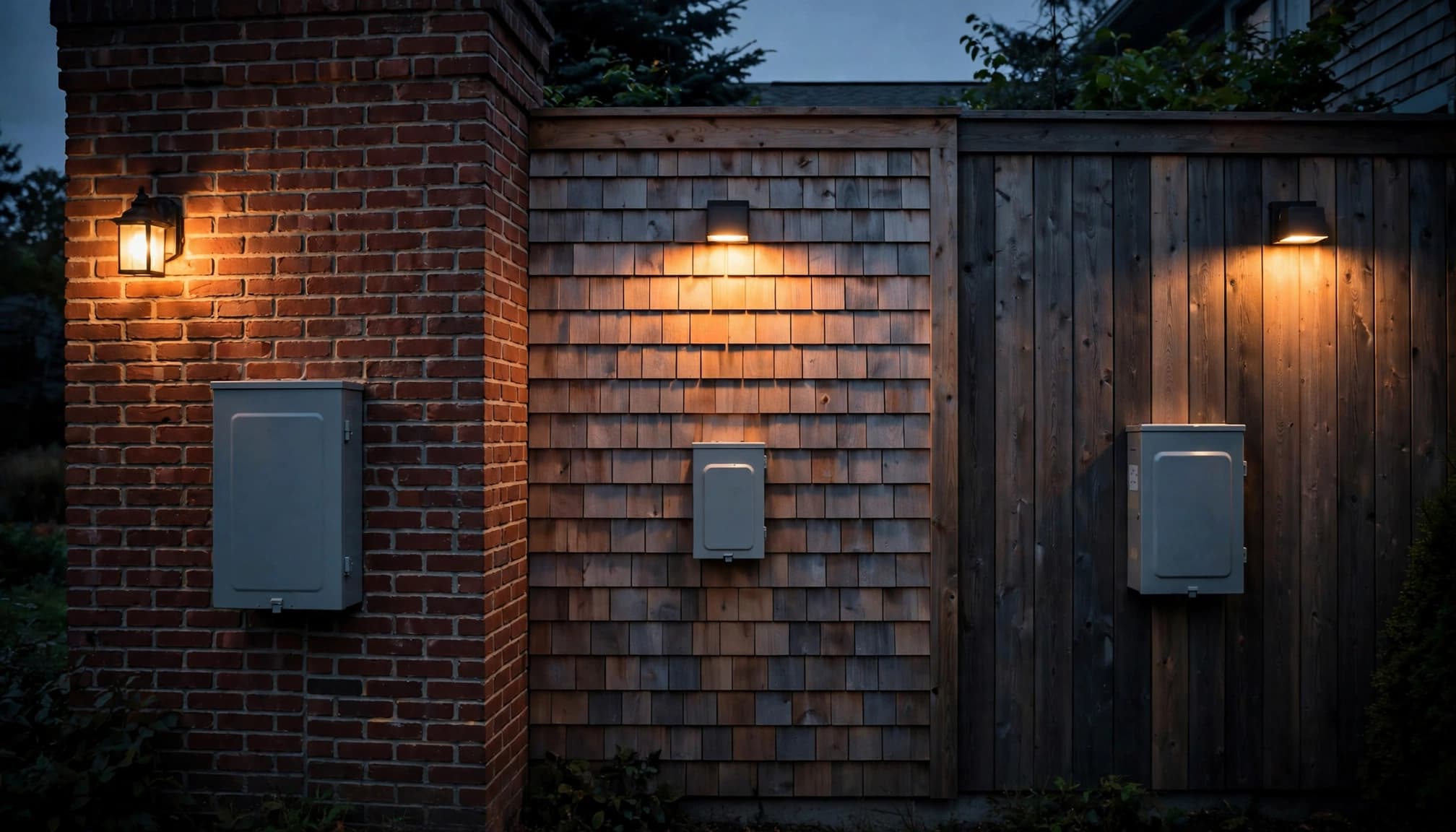
The disconnect must remain accessible and suitable for the environment. An outdoor enclosure may need weather protection, while equipment near moisture or corrosive conditions may need a particular enclosure rating. The required working space must remain clear after landscaping, fences, decks, or additions are completed.
Generators, solar, EV chargers, and pools
Generators may involve Articles 225, 230, 445, and 702 , along with transfer equipment and utility coordination. A standby generator is not safe to connect through an improvised cord or an incorrectly installed inlet. The transfer system must prevent dangerous backfeeding into utility lines.
Solar installations commonly involve Articles 690 and 705 . Their disconnecting equipment may need coordination between the utility service, inverter, photovoltaic array, and other power sources. Solar work can also involve utility interconnection rules and separate inspections.
EV charging equipment falls under Article 625 . A new Level 2 charger may require a dedicated circuit, load calculation, panel work, or a service upgrade. Review the Massachusetts EV charger installation requirements before choosing a charger or assuming the existing panel has capacity.
Swimming pools and spas involve Article 680 , including rules involving bonding, grounding, receptacles, equipment, and disconnect access. Pool work deserves early planning because wiring may be buried or enclosed before the inspector can review it.
Permits, inspections, utilities, and local AHJs
When permits and inspections enter the project
A new service, panel replacement, service upgrade, generator connection, EV charger circuit, solar installation, and many renovation projects commonly require an electrical permit. A separate building, gas, zoning, or utility approval may also apply.
The local authority having jurisdiction , or AHJ, reviews the permit and conducts inspections. In Massachusetts, that usually means the municipal Inspector of Wires or building department. The statewide code supplies the technical baseline, but local departments control scheduling details and may interpret site conditions differently.
A rough inspection generally occurs before insulation, drywall, cabinets, or other finishes conceal the wiring. A final inspection may include equipment identification, protective devices, circuit testing, grounding, and operation.
The Massachusetts electrical rough inspection guide covers the access and preparation issues that can delay approval.
Utility requirements and permit records
Service changes often require communication with the electric utility. The utility may need to review the service size, meter equipment, service conductors, or planned generation before the electrician can complete the work.
Homeowners should confirm who pulled the permit, who will request inspections, and whether the permit was finalized. A general building permit does not always include a separate electrical permit. This matters during a refinance, insurance review, sale, or future renovation.
If you are buying a home or investigating previous work, use the Massachusetts electrical permit history search to look for open, expired, withdrawn, or finalized permits. A licensed electrician can then compare the records with the equipment installed at the property.
When homeowners should call a licensed electrician
Warning signs that deserve assessment
Call a Massachusetts-licensed electrician when a disconnect is hot, damaged, rusted, loose, difficult to operate, or repeatedly trips. Burning smells, buzzing, scorch marks, water entry, flickering lights, or a panel that feels unusually warm also deserve prompt attention.
A breaker trip may result from a temporary overload, but repeated trips can indicate a failing breaker, damaged wiring, an overloaded circuit, or a problem with connected equipment. Resetting it again and again can leave the underlying hazard unresolved.
Do not remove a panel cover, open a disconnect enclosure, test exposed conductors, or attempt to repair energized equipment. Turning off one breaker does not prove that all parts inside a panel or service enclosure are de-energized.
What a professional evaluation includes
An electrician can inspect the service rating, disconnect equipment, grounding and bonding, panel condition, visible branch wiring, conductor sizes, clearances, and equipment connections. The review should also consider planned loads such as heat pumps, electric ranges, EV chargers, generators, and additions.
Depending on the findings, the right solution may be a repair, a listed replacement disconnect, a panel replacement, a service upgrade, or a broader correction of older wiring. The safest answer comes from evaluating the utility connection and the home's complete electrical system together.
For a panel or service project, homeowners can also review Greater Boston electrical panel replacement costs, while remembering that the final price depends on the equipment, access, utility work, permits, and required corrections.
Massachusetts electrical disconnect FAQ
Does every Massachusetts home need an outdoor main disconnect?
No universal answer applies to every home. Earlier Massachusetts amendments required an outdoor emergency disconnect for certain new one- and two-family dwellings and complete service replacements. The 2026 code transition affects how that requirement should be evaluated.
The permit date, scope of work, adopted code edition, service arrangement, utility requirements, and local inspector's decision all matter. Have the electrician confirm the requirement before ordering equipment.
Can I replace a disconnect myself if the replacement looks identical?
A visual match does not prove electrical compatibility. The replacement must have the correct voltage, ampere rating, interrupting rating, enclosure type, terminal ratings, and listing for the installation.
Service equipment can remain energized even when a branch breaker is off. Homeowners should not perform this work or open the enclosure. Use a licensed electrician for replacement, modification, testing, and inspection-related corrections.
Is a generator disconnect the same as a main service disconnect?
No. A generator installation may use a transfer switch, service-rated equipment, a generator disconnect, or other equipment depending on the design. The arrangement must prevent utility backfeed and coordinate with the home's service and grounding system.
Generator projects may also require electrical, building, gas, zoning, or utility approvals. Greater Boston homeowners can review this generator installation guide before planning the equipment location.
Conclusion
A Massachusetts electrical disconnect must fit the home's code edition, service arrangement, equipment, and inspection requirements. The 2026 adoption makes the permit date especially important, while the transition surrounding Article 230.85 means homeowners should verify emergency-disconnect questions instead of relying on general online advice.
Keep access clear, document permits, and use a Massachusetts-licensed electrician for installation or modification. When electrical equipment shows heat, damage, moisture, or repeated breaker trips, professional assessment is the safest next step.