
Electrical Service Mast Problems in Greater Boston Homes

Contact Us
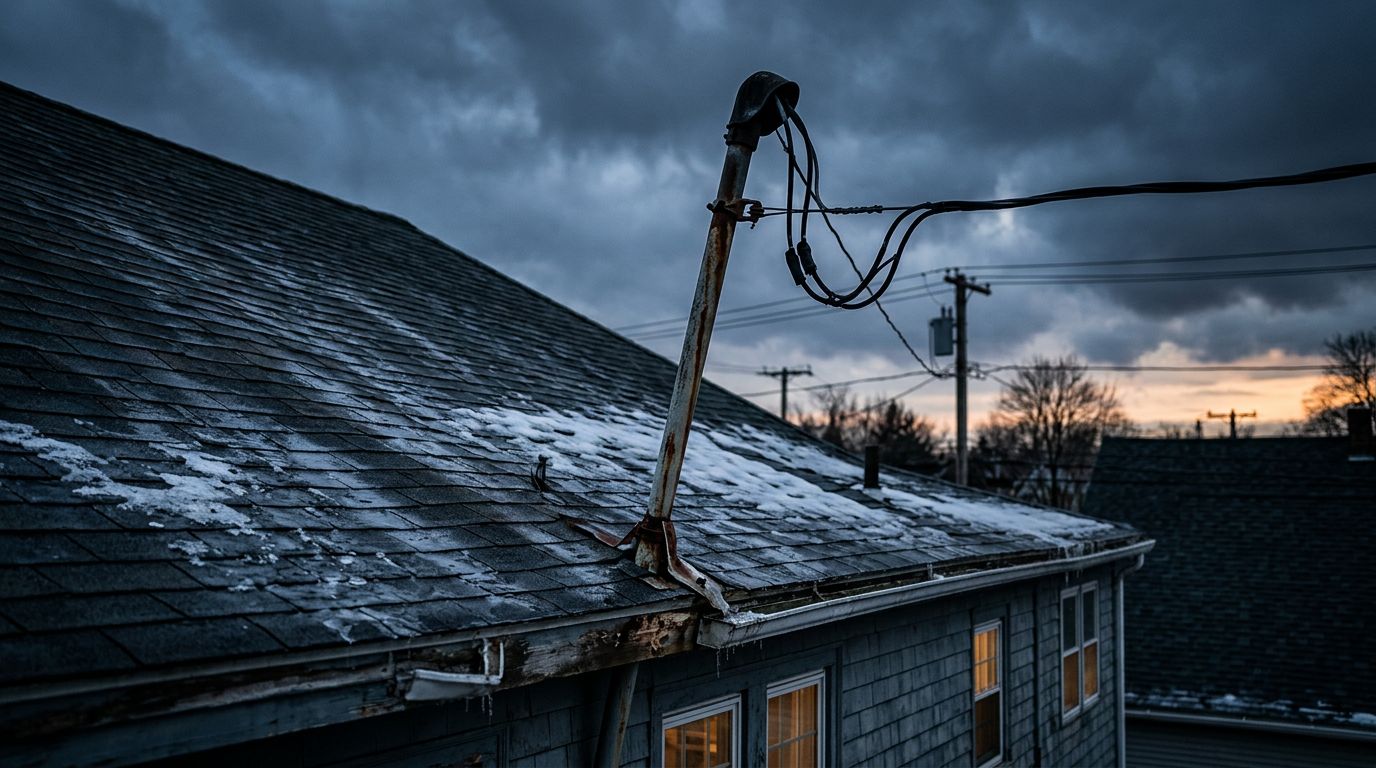
A leaning pipe above your roofline may look like a minor exterior repair, but it can affect the way power enters your home. If you're searching for electrical service mast problems , you may be seeing rust, loose hardware, water damage, or wires that appear lower than they should.
Greater Boston's older homes face extra wear from heavy snow, ice, coastal wind, freeze-thaw cycles, and decades of roof work. Knowing what the mast does, which signs require attention, and when a repair becomes a service upgrade can help you respond before the damage spreads.
What the Electrical Service Mast Does on Your Home
An electrical service mast is the rigid conduit that carries overhead service conductors from the meter area toward the utility connection. On many homes, it extends above the roof and ends at a weatherhead. The utility's service drop connects to that point and brings electricity from the street to the house.
The mast also helps support the service drop. That means it handles more than electrical wiring. It must stay firmly attached to the building and maintain the required position for the utility connection.
Several parts work together at the service entrance:
- The weatherhead helps keep rain and melting snow out of the conduit.
- The service mast protects conductors and supports the overhead connection.
- The meter socket holds the electric meter outside the home.
- The service entrance conductors carry power toward the main panel.
- The main disconnect and panel distribute electricity through the house.
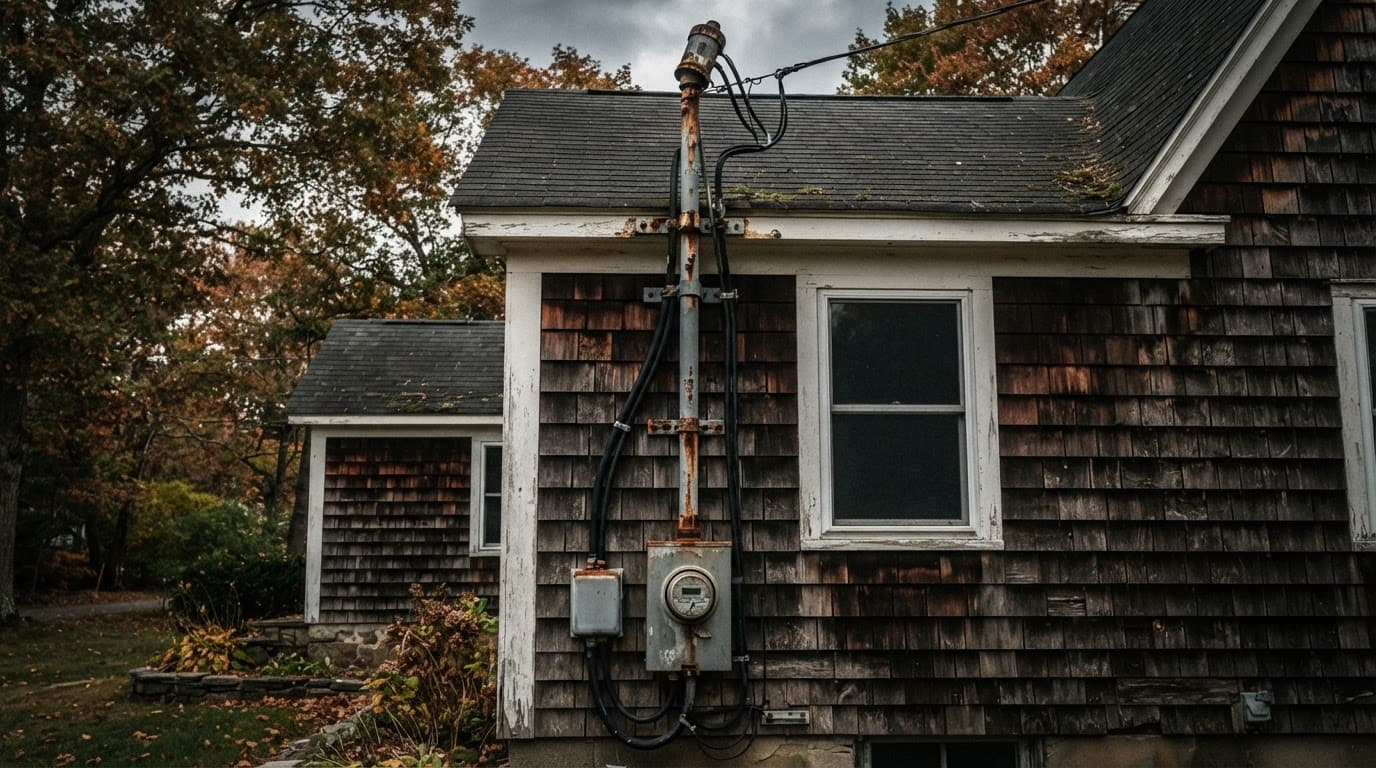
A problem in one component can place stress on the others. For example, a loose mast may pull on the service drop. A damaged weatherhead can allow water into the conduit. Corrosion around the meter socket can affect the service entrance connection.
Older homes may also have smaller electrical services, such as 60-amp or 100-amp systems. Age alone doesn't prove a system is unsafe, but it can make an inspection worthwhile, especially after adding an electric range, heat pump, EV charger, generator, or finished living space. A load calculation can show whether the existing service can handle today's demand. You can learn more about the differences in 100 amp vs 200 amp service.
Common Electrical Service Mast Problems in Greater Boston
Electrical service mast problems often begin outdoors, where the equipment faces weather and physical strain throughout the year. Some defects are easy to see. Others develop inside the conduit, meter socket, or wall.
Wind, ice, and movement
Greater Boston storms can place strong sideways force on an overhead service connection. Ice adds weight to the wires, while wind can make them move repeatedly. Over time, that movement may loosen straps, fasteners, or the mast's connection to the building.
A mast that leans away from the house deserves prompt attention. The movement may indicate damaged mounting hardware, a weakened conduit, or excessive tension on the service drop. The roof flashing can also separate when the conduit shifts.
Snow and ice sliding from a roof can strike the mast or weatherhead. A falling branch can cause similar damage. Never try to push a damaged mast back into place. The service conductors may remain energized.
Rust and water intrusion
Metal conduit can corrode, especially around roof penetrations, threaded connections, and locations where water collects. Surface rust doesn't always require replacement, but rust holes, flaking metal, or a badly weakened connection do.
Water can enter through a cracked weatherhead, a damaged flashing boot, or an open conduit joint. It may then travel toward the meter or panel. You might notice staining near the service entrance, moisture inside the electrical equipment, or corrosion on visible connections.
Water and electricity create a serious safety concern. A wet meter enclosure or panel should be inspected by a licensed electrician. Avoid opening the equipment or placing your hands near it.
Impact and alteration damage
Roof replacements, siding work, gutter installation, tree trimming, and ladder use can affect the service mast. Contractors may accidentally bend conduit, disturb flashing, or remove hardware that supports the equipment.
Homeowners sometimes notice a problem after exterior work has finished. If the mast looked straight before the project and now appears loose or damaged, document the condition and contact the contractor and an electrician. Utility equipment and meter seals should remain untouched.
A missing weatherhead cover, exposed conductor, or loose connection can allow water into the system. Even when the lights still work, the visible damage may signal a larger service entrance issue.
Signs Your Mast Needs an Electrical Inspection
Some warning signs appear outside. Others show up through changes inside the home. A single symptom may have several causes, so a qualified electrician needs to inspect the full service entrance before identifying the repair.
Call for an inspection if you notice:
- The mast leans, twists, or pulls away from the siding or roof.
- Rust has created holes, sharp edges, or loose sections in the conduit.
- The weatherhead is cracked, missing, or positioned differently after a storm.
- The roof flashing around the mast is lifted, split, or visibly wet.
- The overhead wires appear lower than before or pull hard against the mast.
- Your meter socket shows corrosion, heat damage, buzzing, or moisture.
- Lights flicker when large appliances start, especially alongside other service issues.
- You smell burning near the meter, panel, or service entrance.
- A breaker trips repeatedly after water reaches the equipment.
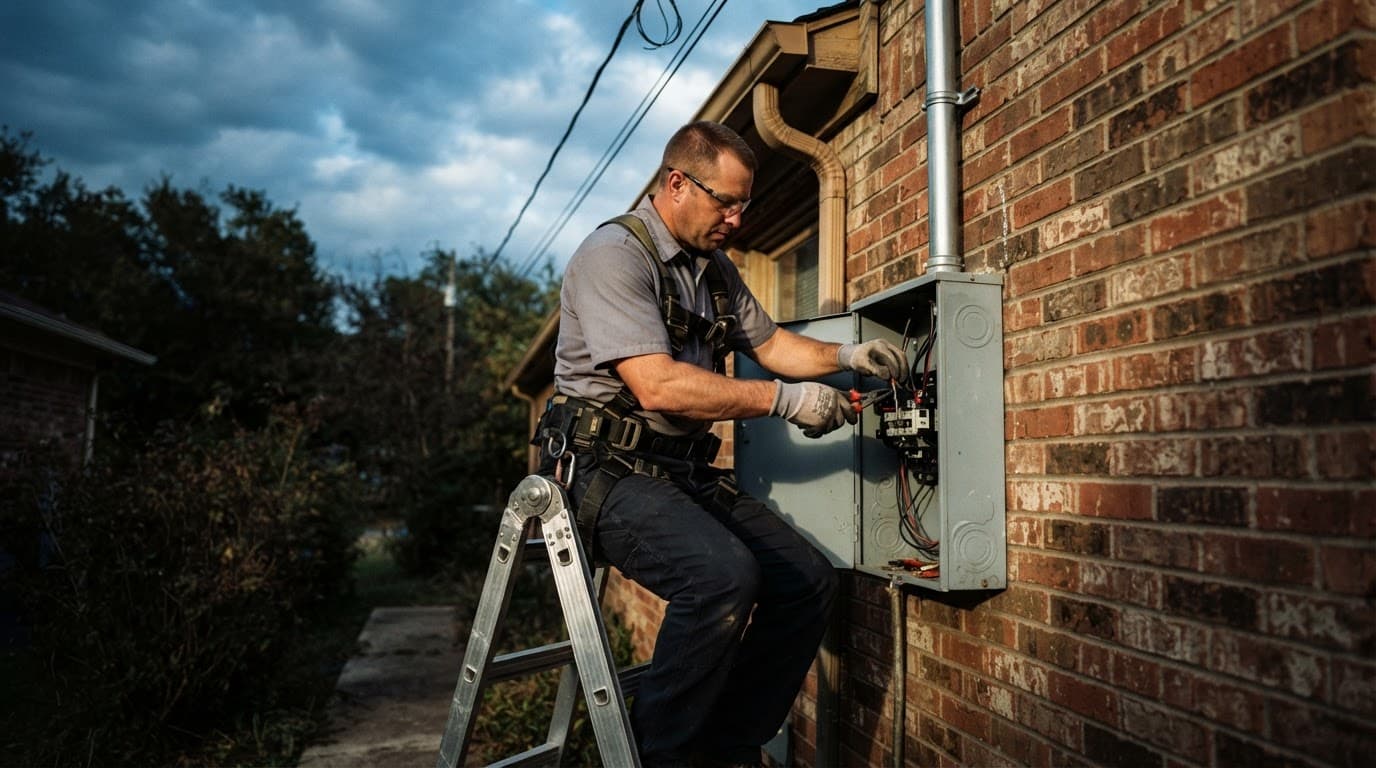
A leaning mast doesn't automatically mean the entire electrical system needs replacement. However, it should never be treated as a cosmetic issue.
A mast can look intact from the ground while its roof attachment or meter connection has already weakened.
If you see arcing, smoke, sparks, exposed conductors, or a fire risk, stay away from the equipment. Leave the home if necessary, call 911 for fire or immediate danger, and contact the electric utility about a damaged service connection.
When a Mast Repair Becomes a Service Upgrade
An electrician starts by examining the mast, weatherhead, meter socket, service conductors, grounding connections, main disconnect, and panel. The inspection helps separate a local repair from a larger correction.
A limited repair may involve replacing damaged conduit, securing mounting hardware, correcting the weatherhead, or repairing the roof penetration. The utility may need to disconnect and reconnect the service before work begins. Only qualified personnel should handle that coordination.
A broader project may be needed when the existing service equipment is undersized, corroded, obsolete, or unable to support the home's electrical load. The electrician may recommend a new meter socket, service conductors, grounding and bonding work, main panel, or mast assembly.
Installing a 200-amp panel doesn't automatically solve a damaged service entrance. The service conductors, meter equipment, mast, grounding system, and utility connection must all work together. Likewise, a new mast won't fix overloaded branch circuits or deteriorated wiring inside the house.
For a regional cost reference, Sirois Electric's guide to service upgrade cost lists approximately $1,600 to $4,000 for many 100-amp to 200-amp upgrades and about $3,000 to $8,000 for a full service upgrade. Those figures are planning ranges, not a quote. Existing damage, permit requirements, roof access, utility coordination, and interior electrical corrections can change the total.
Grounding also needs review during many service projects. Older systems may use different grounding arrangements than newer work. A service upgrade can involve bonding changes and grounding electrode work, so review ground rod requirements for older homes with a Massachusetts-licensed electrician.
What to Do About a Damaged Service Mast
Safety comes first. Don't climb onto the roof, touch the mast, move a wire, or use a ladder near overhead conductors. Keep children, pets, and other workers away from the area until the equipment has been evaluated.
Take these steps:
- Look from a safe distance. Note whether the mast is leaning, corroded, wet, or separated from the building.
- Photograph visible damage. Pictures can help the electrician understand the issue before arriving.
- Call a licensed electrical contractor. Ask for an inspection of the complete service entrance, not only the visible pipe.
- Contact the utility when wires are damaged. The utility can address its equipment and explain whether service must be disconnected.
- Ask about permits and coordination. Service work often requires local permitting and utility scheduling.
- Request a written scope. It should identify whether the job involves a mast repair, meter equipment, panel work, grounding, or a full service upgrade.
The contractor should also check whether recent roof or exterior work contributed to the damage. A proper repair must protect the conductors, support the utility connection, resist weather, and meet current requirements for the work being performed.
Conclusion
A damaged service mast affects the point where utility power enters your home, so visible movement, rust, water, and loose connections deserve prompt attention. Greater Boston weather and older construction can make these issues more common, but a careful inspection can determine whether you need a focused repair or a complete service upgrade.
The safest response to electrical service mast problems is to keep away from the equipment and call a licensed electrician. Early evaluation can clarify the scope, coordinate utility work, and prevent a small exterior defect from becoming a larger electrical hazard.